
To determine the property's orientation, first identify the north direction, then examine the doors and windows of the main rooms. Descriptions such as "facing south" (sitting north, facing south) or "north-south through-ventilation" must be verified against the actual environment; do not draw conclusions solely based on the up, down, left, and right positions shown on the floor plan.
Orientation, house facing, and North indicator
Record the primary window-facing sides and the entrance location; clarify whether the discussion concerns the orientation of the entire dwelling, the living room, or the bedrooms. Definitions of "house orientation" may vary, so the reference plane should be agreed upon before discussion begins. Spatial visualizations within the app cannot be treated as accurate directional measurements unless the north orientation has been calibrated; if the north orientation on the drawings is unclear, additional information should be provided first.
How to assess "north-south through-ventilation"
Trace potential airflow paths on the plan to see if doors and windows align, then observe actual conditions on-site—such as window operation, obstructions, and airflow—to assess the situation. Having windows on opposite sides does not guarantee good ventilation at all times. Record ventilation conditions for the kitchen, bathroom, and living areas separately to avoid applying general promotional descriptions of the entire home to every individual space.
Which suits you better: a south-facing living room or a south-facing bedroom?
Consider when you are home and which rooms you use most, then compare factors like obstructions and natural light. For east-west facing units, afternoon sun exposure, and windowless living rooms or bathrooms, rely on on-site observation rather than making blanket judgments based solely on orientation. Record the time and take photos of different rooms during viewings to make it easier to discuss issues with others later.
Information to prepare when discussing ways to improve natural lighting
Includes details on window placement, external obstructions, room usage, and furniture height. Allows you to compare how moving furniture, leaving space near windows, and adjusting lighting arrangements affect the user experience. The 3D preview in "Space Between" is intended for visualizing the layout and does not constitute a professional simulation of sunlight or natural lighting; feasibility must be independently verified if structural modifications are involved.
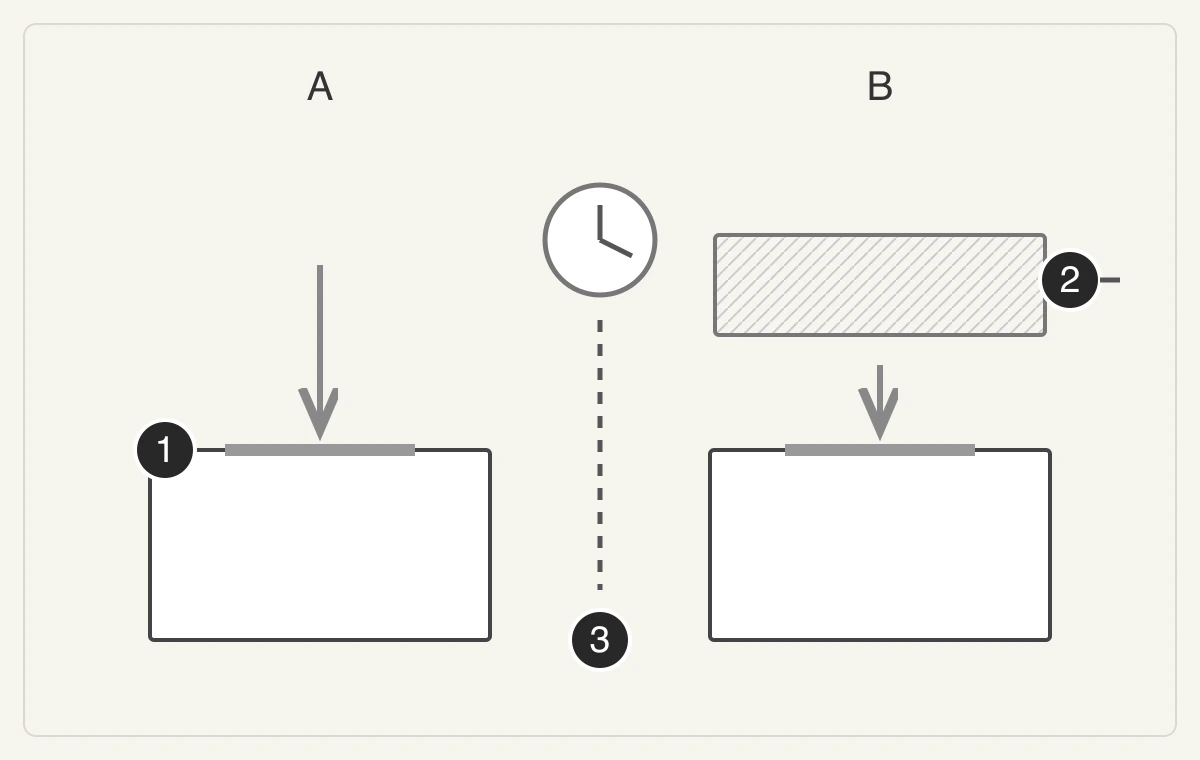
Example: two bedrooms facing the same way can feel different
Suppose two bedrooms face the same direction. A overlooks open space; B faces a nearby building and has a deeper balcony. Orientation alone does not establish equal daylight. Record windows, obstruction outlines, date, time and weather separately. Keep photo settings comparable so automatic exposure does not make a darker room look equally bright. The diagram is not a sunlight simulation.
Is a south-facing home always better?
There is no universal answer for every region or household. Latitude, season, surrounding obstructions, shading and time spent at home affect the experience. Living rooms and bedrooms may also face different directions. Specify the location and room; do not apply one region’s preferences automatically to tropical or Southern Hemisphere homes.
How should I record home orientation with a phone compass?
Specify whether you measure outward through a window, outward through a door or another reference. Record position, direction and time. Follow device calibration guidance, move away from obvious magnetic accessories and compare readings at different positions. Mark unstable readings as unverified. State magnetic or true north consistently; a phone record does not guarantee surveying accuracy.
Can a single midday viewing establish all-day light?
No. One visit records only that weather, season and obstruction setting. Where possible, observe frequently used rooms in the morning, afternoon or the hours you use them. Distinguish direct sunlight, general daylight and artificial lighting. If another visit is impossible, mark other periods unknown and request dated, timed photos with locations.