
Use comparable evidence before weighing two homes. Place the same furniture and daily tasks in each plan, and separate site facts from personal preferences so differences are clear. This guide offers a method, not recommendations for particular listings.
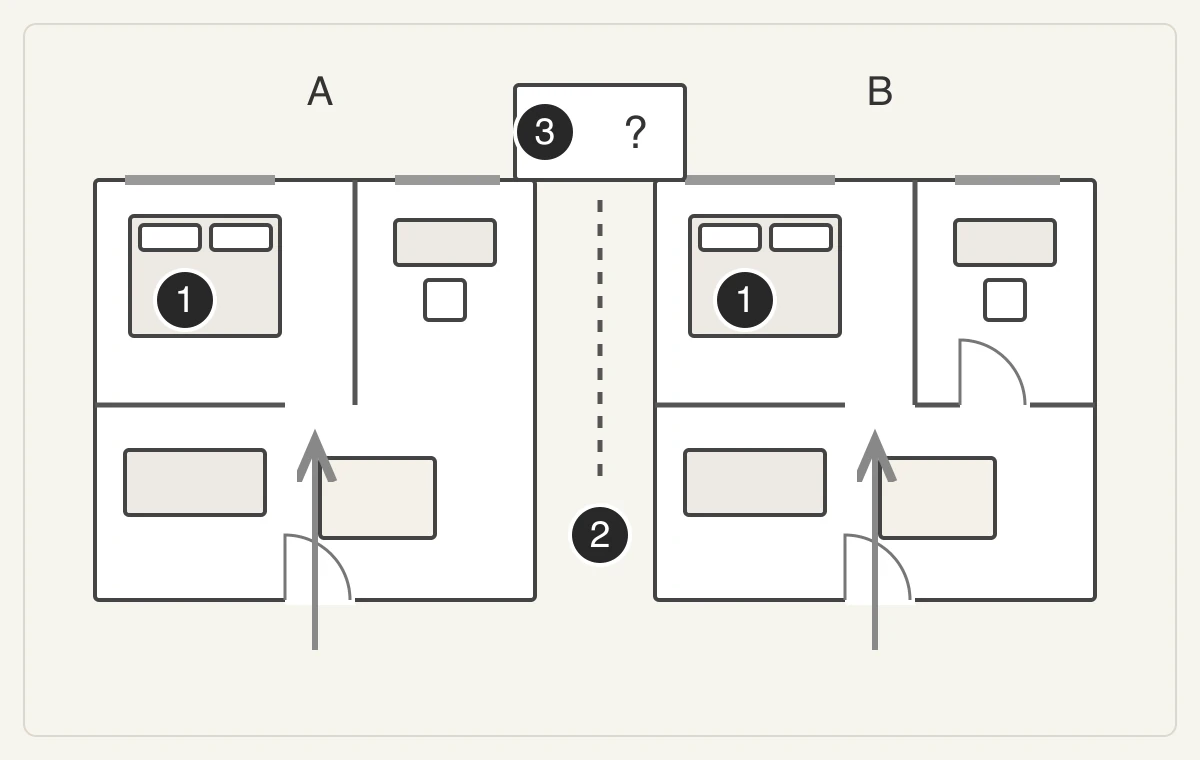
Make dimensions and viewing notes comparable first
State whether area is supplied or measured and what room boundaries the dimensions use. Do not mix gross and usable area. Compare north references, openings and furniture scale, and record each viewing time. Flag differing conditions rather than ranking brightness from different weather or misleading furniture sizes.
Compare the same daily route, not presentation quality
Check entering with belongings, kitchen-to-table trips, laundry, night-time bathroom access and work/rest routes in the same order. Try the actual dimensions of furniture you will keep, including doors and drawers in use. For each home record what it solves, what inconvenience it adds and what evidence is missing.
Example: a larger living room versus a separate workspace
Suppose A has a larger living room but the desk is beside the television, while B has a smaller living room and a separate workspace. If both occupants are home during the day, examine calls and rest competing for space, then check whether B still fits the dining table. Occasional home working may reverse the priority. There is no universal winner.
Can I compare total scores when one home has missing evidence?
Do not treat unknowns as problem-free or automatically assign zero. Compare mutually verified items, then list missing orientation, dimensions, noise or obstruction records separately. Recheck unknowns that matter to the decision; retain uncertainty if they cannot be verified. A total score cannot repair missing evidence.
How can I save a comparison so the next viewing builds on it?
Use this template: item | need | verified A | verified B | unknowns | reason for the trade-off. Label photos and plans with home reference, date and position; keep original notes when adding observations. Annotate plans for discussion. This suggested record does not imply that the App has an automatic property-comparison feature.
When is it useful to ask someone to review both plans?
Ask once shared needs are clear but a particular layout trade-off remains unresolved. Supply both plans, consistently scaled furniture and the unknowns list. Request a comparison of the same question rather than two unsupported scores. Transaction, structural or specialist inspection matters require the appropriate professionals; a layout discussion does not replace them.