
Evaluate the specific building, floor and windows, not just the neighborhood name. A site plan establishes relationships; observation checks sound, light and access. Homes in one development can offer different experiences.
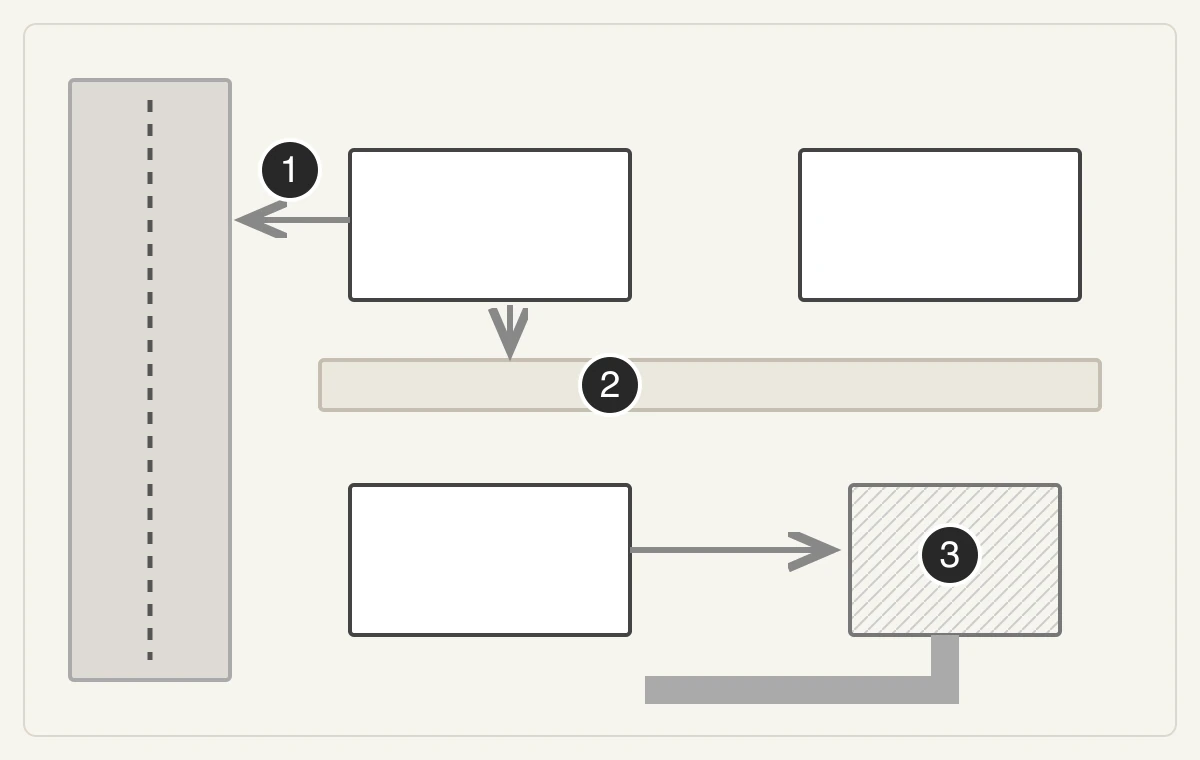
Map the building, entrance and window together
Confirm the site-plan version and north reference. Mark the building, entrance, actual floor and main window directions, followed by neighboring buildings, roads, garage ramps, shared activity areas and equipment. Maps and brochures may be outdated. Identify the source and uncertainty of planned or inaccessible areas rather than treating plans as observed facts.
Example: two windows in one building need different checks
Suppose the living room faces an internal footpath while the bedroom faces a garage entrance. Check sightlines at the living-room window and record passing vehicle sound and lights at the bedroom. Diagram lines show viewing directions, not distance, acoustic propagation or risk boundaries. An internal building position does not remove the need to check each room.
Is a street-facing or an internal home a better fit?
Compare the specific rooms and your daily schedule. On the street side, observe traffic, street activity and night lighting. An internal side may face a play area, shared equipment or vehicle access. Record experience with windows open and closed, and check walking, transit and parking routes. A location label cannot replace observation.
Does a large gap between buildings guarantee daylight and privacy?
Distance alone is insufficient. Consider the opposite building’s height, your floor, window direction, balconies and trees. Privacy concerns sightlines from windows or paths; daylight also depends on time, season and weather. Record actual views and obstructions without inferring annual sunlight or assuming a higher floor is unobstructed.
How should I ask about a road alignment or reverse-bow setting?
Use a photo or diagram to show the road’s curve, the home and the affected openings; not every bend is a reverse-bow relationship. Record traffic, lights, sound, access and visible obstructions separately. Traditional terms describe shapes in a cultural framework, not forecasts of accidents or fortune. Consult the matching atlas entry for the definition.
A neighborhood observation record to copy
Home reference | viewing date and time | floor and window | roads and entrances | buildings and trees | sound and light with windows open/closed | confirmed observations | missing evidence. Add dated follow-ups without replacing earlier notes. Use reference labels and simplified diagrams for public discussion, hiding door numbers and the precise address.