
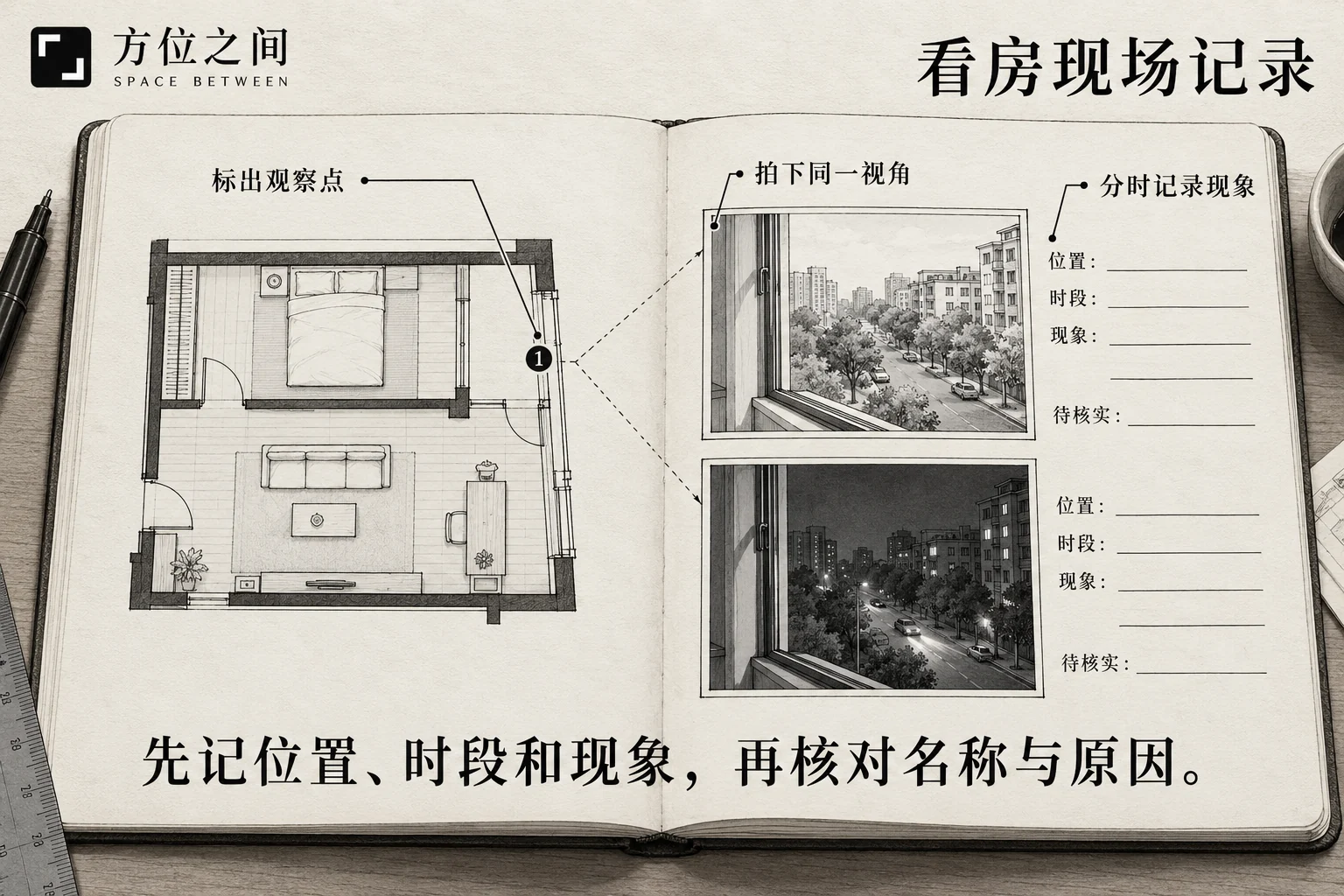
Fix the room and viewpoint first
Mark entrances, bedrooms, regular seating positions and main windows on a plan, and number the viewpoints. At each point, take a contextual photograph before close-ups. Note direction, floor, window position and obstructions; mark distances as estimated or unknown when they cannot be measured. A cropped corner alone does not show whether it actually faces a place used in daily life.
One visit cannot cover every condition
Daytime visits reveal daylight, obstructions and sightlines; evening or nighttime visits reveal headlights, signs and operating equipment. Dry weather and post-rain visits may show different drainage conditions. If another visit is impossible, list the missing periods as unverified. Mark statements from management or residents as reports, rather than treating “usually quiet” as an all-day measurement.
Use the same format for each observation
Start with information another person can check, rather than a fortune label. The following fields can be copied into viewing notes.
- Location and subject: room, viewpoint number and the road or building faced; link photo numbers to the plan.
- Conditions and observation: date, time, weather and opening positions. “Headlights reach the pillow” is more actionable than a light-sha label alone.
- Frequency and use: occurrences during the observation, approximate duration and effects on sleep or work. Keep personal experience separate from measurements.
- Follow-up and limits: whether another room or closed curtains changes the observation, what remains unseen, and who should check it.
Compare changes under similar conditions
Try small changes first, such as moving a desk, adjusting curtains or redirecting a light, then revisit under similar conditions. Curtains reducing glare does not mean road noise has also been addressed. Hong Kong Housing Authority road-noise measures involve specific layouts, barriers and window designs; plants and ornaments are not interchangeable with acoustic measures. Record which observation each change targets.
List maintenance issues separately
For leaks, mould, cracks and loose components, record location, extent and dates of change. Investigate the source of moisture instead of ending with cosmetic coverage. Whether a crack is structural needs appropriate professional assessment. A traditional name may be a cultural note, but cannot replace a leak investigation or building inspection.
Example: nighttime headlights in a street-facing bedroom
Suppose a viewer notices headlights from turning vehicles crossing the pillow on a clear evening. They record the time, travel direction, curtain position and bed location, then separately try moving the pillow and adjusting shading that evening. The conclusion concerns light reaching this sleeping position under specific conditions, not an inevitable ill fortune for the whole home. Daytime noise and wet-weather drainage remain unverified.
Sources and further reading
These sources help clarify the concepts and their origins. Explaining a traditional term does not establish that it can predict outcomes.