
Defining features
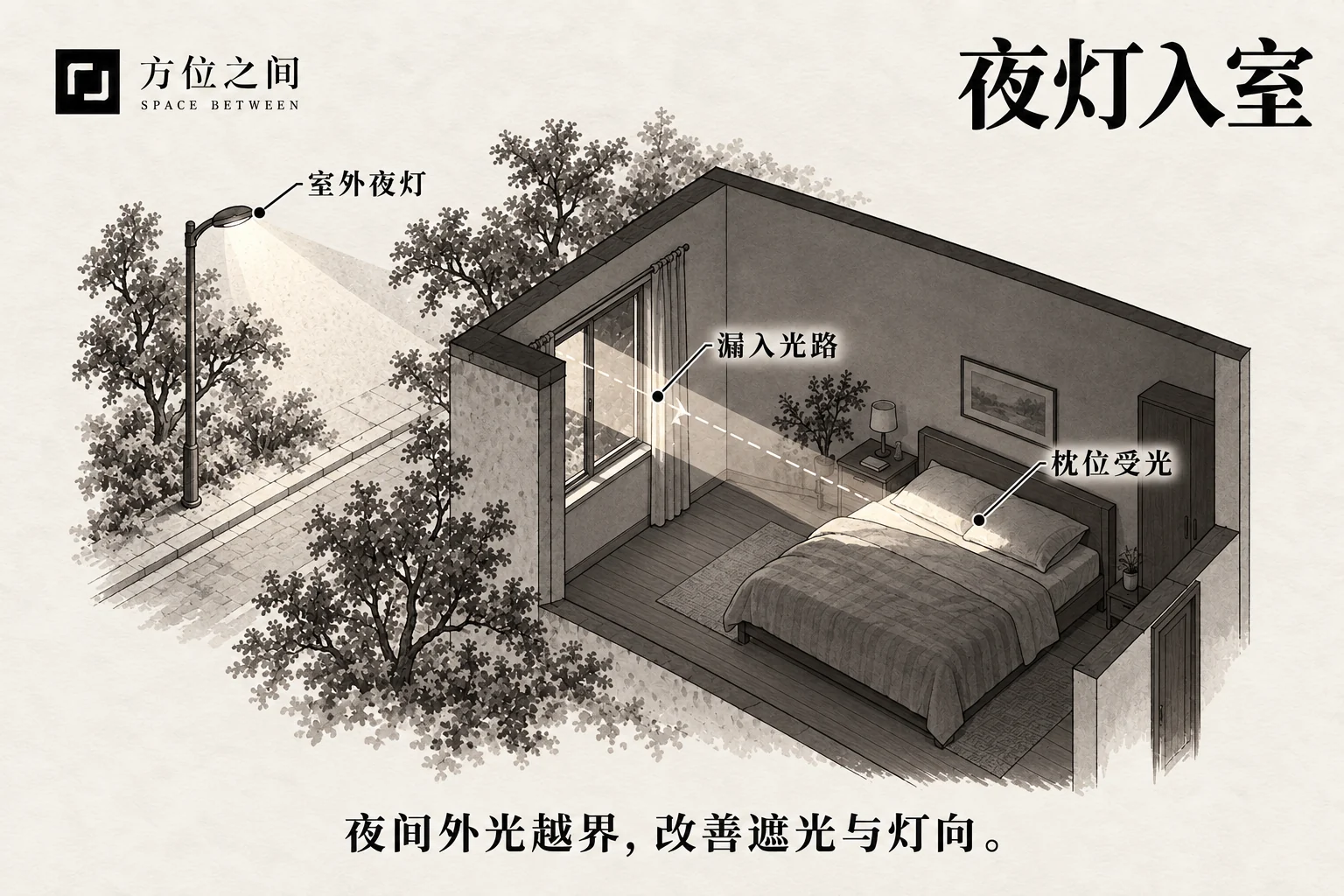
Sources include signs, façade floods, parking lights and neighboring fixtures. Problems may be direct views, bright patches or room-wide illumination. The same fitting affects a living room and pillow differently; record where and when the person actually rests.
How to recognize it
Observe before bed with normal curtains and log switching times. Photographs help comparison, but automatic exposure alters brightness. A sign operating only during business hours may respond to a timer agreement better than permanent window blocking; an overexposed photograph is not a conclusion.
Common confusions
Sustained night light differs from daytime reflection. Do not switch off essential stair or corridor lighting. A visible streetlamp does not prove strong pillow-level illumination. Respect individual responses while documenting exact locations and hours for a complaint.
Folklore and sources
“Artificial-daylight sha” is a modern label; no dedicated ancient text for electric lighting was verified. Hong Kong’s lighting charter supports reducing unnecessary nighttime light, not claims that brightness attracts spirits, financial loss or relationship conflict.
Traditional responses and practical improvements
Curtains and screens can regulate light without charms. First discuss aiming, shielding and schedules with the operator, then improve bedroom shading. Preserve ventilation and safety lighting; total darkness everywhere or retaliatory illumination are not general solutions.
Sources and further reading
These sources help clarify the concepts and their origins. Explaining a traditional term does not establish that it can predict outcomes.