
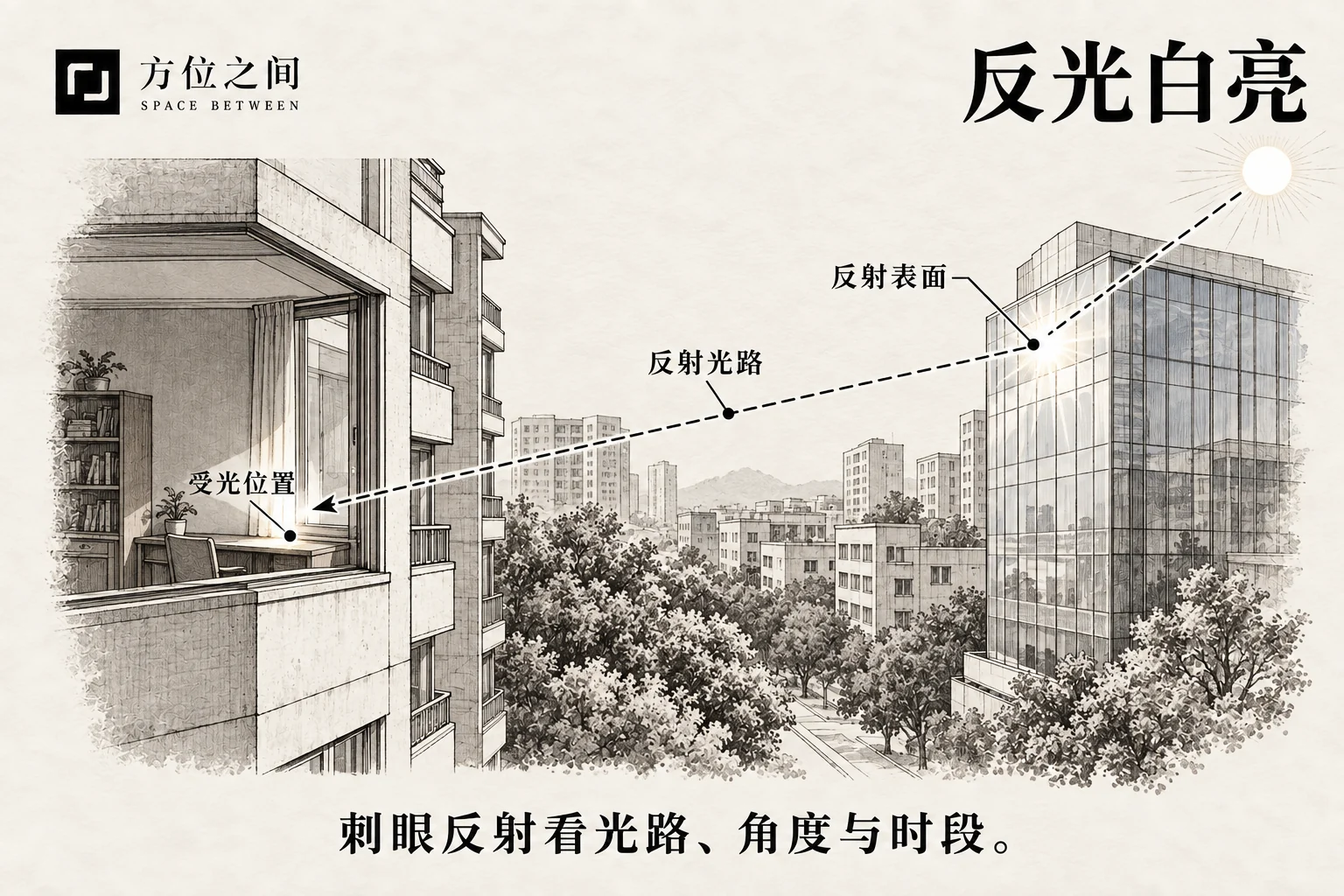
Defining features
Glass façades, metal roofs or mirrors may reflect sunlight through a window. A bright patch may move briefly or remain on a seat or bed. Separate daytime reflection from direct nighttime lighting rather than labelling every bright surface harmful.
How to recognize it
From actual seated or lying positions, log timing, duration and source; briefly shading the window can test the path without staring at strong light. If moving a desk changes an afternoon glare patch, address that position first.
Common confusions
Good daylight is not the same as glare, and white walls or mirror counts are not a diagnosis. Screen reflections and exterior glare can coexist; fixing one may leave the other. Heat reduction and glare reduction are separate objectives.
Folklore and sources
“Light like an arrow” is a metaphor; no common classical formula for these modern terms was verified. DOE daylighting material addresses light and heat, not arguments or lost wealth. Illustrative light paths do not represent occult forces.
Traditional responses and practical improvements
Screening and reorientation can become glare control or small furniture moves; do not reflect light back at neighbors. Adjust the source or reflective angle when possible, coordinate shading and choose window treatments that preserve useful daylight and ventilation.
Sources and further reading
These sources help clarify the concepts and their origins. Explaining a traditional term does not establish that it can predict outcomes.