
Defining features
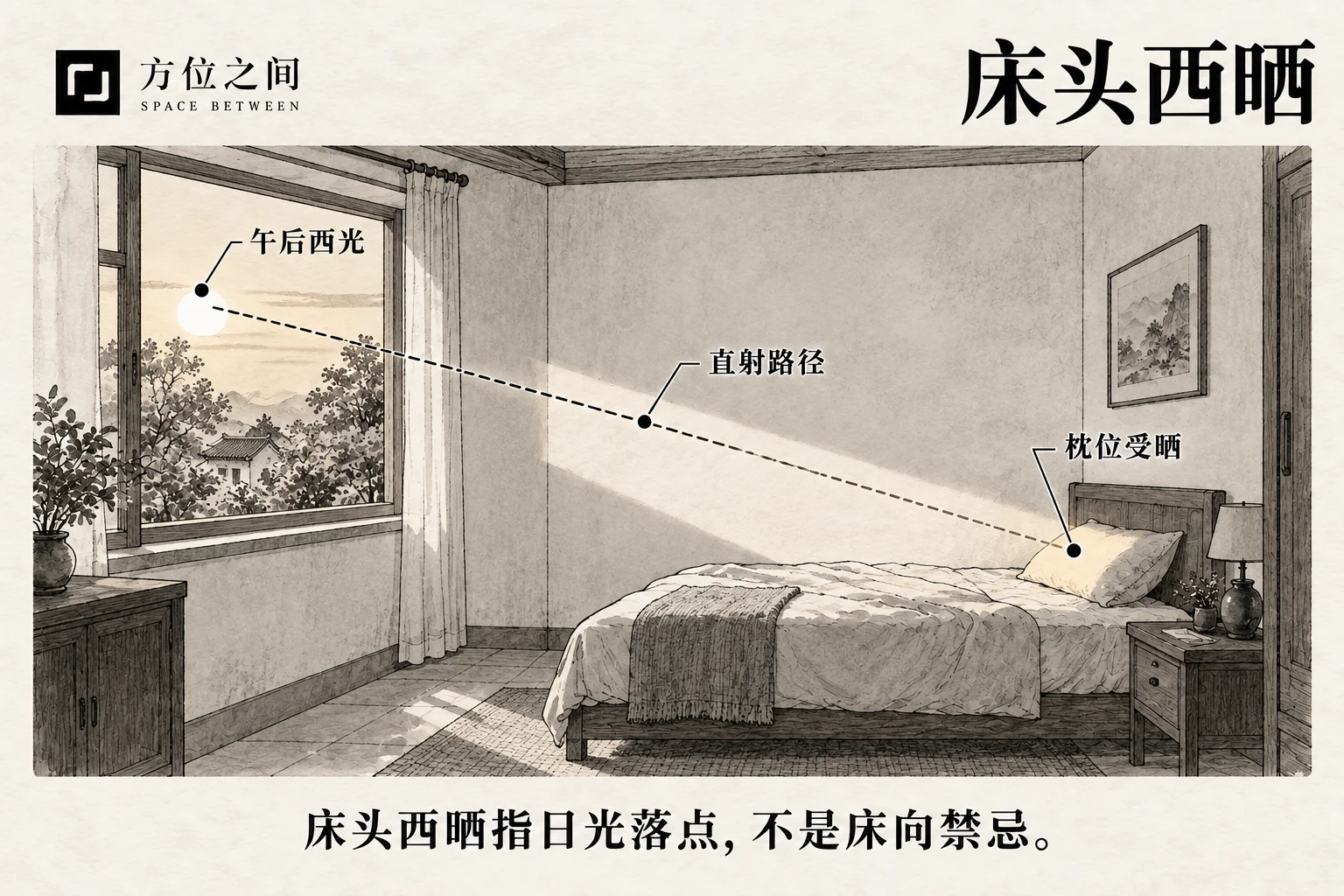
Low evening sun may strike the pillow, headboard or direct sightline through a west window. Obstructions, glass and shades change the timing. Two west-facing bedrooms may differ in whether light reaches the bed or heat lingers after dark.
How to recognize it
Log sun patches during usual rest hours and compare seasons and shading. If only summer evenings illuminate the pillow, test moving the bed or shade first. Surface temperatures in sunlight and room air temperatures are different measurements.
Common confusions
A west-facing headboard without a west window is not necessarily sunlit; morning light from an east window may also reach a pillow. Distinguish direct sun from reflected glare, and recognize that a person may welcome warmth but dislike strong light.
Folklore and sources
Associating west or sunset with decline is symbolism, not a finding about sleep or lifespan. DOE daylighting material notes heat and glare through east and west glazing; it does not validate fortune judgments from bed direction.
Traditional responses and practical improvements
Avoiding strong light and shifting a bed can become practical layout changes; one direction does not require moving home. Prioritize suitable exterior shading, window treatments and modest bed relocation while preserving daylight and airflow. Thermal upgrades depend on window performance, not charms or color.
Sources and further reading
These sources help clarify the concepts and their origins. Explaining a traditional term does not establish that it can predict outcomes.