
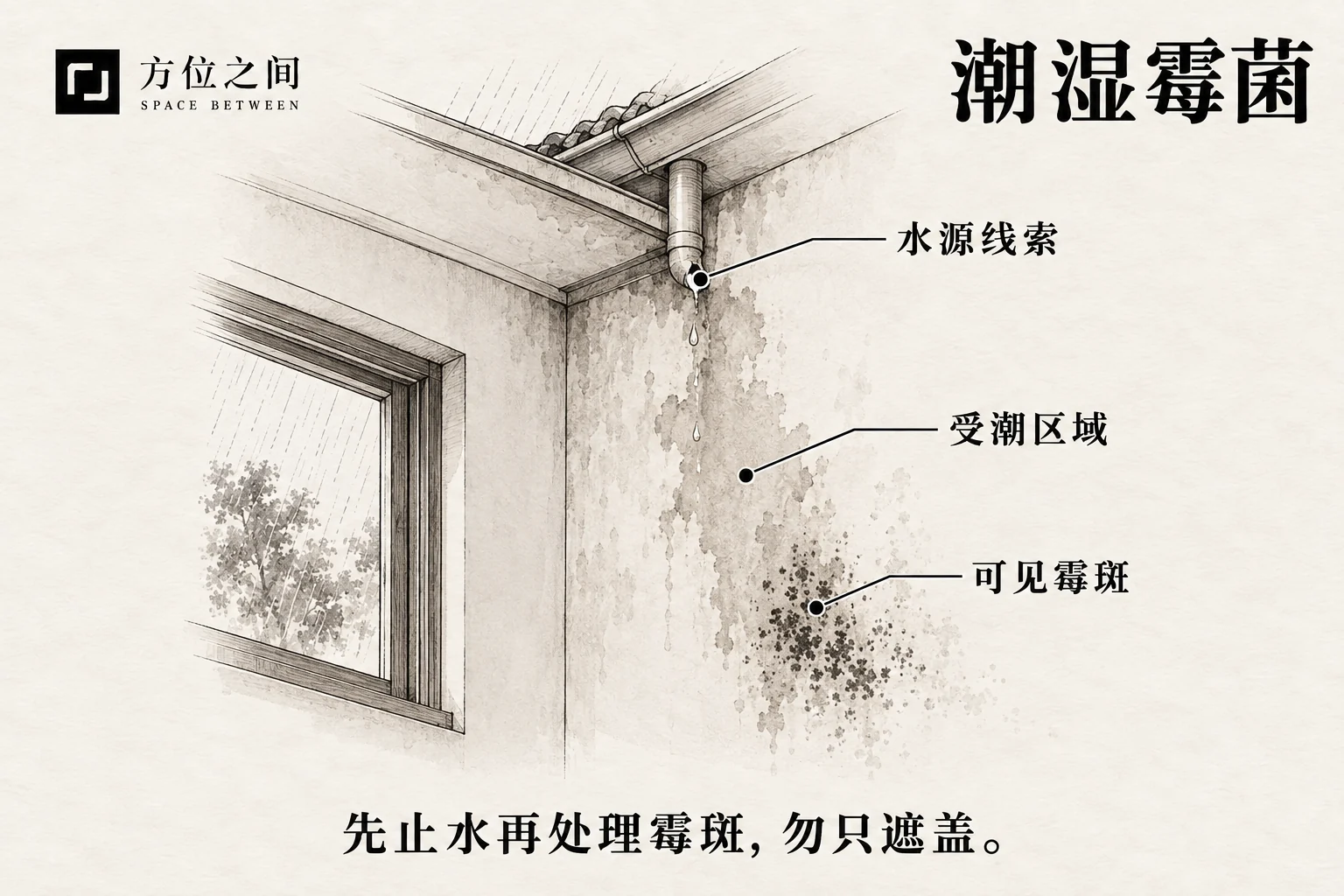
Defining features
Signs include condensation, recurring damp marks and mold in corners or behind furniture, sometimes with odor. Mold has many colors; black does not identify a specific species. A photograph, smell or color cannot establish the complete exposure.
How to recognize it
Log dampness after rain, bathing or air conditioning, checking glass, pipes and wall bases. Winter condensation at cold glass differs from post-rain roof leakage. A humidity meter helps track change, but one reading cannot rule out a hidden leak.
Common confusions
Old stains may be dry, and dust is not necessarily mold; use moisture history and inspection. Masking odor does not remove the source. Visible growth and airborne test values answer different questions; there is no universal “safe mold count” to pursue.
Folklore and sources
“Damp-yin sha” is a modern folk label, not a supernatural explanation. EPA emphasizes moisture control, cleanup and fixing water problems. This does not validate financial-loss omens or disease predictions based on mold color.
Traditional responses and practical improvements
Drying, ventilation and cleaning can become maintenance practices, but incense, paint and paper cannot simply cover the problem. Repair leaks and persistent moisture first, then treat affected material appropriately. Large, recurring or system-related problems need professional assessment and water-source rechecks.
Sources and further reading
These sources help clarify the concepts and their origins. Explaining a traditional term does not establish that it can predict outcomes.