
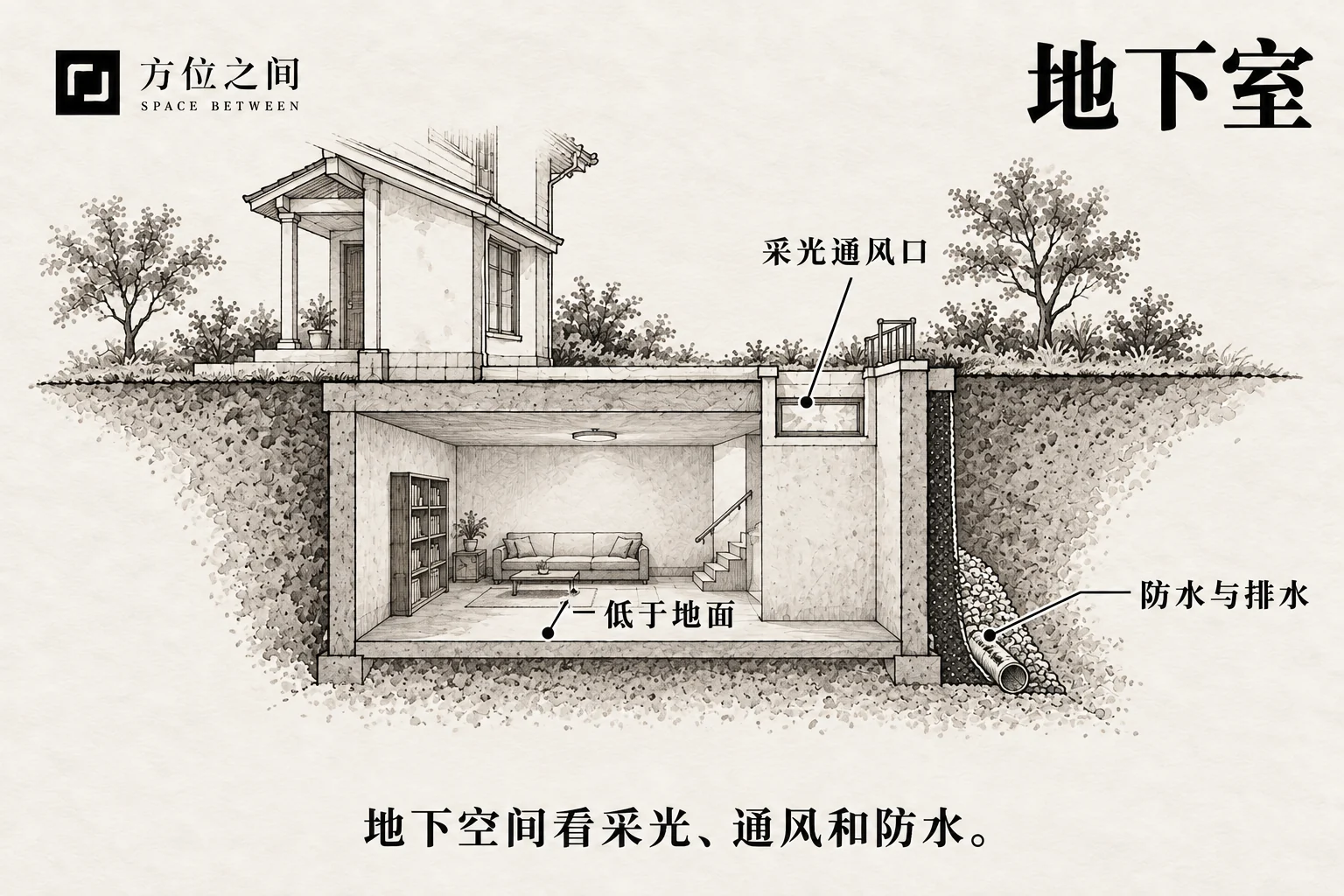
Defining features
Below-ground floors may use high windows, light wells or mechanical systems. Fully and partly underground rooms differ, as do storage and lawful living spaces. Bright decoration does not prove that waterproofing, enclosure and use conditions are adequate.
How to recognize it
Check window level, post-rain wall bases, drainage, exhaust routes and permitted use. Repeated rain-related stains warrant a leak record. When beginning to occupy a lower floor, consider radon testing under local guidance; the gas cannot be assessed by smell.
Common confusions
Dimness and dampness are distinct: light does not dehumidify, and circulating air is not necessarily outdoor air. A basement differs from a shaded ground-floor room. Basement presence alone cannot establish radon levels; testing supplies actual information.
Folklore and sources
Associating underground space with yin is an above/below and light/dark symbol. “Basement sha” is not treated as a verified classical name or evidence of spirits or decline. EPA radon and moisture material identifies factors to inspect, not judgments about occupants.
Traditional responses and practical improvements
Light and order can improve appearance, but ornaments cannot replace drainage, ventilation or radon mitigation. Check use and escape requirements, repair leaks and moisture sources, and provide fresh air. Specific measured problems need professional treatment and follow-up, not one renovation assumed permanent.
Sources and further reading
These sources help clarify the concepts and their origins. Explaining a traditional term does not establish that it can predict outcomes.