
Defining features
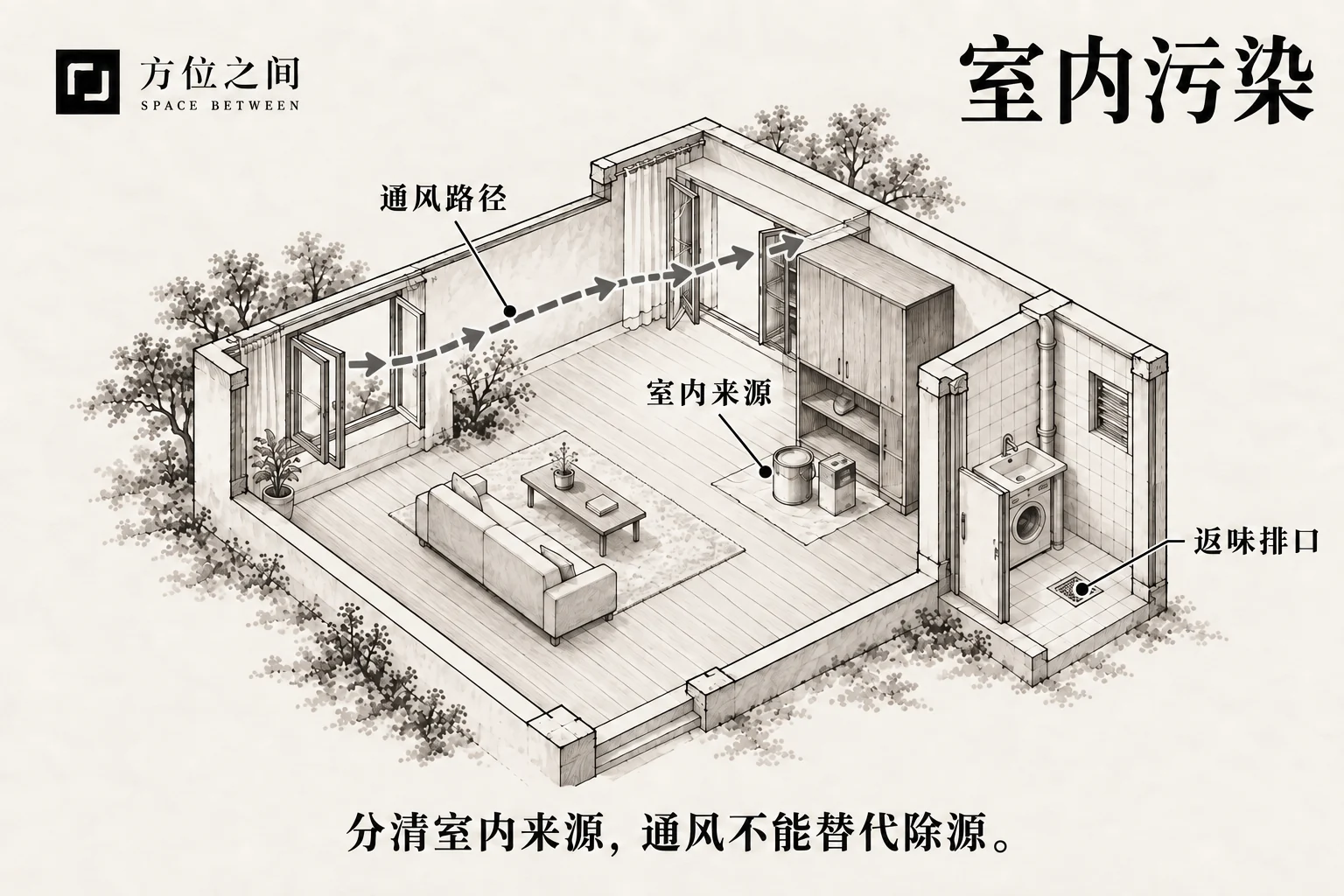
Sources include combustion, cooking, renovation materials, cleaners and outdoor infiltration. Not all pollutants are detectable by smell: odor is a clue, not a material rating. Particles and gases may coexist in one room.
How to recognize it
Record preceding activities, new objects and ventilation. If a new cabinet smells stronger after a closed night, check its material information first. Choose tests for a defined concern; one total reading from a low-cost device cannot characterize every pollutant.
Common confusions
Drain odors may need plumbing work; mold odors call for moisture investigation. Fragrance does not prove clean air, and “natural” or “green” does not mean suitable at any dose. Filtration, exhaust and open windows do different jobs; one device cannot replace source control.
Folklore and sources
Here “odor sha” is a modern environmental category, not a verified classical testing term. Cleanliness and ventilation may provide cultural context, but irritating smells do not establish invisible spirits. EPA material concerns pollutant sources and exposure conditions.
Traditional responses and practical improvements
Translate cleansing into removing clutter, cleaning and airflow, not burning incense as purification. Reduce identified sources, maintain kitchen and bathroom extraction and ventilate according to outdoor conditions. Persistent problems warrant qualified testing and maintenance for the specific substance.
Sources and further reading
These sources help clarify the concepts and their origins. Explaining a traditional term does not establish that it can predict outcomes.