
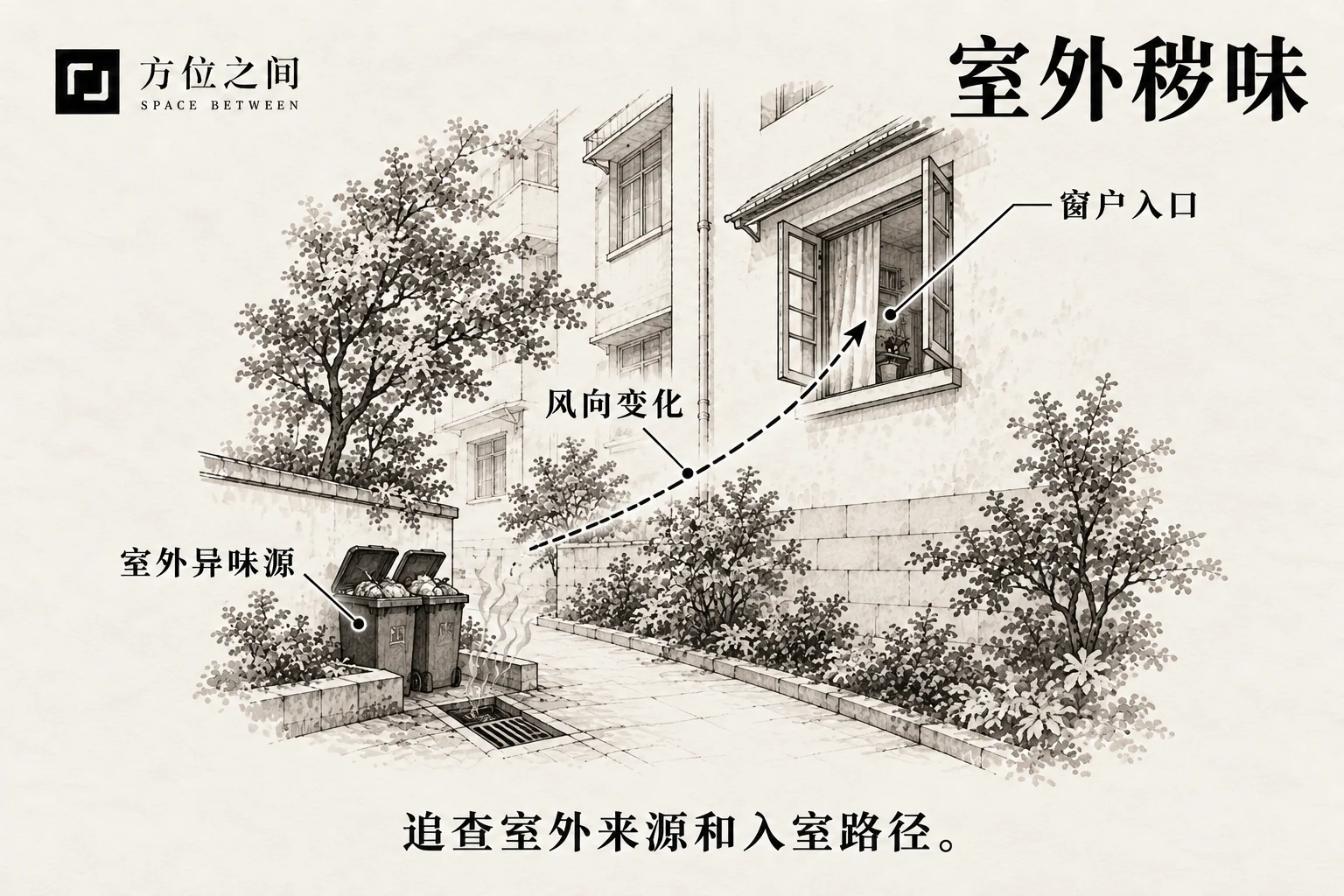
Defining features
Sources may include refuse storage, dirty drains, restaurant outlets or wastewater overflow. Odors change with collection, business hours and wind. Seeing a facility does not establish indoor exposure; identify a pathway and duration.
How to recognize it
Log dates, times, window position and wind, distinguishing brief collection from persistent leakage. Cooking odors at one window after closing time may justify checking an outlet. Do not lean over drains to identify chemicals by smell or test improvement by masking odors with fragrance.
Common confusions
Odor strength does not directly measure toxicity, and no smell does not prove clean air. Outdoor refuse, drain backflow and indoor dampness can smell similar; locate the source. Sewage overflow is a sanitation issue, not merely a door facing something unpleasant.
Folklore and sources
Associating dirt with ill fortune combines cleanliness values and symbolism. No universal classical “filth sha” rule covering modern pollutants was verified. EPA source-control and ventilation advice addresses actual conditions, not changes to family fortune.
Traditional responses and practical improvements
Cleaning rituals can be understood as tidying, but incense and strong fragrances may add pollutants. Prioritize enclosed refuse, drain repair, exhaust positioning and collection management. Where outside air is polluted, choose ventilation times carefully while retaining a necessary fresh-air route.
Sources and further reading
These sources help clarify the concepts and their origins. Explaining a traditional term does not establish that it can predict outcomes.