
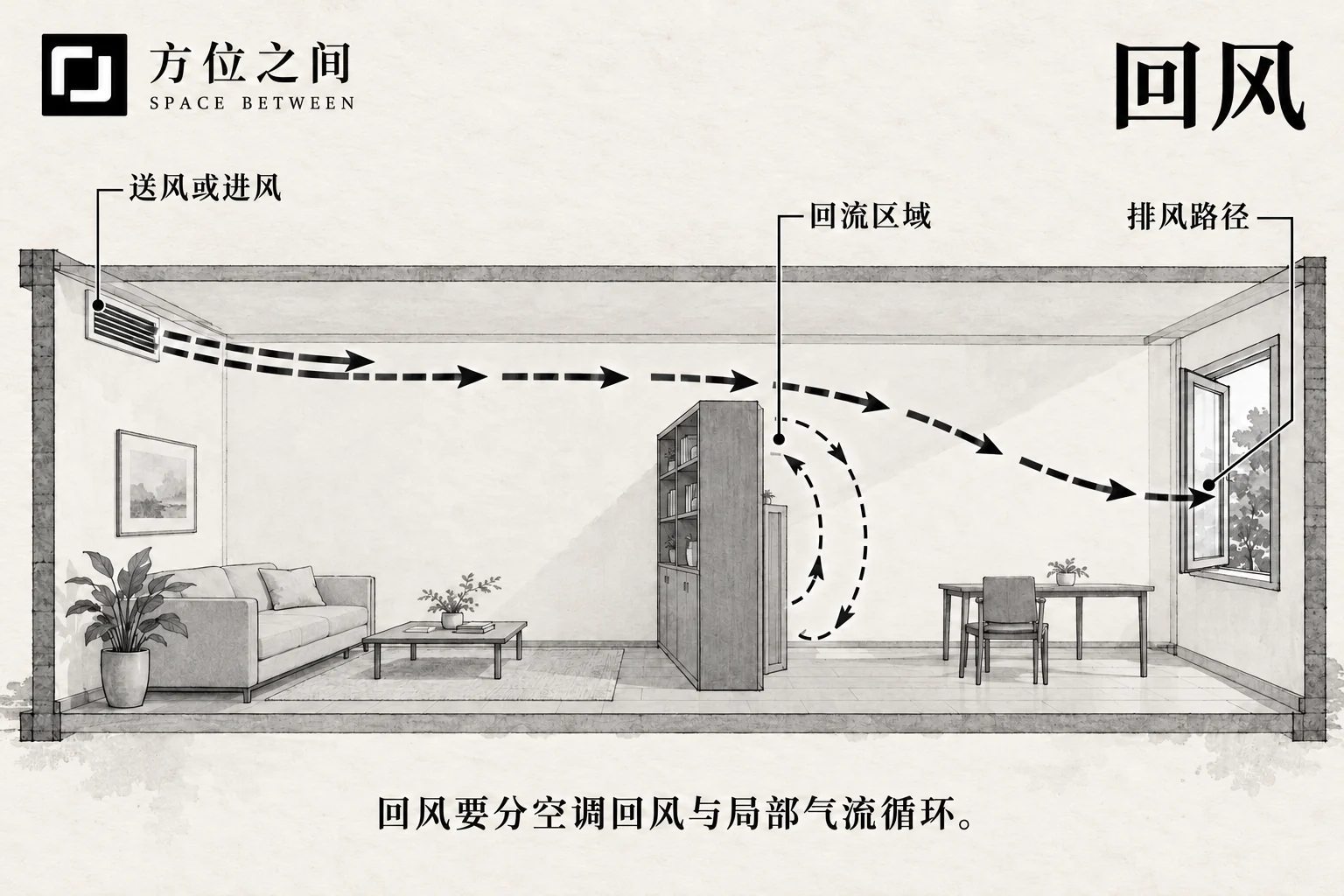
Defining features
Exhaust may re-enter a nearby window, corridor odors may follow an open door, or a room may feel stuffy despite moving air. Intake, exhaust, pressure and outdoor conditions matter; a fan stirring air does not necessarily provide enough fresh outdoor air.
How to recognize it
Log doors, windows, extractors and AC when odors occur, and compare safely one at a time. Stronger bathroom odor when kitchen extraction runs suggests checking make-up air and plumbing. Do not block pipes yourself or treat smell as the only airflow measurement.
Common confusions
Normal HVAC return air is not synonymous with polluted backflow; filtering and fresh-air supply differ. Outdoor building recirculation and indoor short-circuit ventilation operate at different scales. A hand sensation or moving paper strip cannot replace a system inspection.
Folklore and sources
Linking swirling air with blocked fortune is symbolism, not a verified uniform classical rule. EPA distinguishes source control and ventilation; Hong Kong Observatory explains building airflow disturbance. Neither supports a wind direction inevitably causing misfortune.
Traditional responses and practical improvements
A wish for flow can become mapping actual air paths, without using chimes or incense as proof. Check intake, exhaust, make-up air and maintenance, with professional measurement when needed. Outdoor pollution matters too; opening every door and window is not universally appropriate.
Sources and further reading
These sources help clarify the concepts and their origins. Explaining a traditional term does not establish that it can predict outcomes.