
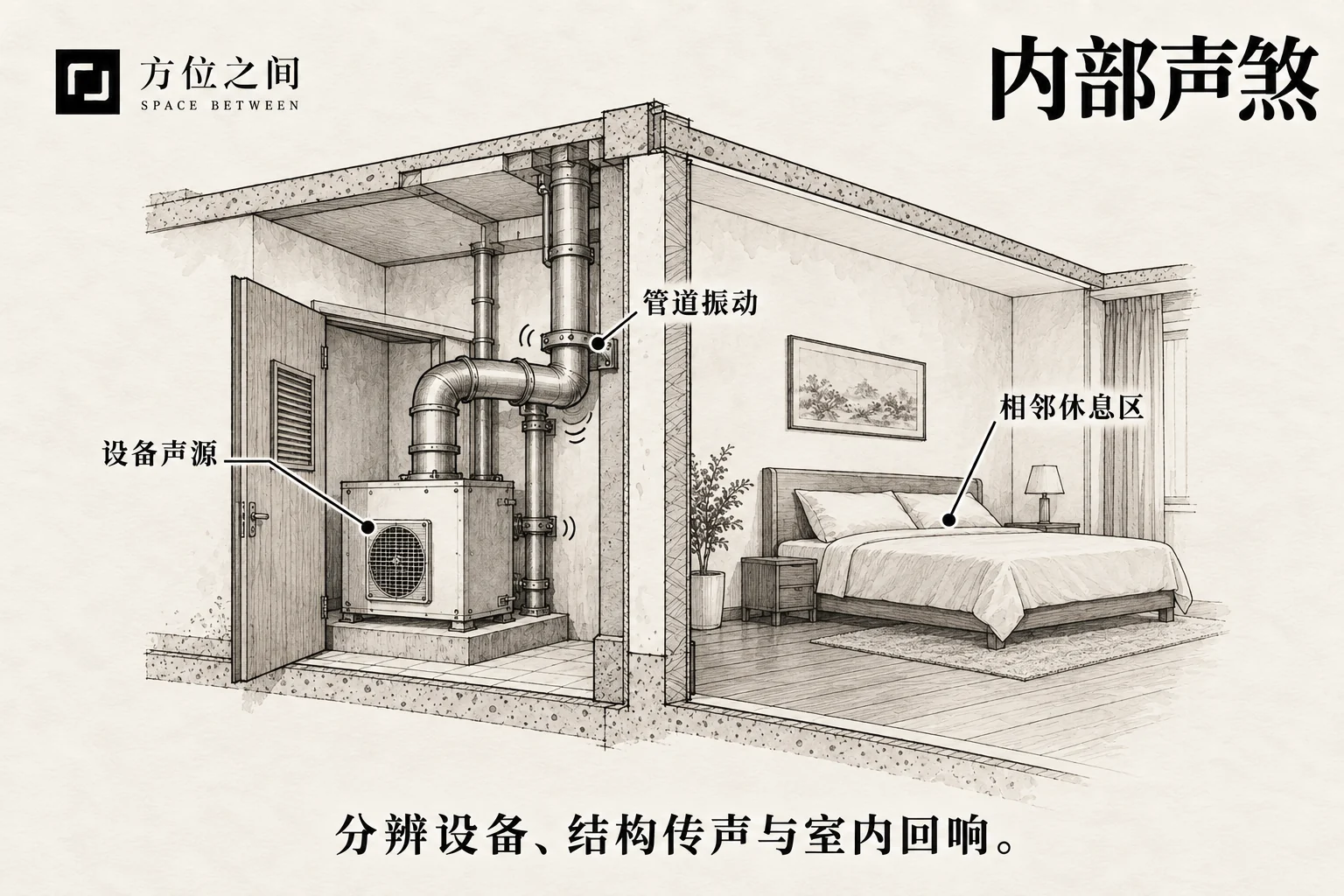
Defining features
Sources include compressors, fans, pumps, water flow, moving furniture and hard-surface reverberation. Cycling equipment can transmit vibration through contact. Record where a person hears it, not only where the appliance stands.
How to recognize it
Compare equipment on and off safely without opening electrical parts. A hum stopping with a fan is a location clue, not a fault diagnosis. Log night, water-use and high-load conditions; seek maintenance rather than repeatedly striking pipes.
Common confusions
An empty room’s echo differs from poor wall insulation. Upstairs footsteps may travel through structure. Soft furnishings can reduce some reverberation without blocking all low-frequency equipment noise; absorption and isolation are different.
Folklore and sources
“An unsettled home” is a metaphor, not evidence that equipment predicts disputes or fortune. This modern sound entry draws on WHO knowledge without inventing ancient decibel standards. A cultural wish for quiet does not replace maintenance.
Traditional responses and practical improvements
Simplifying and moving objects can become tidying and sensible operating schedules, not adding chimes to overpower noise. Check installation, vibration contacts and maintenance, and adjust rest-area layouts. Use soft finishes appropriately; electrical and plumbing alterations need professionals and follow-up.
Sources and further reading
These sources help clarify the concepts and their origins. Explaining a traditional term does not establish that it can predict outcomes.