
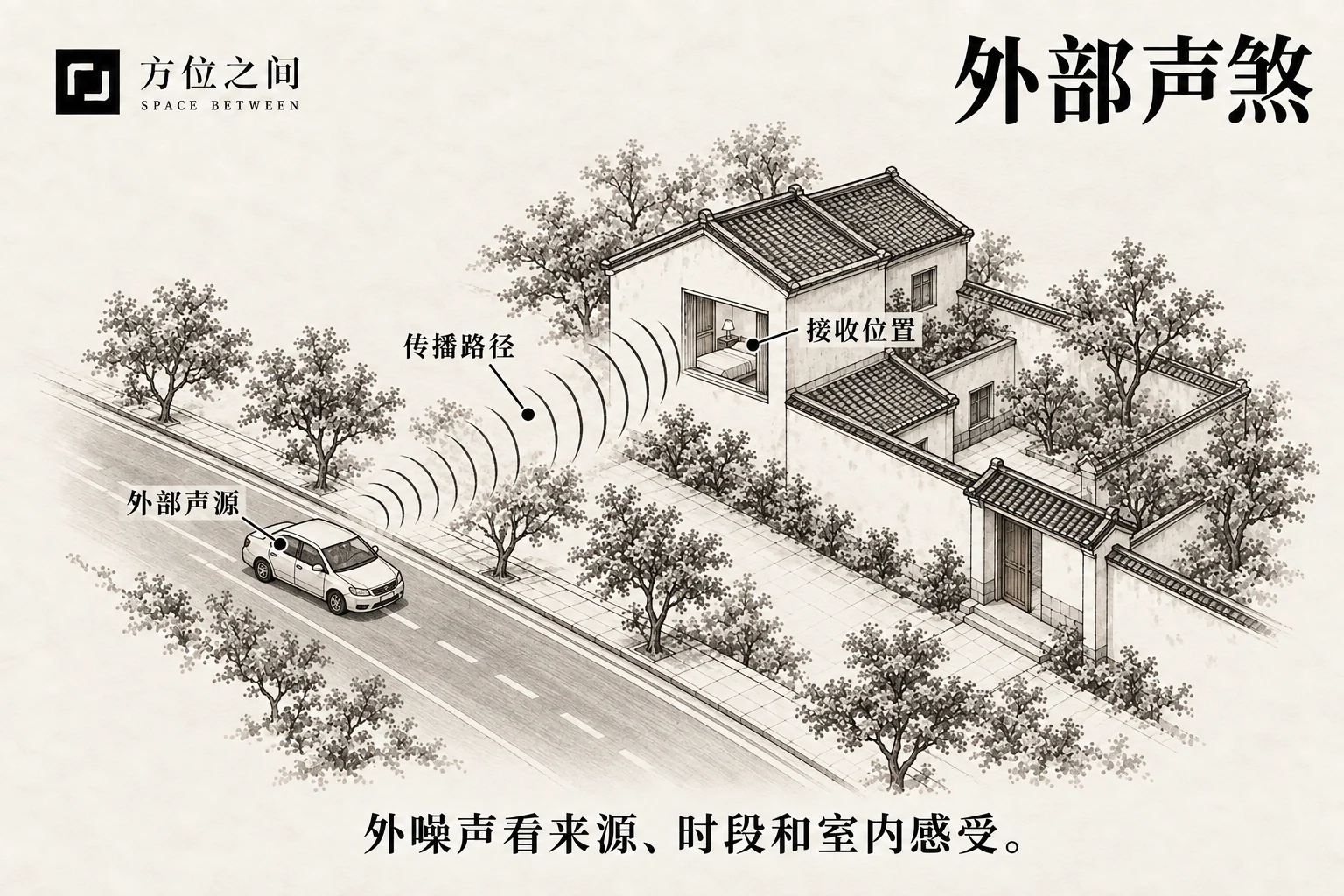
Defining features
Examples include road hum, passing trains, nighttime unloading, bells and intermittent piling. Continuous quiet noise differs from sudden loud events. Audibility does not prove a limit violation, but familiarity does not erase recurring disturbance.
How to recognize it
Log hours, duration, room and window state; obtain professional measurements under local methods when needed. A repeated unloading log can be checked with management. Phone decibel apps may show trends, but are not certified reports.
Common confusions
Airborne noise and structural vibration may coexist and need different solutions. Separate external sound from refrigerators, fans and pipes. Sound insulation, reverberation and personal perception are distinct; one decibel value cannot summarize them all.
Folklore and sources
This modern folk label does not imply a classical noise threshold. WHO discusses noise, health and rest; it does not mean every audible sound causes illness, nor that traffic or bells drain wealth.
Traditional responses and practical improvements
Seeking a quiet room can guide layout; wind chimes may add sound. Coordinate source hours and maintenance, then evaluate window gaps, acoustic construction and quieter rooms. Preserve ventilation in acoustic work rather than sealing every opening as the whole solution.
Sources and further reading
These sources help clarify the concepts and their origins. Explaining a traditional term does not establish that it can predict outcomes.