
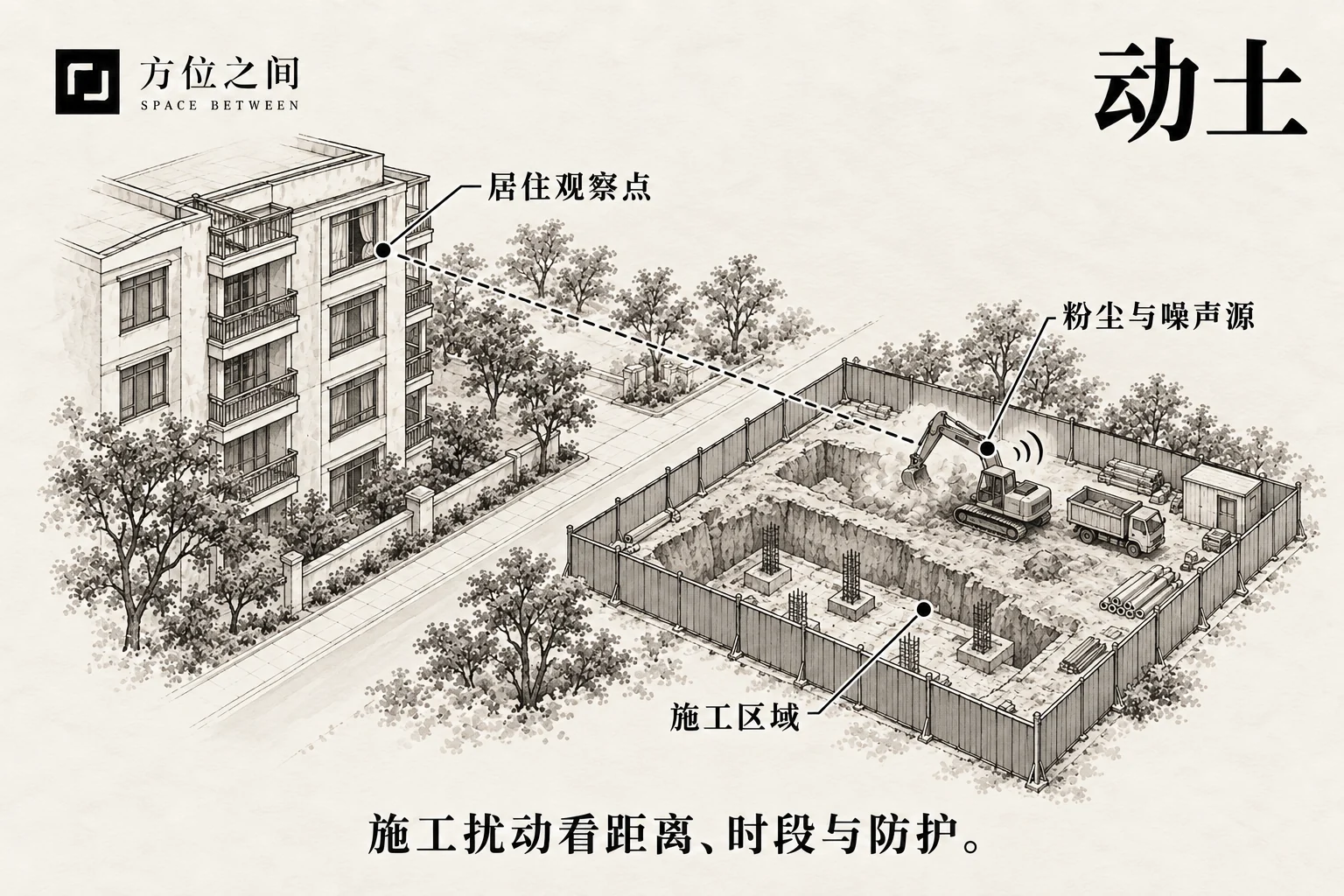
Defining features
Examples include excavators, demolition, upstairs drilling and road trenches. Effects vary with the work stage, hours and distance. Visible soil alone is not a problem, and a brief repair differs from a project lasting months.
How to recognize it
Record the location, work hours, dust and sound with windows open and closed, and keep public notices. If a window rattles only during piling, log the time for management to investigate. New damage needs a separate professional assessment; sensation alone cannot establish its cause.
Common confusions
Construction-date taboos are a separate cultural practice, not a test of legality or nuisance. Separate work noise from existing traffic and appliances. Cracks or standing water that remain after work ends still require investigation; the issue is not closed because a “sha period” has passed.
Folklore and sources
Traditional date-selection texts discuss repairs and directional taboos, but a building site does not prove that activity in a direction causes misfortune. This is a modern construction entry. WHO and building guidance concern measurable disturbance and defects, not disaster caused by dates or directions.
Traditional responses and practical improvements
Avoidance and timing may remain personal cultural choices, but cannot replace site protection. Coordinate working hours, dust controls and affected areas, and move the resting room if appropriate. Ventilate with outdoor air quality in mind; do not seal ventilation permanently or enter sites to place charms.
Sources and further reading
These sources help clarify the concepts and their origins. Explaining a traditional term does not establish that it can predict outcomes.