
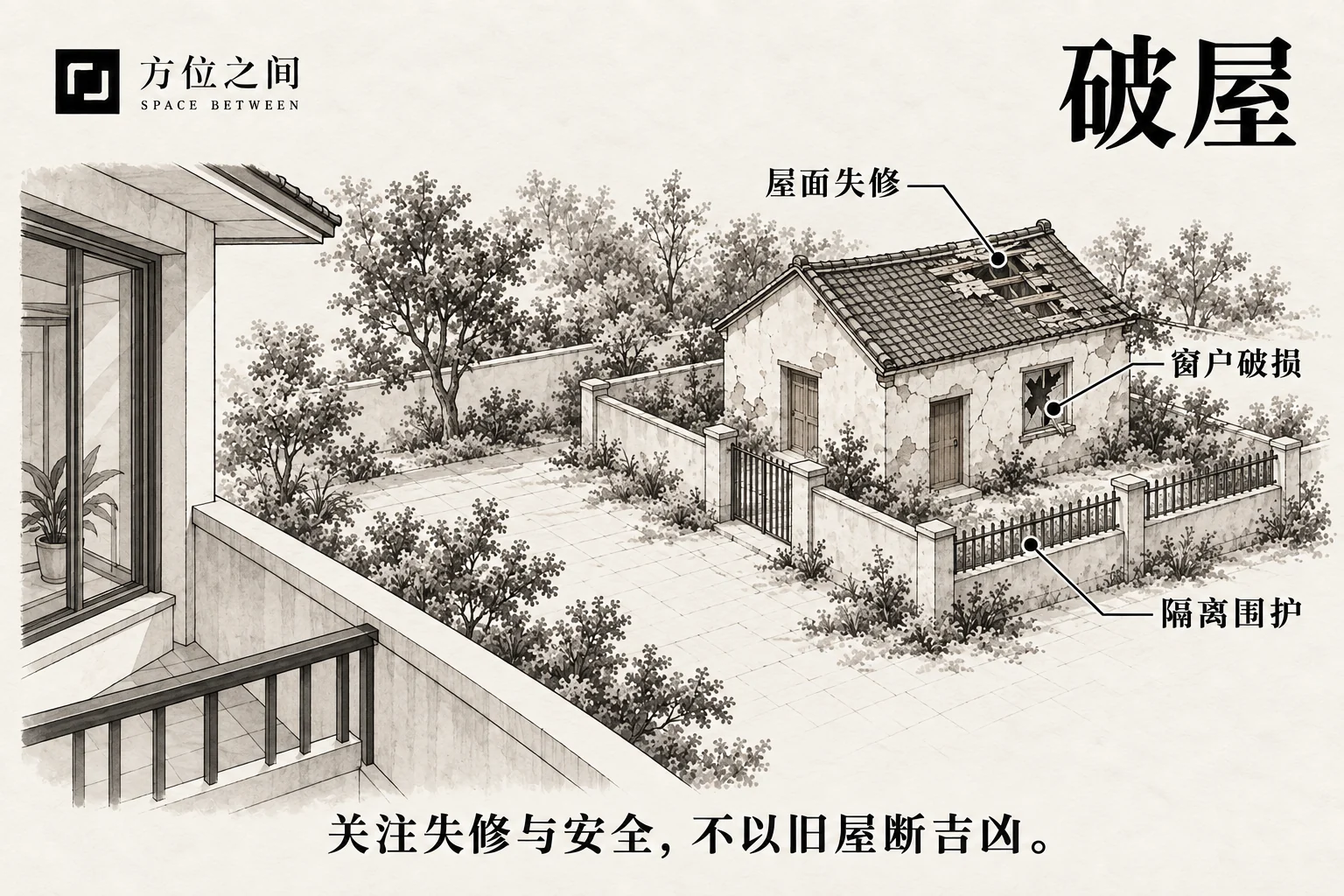
Defining features
Typical scenes include collapsed roofing, exposed members, broken windows and debris visible from home. Nearby concerns may include falling material, standing water or unmanaged access. Record visual disorder separately from effects that physically reach the home; they require different responses.
How to recognize it
Photograph the overview and damage from a safe public location, noting dates, distance and changes; observe drainage after rain. New fragments beneath the same eave on two visits justify a management investigation. Do not enter an unsafe building for a closer inspection.
Common confusions
Historic finishes and properly maintained heritage buildings are not dilapidated merely because they are old. Some modern catalogues call a neglected vacant house in front of or beside a home “Ting Jiu sha,” and a leaking vacant house in front “Po Hao sha”; some add a condition of symbolic sha alignment. These catalogue names differ from the literal temporary resting of a coffin and must not stigmatize funeral customs or poorer residents.
Folklore and sources
Associating a damaged vacant house with stagnation or loss is an analogy used in modern catalogues. No dedicated primary classical source has been verified for these spatial definitions of Po Wu, Ting Jiu or Po Hao sha; they are presented as modern classifications, not classical verdicts. Buildings Department guidance supports checking cracks, spalling and repair needs, not a claim that viewing a vacant house causes financial loss.
Traditional responses and practical improvements
Screening, tidying and repair symbolize renewal in folk practice. Adjust a view as a preference, without treating charms as structural repairs. First ask owners or managers to address falling debris, drainage and enclosure; any plants or screens must preserve light, ventilation and escape routes.
Sources and further reading
These sources help clarify the concepts and their origins. Explaining a traditional term does not establish that it can predict outcomes.