
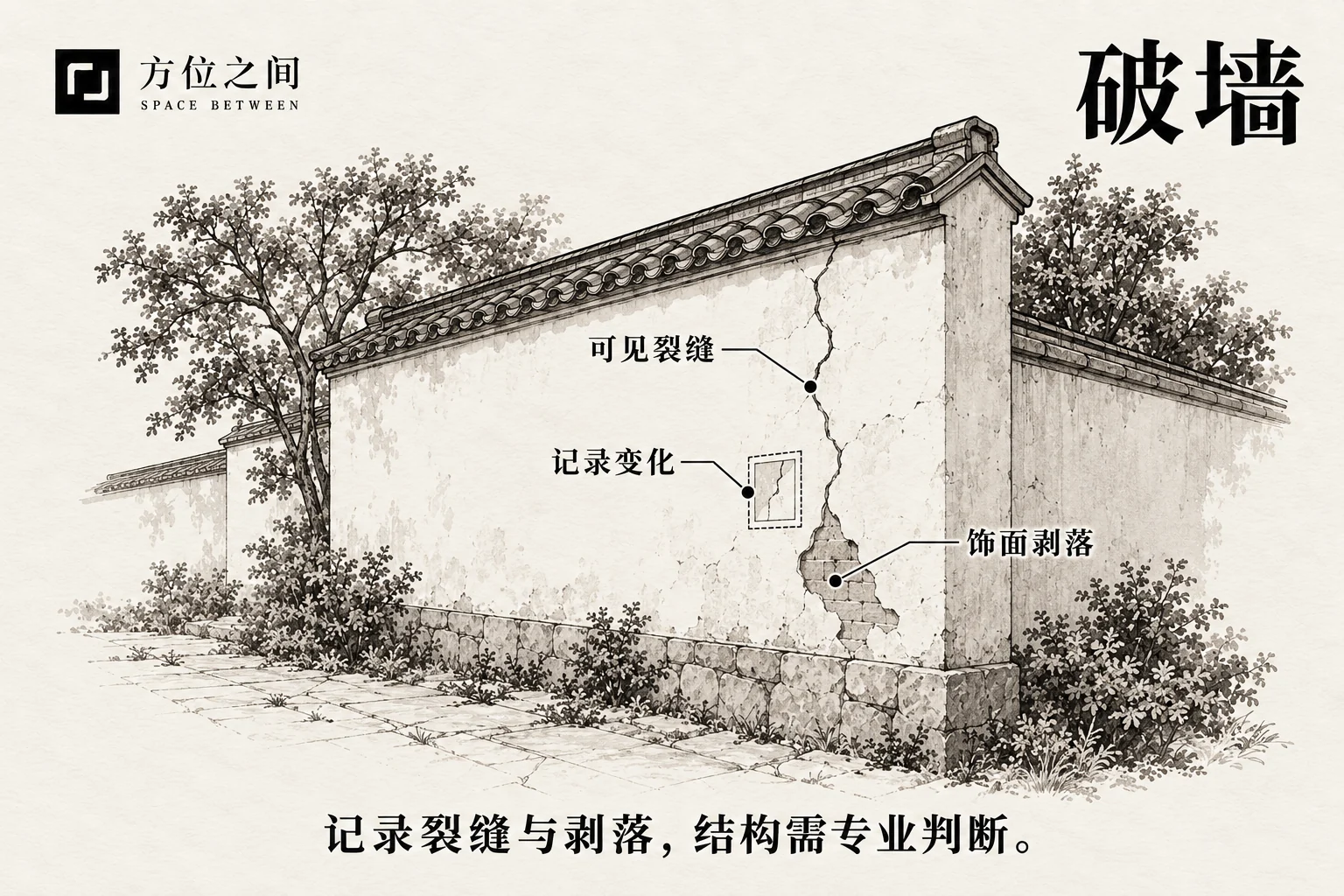
Defining features
Features include missing finishes or bricks, bulging, cracking and leaning. Distinguish loose material near people from discoloration. Loose high-level façade material or finishes above a bed deserve higher priority than old stains on a distant wall; they are not merely one visual category.
How to recognize it
Record a crack’s location, length, direction and change, alongside leaks, rust or newly sticking doors. A diagonal crack growing from a window corner warrants showing dated photographs to a building professional. Do not tap loose high surfaces or simply paint over evidence.
Common confusions
Decorative joints, material junctions and surface hairlines differ from cracks through load-bearing elements; width alone is not a diagnosis. A broken boundary wall differs from a dilapidated building, and retaining walls also involve soil and drainage, beyond ordinary interior-wall repairs.
Folklore and sources
A broken boundary may symbolize lost protection or disorder, but cracks do not predict family disputes. No dedicated classical passage for “damaged-wall sha” was verified. The modern label is paired with official defect guidance to identify physical issues, not validate folklore.
Traditional responses and practical improvements
Repairing a boundary can symbolize restored order, but pictures, talismans or mirrors cannot secure loose masonry. Avoid falling-material zones, notify management, establish the cause, and repair leaks and damage. Keep repair records and recheck; cosmetic covering follows diagnosis.
Sources and further reading
These sources help clarify the concepts and their origins. Explaining a traditional term does not establish that it can predict outcomes.