
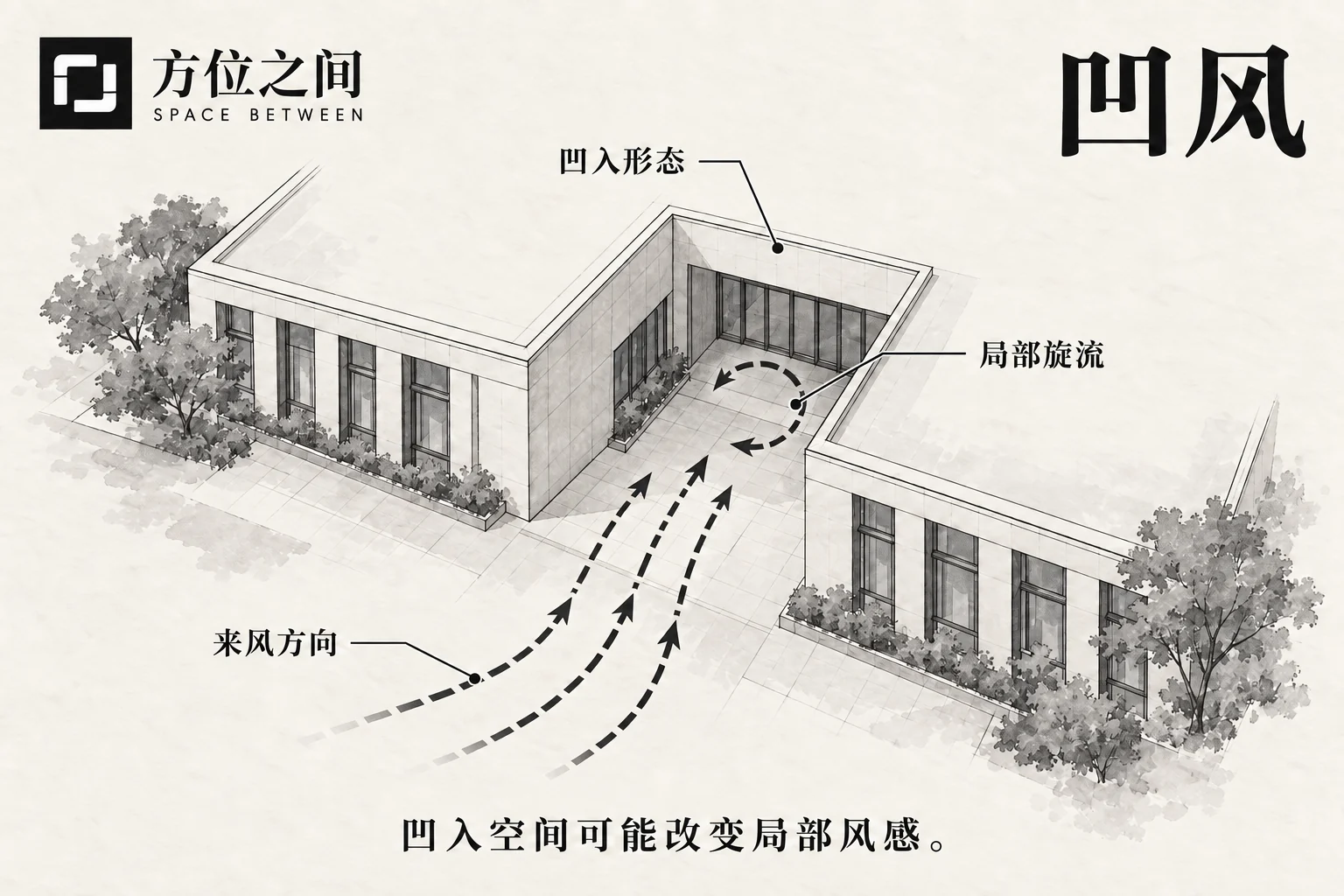
Defining features
Examples include recessed entrances between wings, deep balconies and light courts. Swirls or gusts may occur at one time and calm at another. A concave outline does not establish harmful qi or an inability to retain wealth.
How to recognize it
Compare doors, plants and experience in calm and windy weather, noting smoke or rain ingress. If gusts occur only with one wind direction, give weather and location records to designers or managers. Do not test the effect near railings in strong wind.
Common confusions
A wind pocket differs from the visual gap between two towers and from HVAC return air. Recesses may shelter or produce complex flow depending on scale and boundaries. A model illustration alone cannot determine one dwelling’s ventilation or structural safety.
Folklore and sources
No verifiable uniform classical source for “recess-wind sha” was found. Hong Kong Observatory explains how buildings block, divert and disturb airflow. This suggests what to inspect; aviation thresholds are not transferred to homes, and wind sensations do not predict destiny.
Traditional responses and practical improvements
Wind shielding can become designed spatial adjustment, not unauthorized walls across shared openings. Identify the source and use needs, then assess suitable wind and drainage measures. Façades, window loads and communal spaces require competent professional and management involvement.
Sources and further reading
These sources help clarify the concepts and their origins. Explaining a traditional term does not establish that it can predict outcomes.