
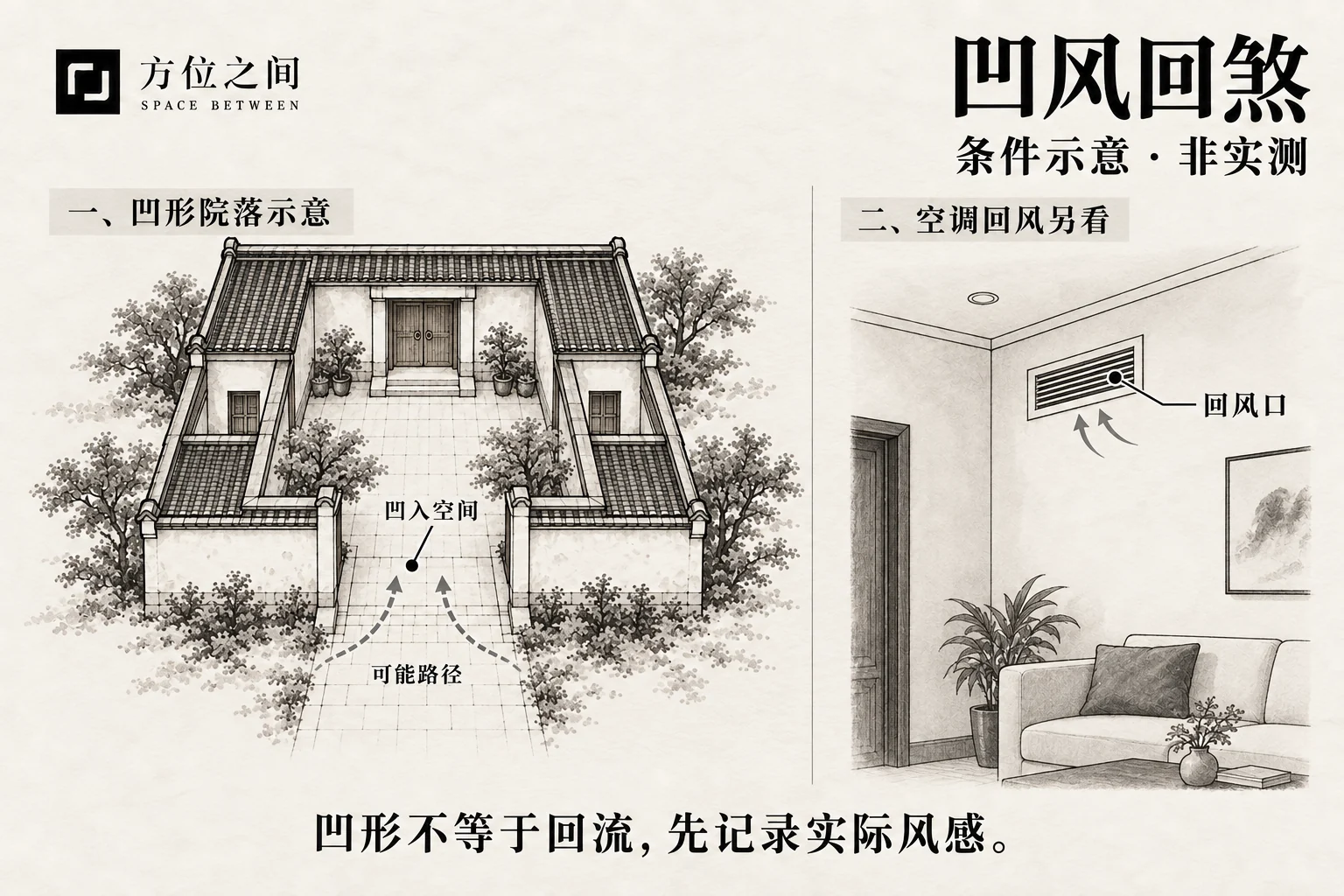
Definition and subject
The supplied name combines a recess with returning air, which can encourage treating an inward building form and air recirculation as one thing. Here it is a compound term requiring clarification: the recess may be an entrance between wings, a facade groove, or a low space; returning may mean a change in airflow, recirculation, or an odor returning. Without the original illustration and observations, no single vortex path can be assigned.
How to identify it
Mark the recessed boundaries, openings, nearby building volumes, and normal standing position. Observe how air feels in different weather and window or door states. Record whether it occurs at one opening, whether odors accompany it, and how long it lasts. Curtain movement gives a local clue, not a complete wind field. Curved arrows in an illustration must be labeled as possibilities rather than measurements.
Versions, folk interpretations, and source limits
Folk language often describes fast wind as dispersing and returning wind as disturbing; other accounts value enclosure as sheltering wind. A recess is therefore not universally unfavorable even in traditional descriptions. This page preserves the compound name as a searchable entry without treating financial reversals as verified results or labeling every courtyard and setback Aofenghui sha.
What to check in the actual setting
Modern building-wind assessment considers incoming wind, neighboring massing, and opening conditions. Hong Kong's air-ventilation assessment material illustrates a site-specific approach; the word recess cannot replace that analysis. An indoor air-conditioning return grille may be a normal system component, not evidence of an outdoor eddy. Record mechanical return air, natural ventilation, and odor backflow separately.
Practical improvements and the limits of remedies
First adjust usual seating, use existing doors and windows appropriately, and clear objects obstructing paths, then observe any change. For persistent wind noise, slamming doors, or recurring odors, describe the times and conditions to the manager and arrange relevant ventilation or opening checks where needed. Do not seal exhaust outlets to block supposed sha or install unassessed windbreak panels at height.
Similar names and common confusions
Recess wind concerns air felt in an indented space. Returning air may mean natural recirculation or a mechanical ventilation term, so they only partly overlap. Narrow-gap sha is a visual relationship between buildings; actual wind requires a separate check. Through-drafts also involve indoor openings. If a source does not identify the recess and where the air comes from, clarify the objects before proposing a universal remedy.
Sources and further reading
These sources help clarify the concepts and their origins. Explaining a traditional term does not establish that it can predict outcomes.