
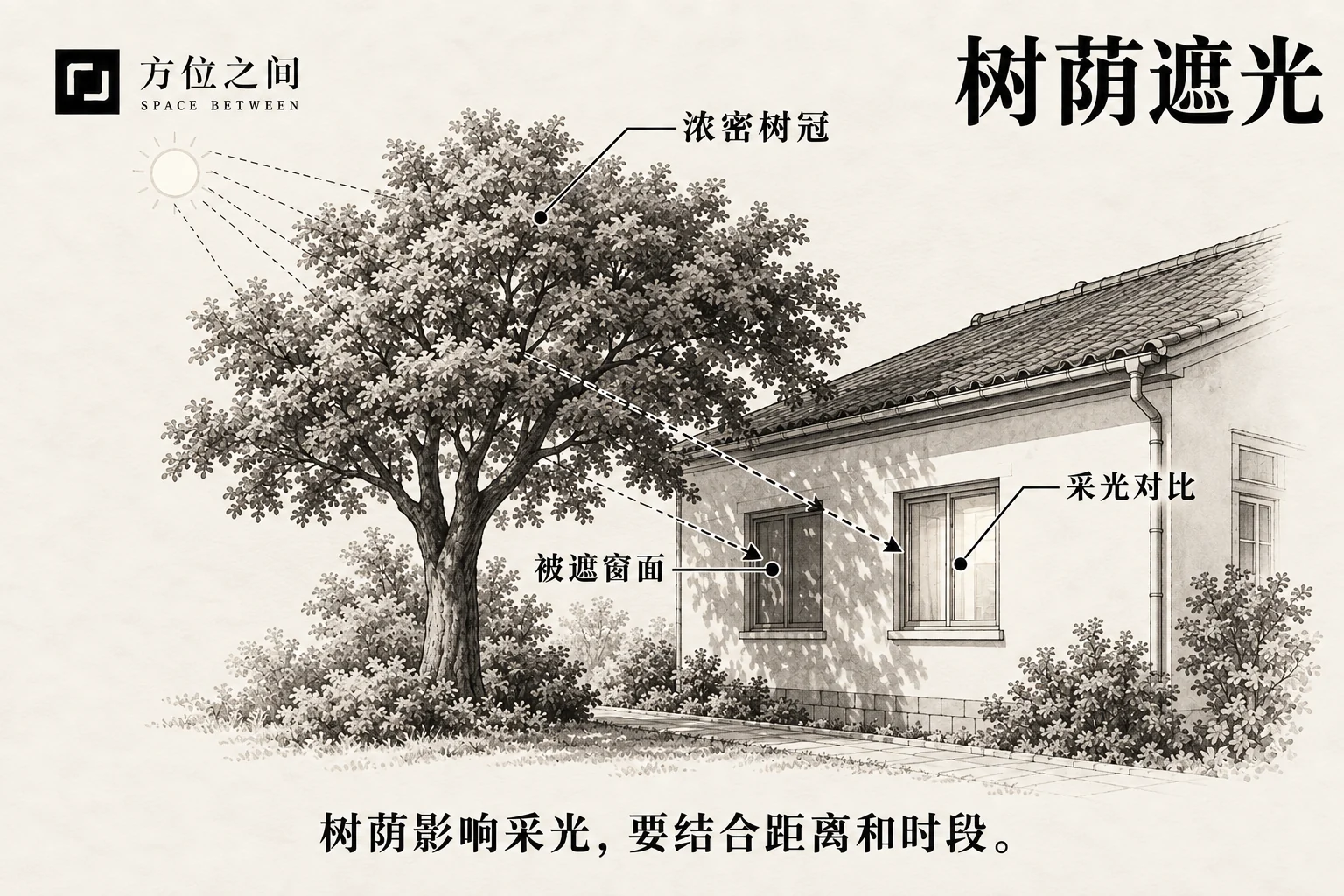
Defining features
Dense foliage may sit close to low-floor glass or block much of the visible sky. Seasons, species and pruning change the shade. Summer-afternoon protection differs greatly from a winter room lacking daylight all day.
How to recognize it
Record morning, noon and afternoon light from the same window and compare leafy and bare seasons, not just a rainy-day photo. If reading is easy by the window but not deeper inside, also assess room depth, glazing and furniture rather than blaming one tree.
Common confusions
Shade differs from a trunk aligned with a doorway or branches striking a building. Trees can reduce summer sun, but denser planting is not always better. Removing a tree may introduce glare, heat and lost privacy.
Folklore and sources
“Heavy tree yin” uses light and dark symbolically; no classical basis for inevitable family decline was verified. DOE landscaping advice concerns solar heat, climate and seasons, not a tree species inherently carrying good or bad fortune.
Traditional responses and practical improvements
Pruning and borrowed views can inspire maintenance, but authorized specialists should handle tree work. Keep useful shade while managing foliage and window clutter, then improve task light. Do not fell trees without permission or replace comfortable daily light with strong spotlights.
Sources and further reading
These sources help clarify the concepts and their origins. Explaining a traditional term does not establish that it can predict outcomes.