
Questions and answers
Is yongshen simply a missing phase in Bazi?
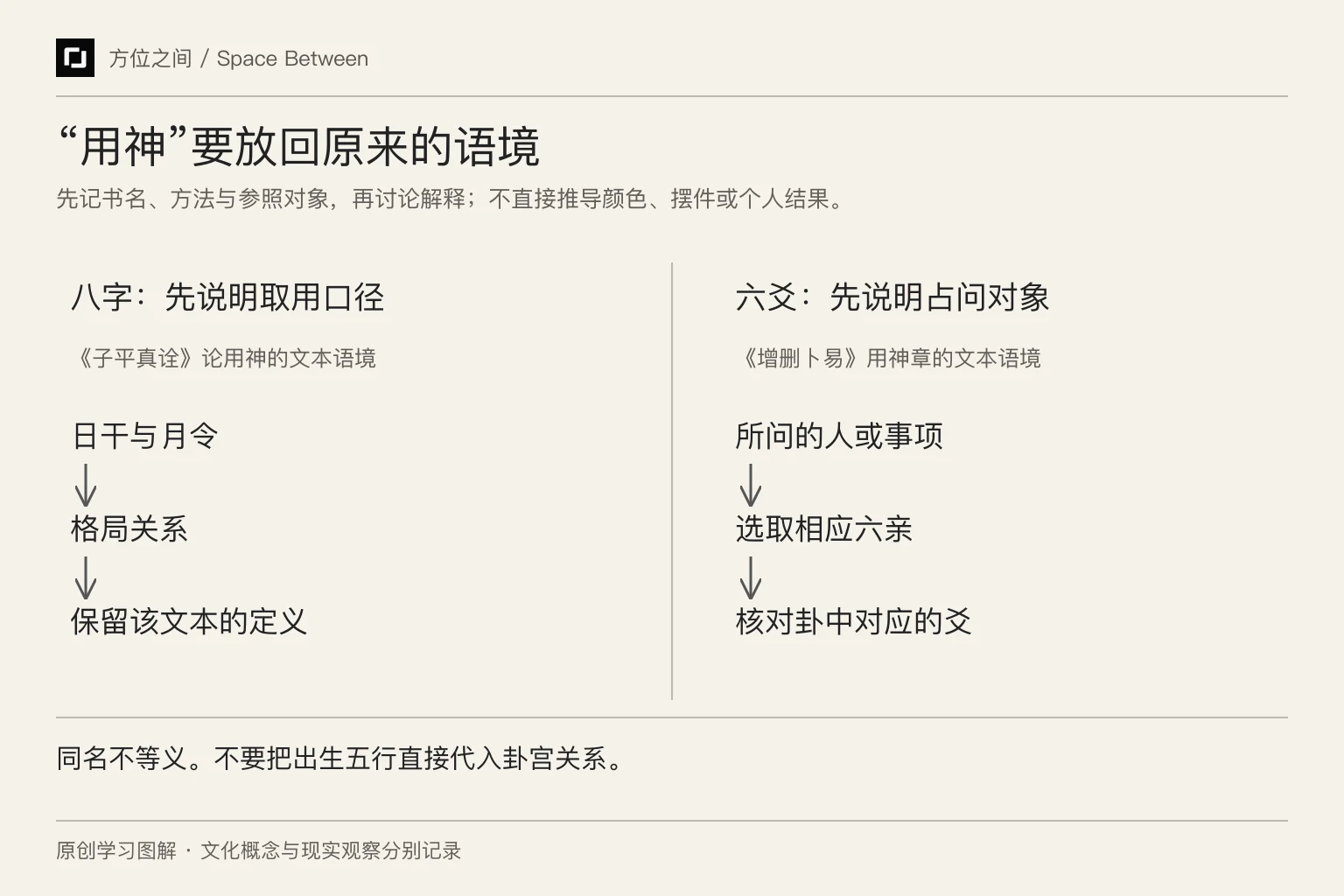
The Yongshen chapter of Ziping Zhenquan discusses structures through the day stem and month order. In that context, yongshen cannot simply be translated as the most deficient phase. Modern introductions also discuss strengthening/suppressing or seasonal adjustment; their focus can differ. Specify the convention rather than merging definitions into one rule.
Read the full explanationWhy must a Liuyao question identify its subject first?
Zengshan Buyi discusses focal relations such as parents, descendants, official/ghost, wealth and siblings according to the question. Asking about a parent and asking about a child select different representatives within that method. Establish the subject and matter before identifying a relevant line; a supposedly lucky line without a question is insufficient.
Read the full explanationCan Bazi ten gods and Liuyao six relations be substituted directly?
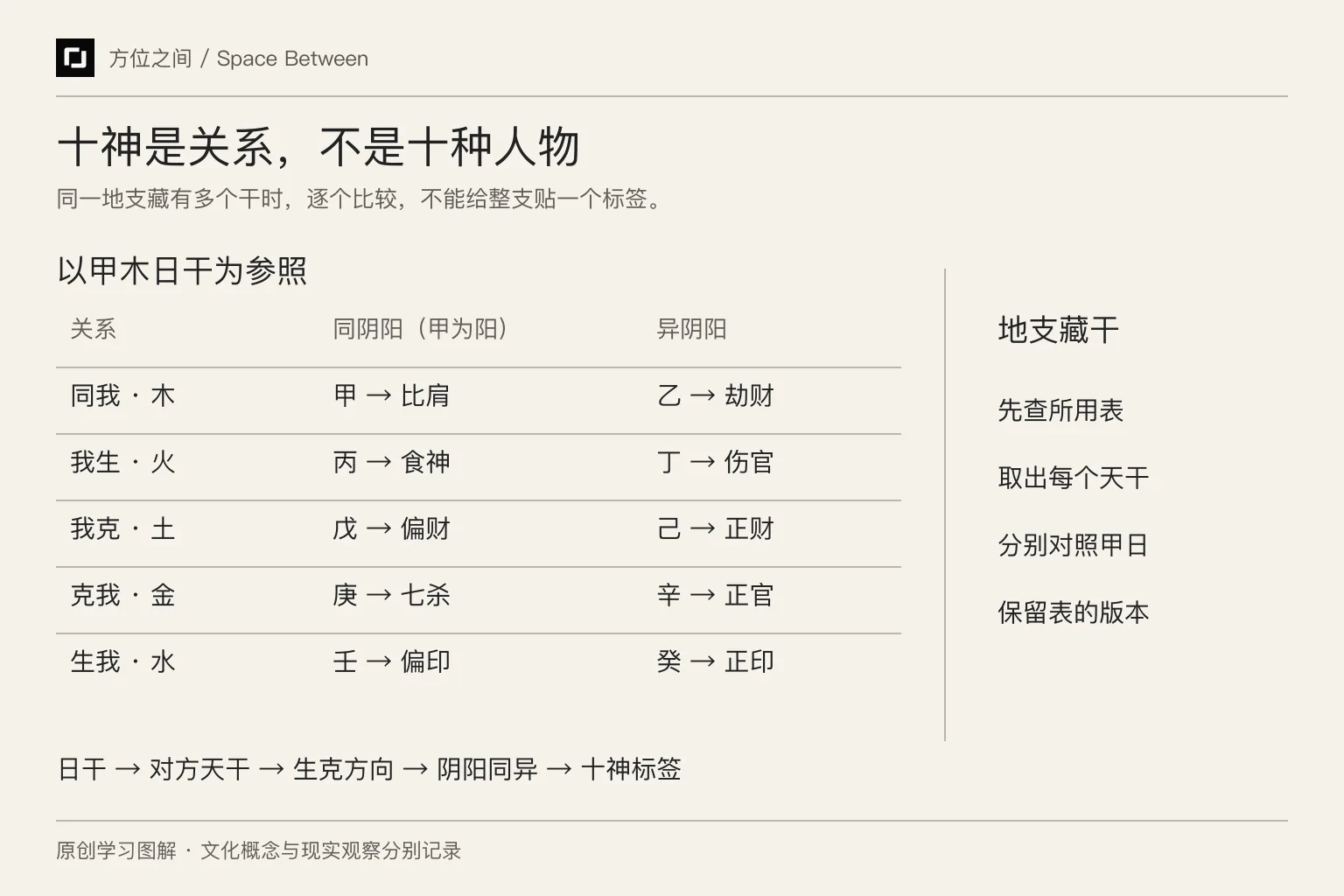
Bazi ten-god relations use the day master as reference. Najia Liuyao relation assignments use chart conventions including the palace phase. Do not substitute a person’s day stem for the hexagram palace or equate the labels directly. Relations of producing, controlling and sharing a phase only make sense after the reference is fixed.
Read the full explanationDo Yongshen, Xishen and Jishen have universal meanings?
There is no method-free definition. In some balancing approaches Yongshen is the selected regulating focus, Xishen supportive conditions and Jishen opposing ones; pattern texts use their own seasonal relations. In Zengshan Buyi, Jishen usually names a line controlling the selected Yongshen. Define the reference first. “Missing wood means add wood” and “Jishen guarantees disaster” omit necessary conditions.
Read the full explanationBazi: declare the interpretive convention
The Yongshen chapter of Ziping Zhenquan discusses structures through the day stem and month order. In that context, yongshen cannot simply be translated as the most deficient phase. Modern introductions also discuss strengthening/suppressing or seasonal adjustment; their focus can differ. Specify the convention rather than merging definitions into one rule.
Liuyao: start with the subject of the question
Zengshan Buyi discusses focal relations such as parents, descendants, official/ghost, wealth and siblings according to the question. Asking about a parent and asking about a child select different representatives within that method. Establish the subject and matter before identifying a relevant line; a supposedly lucky line without a question is insufficient.
Similar relation names, different reference systems
 Enlarge diagram
Bazi ten-god relations use the day master as reference. Najia Liuyao relation assignments use chart conventions including the palace phase. Do not substitute a person’s day stem for the hexagram palace or equate the labels directly. Relations of producing, controlling and sharing a phase only make sense after the reference is fixed.
A comparison you can check
Make two notes. For Ziping Zhenquan, record day stem, month order and the structure discussed. For Zengshan Buyi, record the question subject, selected relation and basis for the line. The first supplies no hexagram palace, and the second no complete natal pillars, so their conclusions cannot be copied across.
Do not jump from yongshen to objects or outcomes
Even when a method selects a phase or line as its focus, this does not automatically prescribe clothing colors, purchased objects or medical action. Ask for the intervening reasoning and scope. This article explains terminology and argument structure; it neither casts charts nor promises changes to life outcomes.
Do Yongshen, Xishen and Jishen have universal meanings?
There is no method-free definition. In some balancing approaches Yongshen is the selected regulating focus, Xishen supportive conditions and Jishen opposing ones; pattern texts use their own seasonal relations. In Zengshan Buyi, Jishen usually names a line controlling the selected Yongshen. Define the reference first. “Missing wood means add wood” and “Jishen guarantees disaster” omit necessary conditions.
Sources and further reading
These sources help clarify the concepts and their origins. Explaining a traditional term does not establish that it can predict outcomes.