
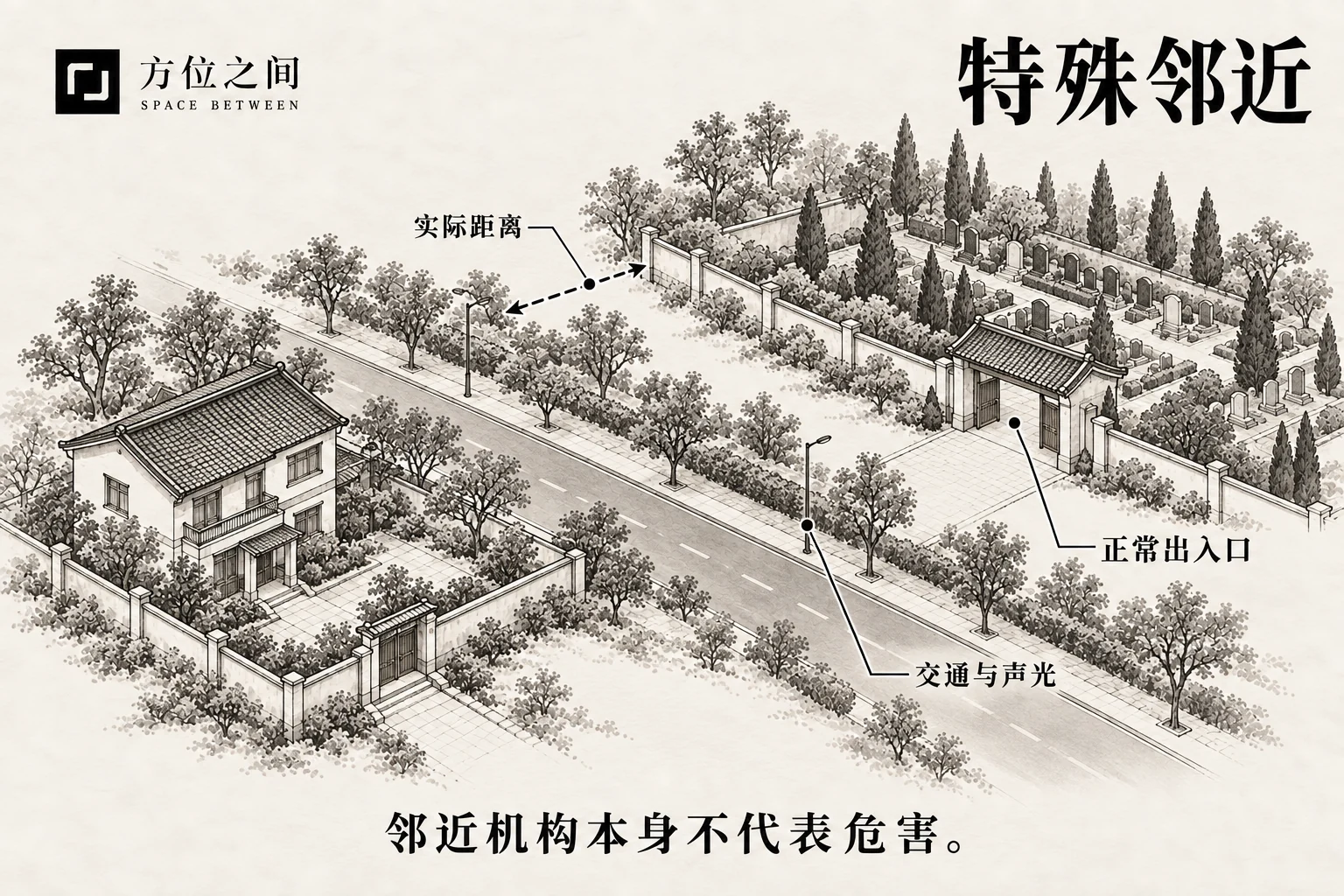
Defining features
The places serve different purposes: remembrance, care and religious practice. Record actual lighting, traffic, bells, smoke or crowds rather than treating all as one environment or judging patients, visitors and worshippers negatively.
Yin-ominous, yin-influence and isolation-related sha are folk terms examined together here, not evidence of one common physical source. For an “unoccupied dark house,” check vacancy-related maintenance and daylight separately. Temples, cemeteries, hospitals and former battlefields have different functions or histories; one yin label does not make them the same kind of place.
How to recognize it
Observe on different dates and at different times, noting distance, views and sound sources. Festival-only amplification needs its actual duration recorded; seeing a wall daily does not mean continuous disturbance. Prior unease is not a physical measurement.
Common confusions
Darkness, dampness, vacancy and associations with death are separate matters. A bright, ventilated home near a cemetery is not moldy by location. Hospital proximity does not establish a special airborne hazard; every concern needs a pathway and evidence.
If “yin influence” means damp or musty odours, consult damp and mould and investigate water sources. For recirculation between towers or returning odours, consult recirculating air and recessed wind spaces. A low dwelling surrounded by tall buildings is a separate built-form entry, isolated-yin sha. Place associations, low light, moisture and airflow can coexist but need separate checks.
Folklore and sources
Terms such as “isolation” carry negative folk judgments. No uniform classical rule for modern medical or religious facilities was verified. WHO housing material concerns actual light, noise and air, not claims that these places harm relationships or fortune.
Volume Five of Duo Neng Bi Shi includes old injunctions about living at former temples, shrines, military camps and battlefields, showing that place memory entered dwelling customs. These are historical taboos, not evidence that modern hospitals cause disease, religious facilities are harmful or homes near historic sites are inevitably unlucky.
Traditional responses and practical improvements
Tidying, gentle lighting and adjusted views may support a personal sense of calm, without excluding neighbors or disrupting rites. Address actual lighting, exhaust, traffic and activity hours. If no effect is established, liking the setting remains a preference rather than a harm finding.
Sources and further reading
These sources help clarify the concepts and their origins. Explaining a traditional term does not establish that it can predict outcomes.