
Name and meaning
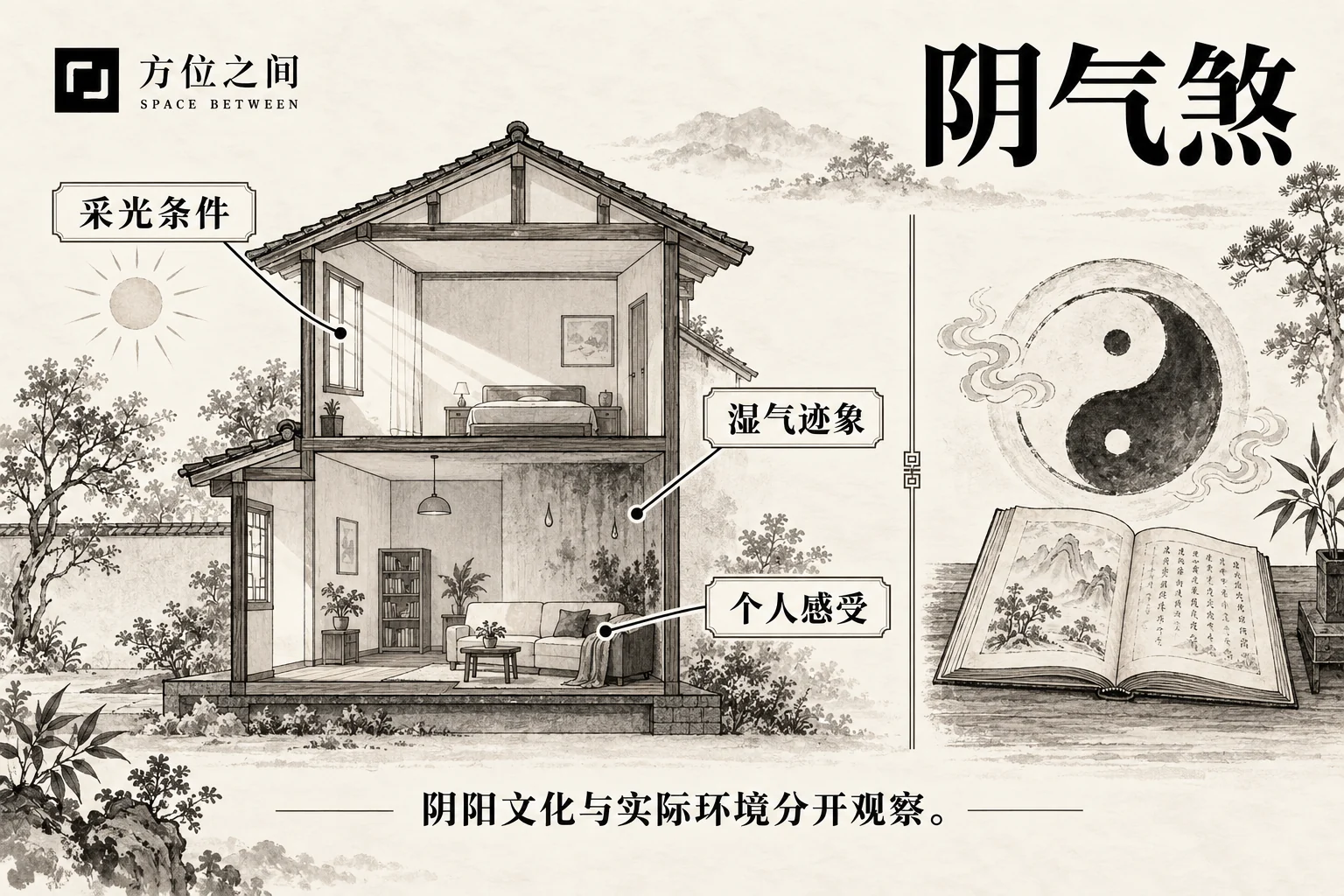
Yin-Qi Sha is a folklore description of supposedly excessive yin, but yin is one relational aspect of yin–yang, not inherently harmful. Retellings often mix darkness, moisture, quietness and fear. This entry separates them rather than judging a building, place or occupant through one word.
Sources and spelling variants
Sources use yin qi for shade, night, stillness or a symbolic balance, without a uniform subject. Traditional yin–yang attributes do not equal humidity or light levels. Specify whether a claim is cultural classification or site description; hospitals, funeral facilities or temples are not themselves evidence of polluted air or harm.
Recognizing the context
Record daylight, lighting needs, moisture locations, ventilation use and feelings separately. A room may vary by season and time. Discomfort on one visit does not establish its cause; possible leakage, mold or air problems should be investigated through specific signs.
Folk interpretations and versions
Traditional imbalance language can be studied as culture without predicting illness, loneliness or family conflict. A cool, shaded room may be comfortable for a particular climate and use. Neither every shaded room nor a person’s temperament should be assigned an inherently unfavorable identity.
Practical observation and limits
Treat lighting, moisture, air quality and emotional response as distinct questions. Investigate recurring leakage, improve insufficient task lighting and calmly discuss fear created by stories. A lamp does not solve everything, and an exorcism account cannot replace needed building or professional assessment.
Reading and responding
Observe at comparable times and record changes, address confirmed issues and then assess the result. Respect different beliefs and facility users rather than stigmatizing a neighborhood institution. A culturally balanced arrangement may express preference but does not promise to expel a physical yin substance or change health or fate.
Sources and further reading
These sources help clarify the concepts and their origins. Explaining a traditional term does not establish that it can predict outcomes.