
Name and meaning
Polluted-Qi Sha describes perceived impurity, odor or discomfort and overlaps with odor and impurity terminology. It is not a pollutant with a standardized concentration threshold. Modern discussion should specify substances, sources and exposure conditions rather than merging drain odors, cooking fumes and dampness into one undifferentiated qi.
Sources and spelling variants
Traditional impurity may carry symbolic or ritual meaning, whereas air pollution needs defined substances and conditions. Shared wording cannot equate them. Distinguish cultural restrictions, smell and measurable contaminants. This entry organizes observation through the name without presenting it as a scientific testing category.
Recognizing the context
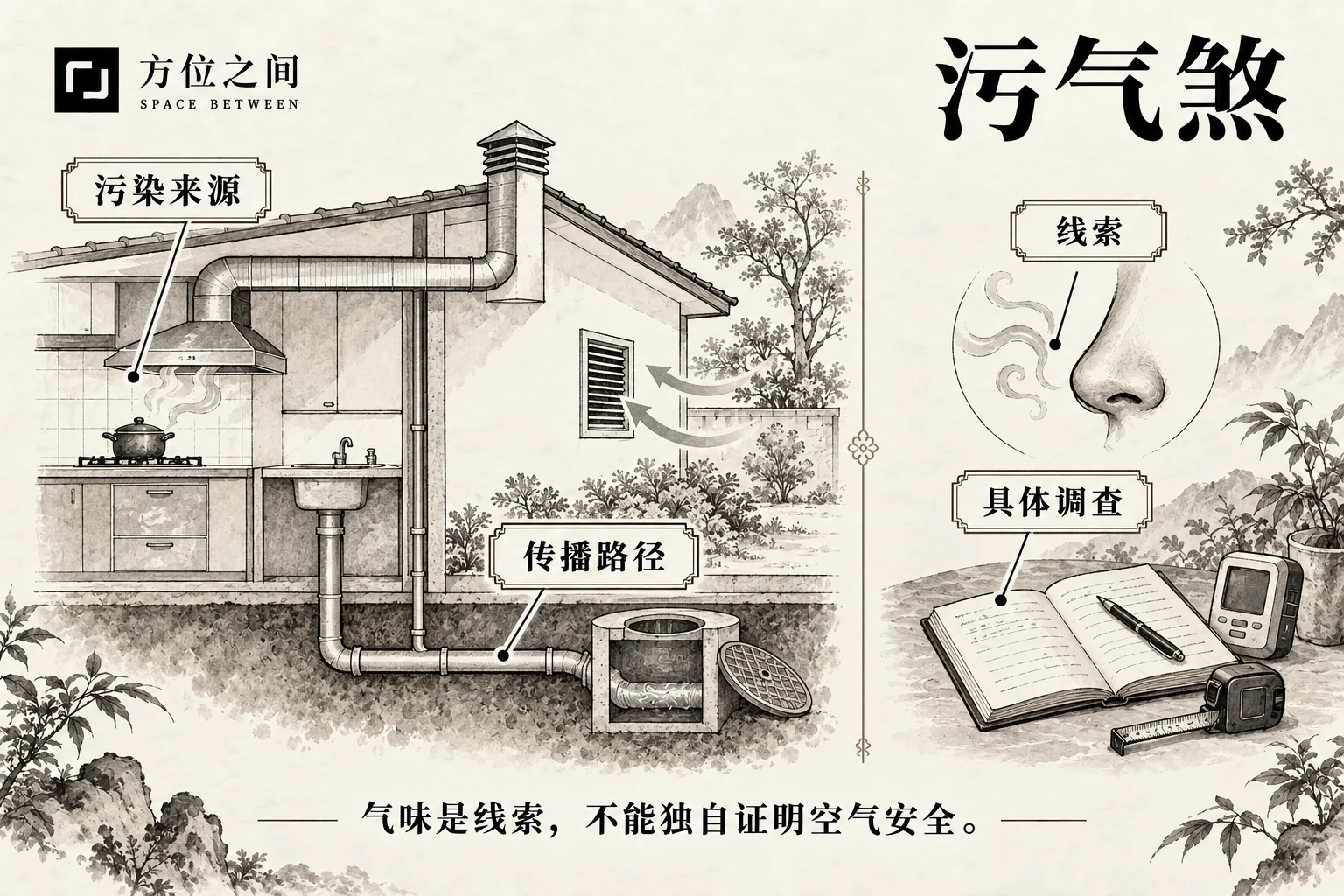
Begin with when and where a problem occurs: does it coincide with cooking, cleaning, renovation, drainage or outdoor sources, and change with windows or equipment? Smell is a clue, not a safety judgment. A more pleasant fragrance does not establish that the original contaminant has been removed.
Folk interpretations and versions
Cultural purification language may express wishes for comfort and peace, but incense, talismans and ornaments are not thereby pollution controls. Blaming a neighbor’s or group’s supposed aura distracts from investigating sources. Document narratives while handling emissions and facility problems through facts.
Practical observation and limits
Environmental guidance distinguishes reducing sources, suitable ventilation and matching air-cleaning methods, noting that filtration does not solve every gaseous pollutant. Persistent odors, leaks or equipment faults require investigation of their causes and conditions. One appliance or plant cannot guarantee safety throughout a home.
Reading and responding
Locate and control the source first, then arrange ventilation according to outdoor conditions and room use; obtain appropriate drainage, equipment or pollution checks when needed. Record changes to see whether the source was addressed. Do not hide the issue with incense or sprays, or mix cleaning chemicals to remove supposed polluted qi.
Sources and further reading
These sources help clarify the concepts and their origins. Explaining a traditional term does not establish that it can predict outcomes.