
Name and meaning
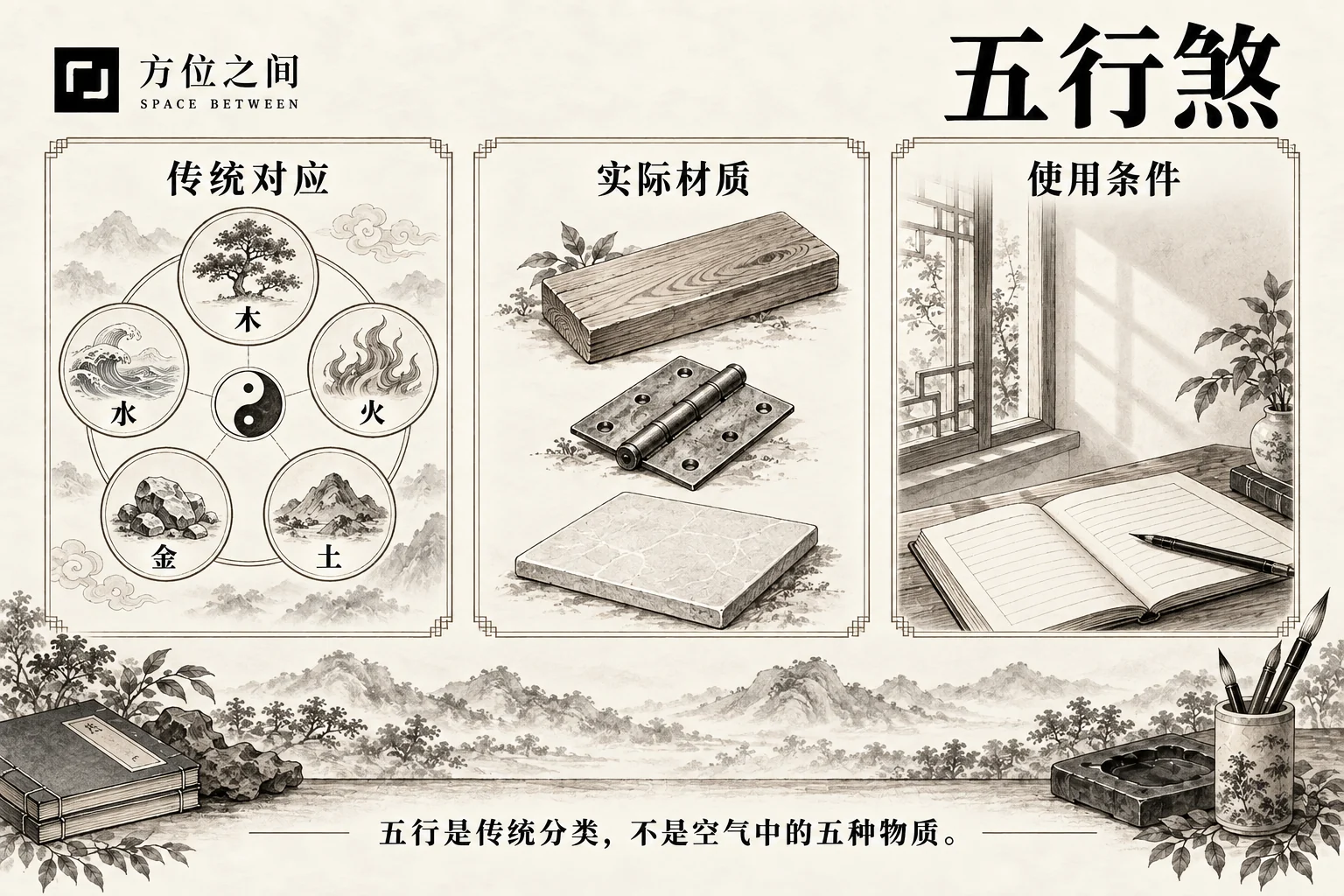
Five-Elements Sha usually denotes a relationship judged unsuitable within a feng-shui or divination interpretation. Wood, Fire, Earth, Metal and Water are traditional categories here, not five substances harming one another in the air. Without the correspondence rules, the reader cannot know whether the claim concerns color, form, direction or time.
Sources and spelling variants
Different systems use the Five Elements for different objects and inferences. Comparing a pointed building to Fire is not the same physical causal chain as classifying a time label as Fire. There is no established universal physical test for Five-Elements Sha; preserve each source, rule and input rather than merging tables.
Recognizing the context
Ask what is assigned to an element, why, and what result a generating or controlling relation is supposed to explain. A leap from a yellow wall to childhood illness, or from door orientation to a guaranteed metal-object remedy, lacks evidence that “tradition says so” cannot supply. Symbolic correspondence is not measurement.
Folk interpretations and versions
Five-Elements relationships can illuminate cultural order and aesthetic preferences. A controlling relation does not automatically mean physical harm, nor does supplementing an element promise better fortune. Show differing classifications of an object rather than selecting whichever best promotes a remedy product.
Practical observation and limits
Material choices require separate attention to actual composition, performance, lighting, visual comfort and use. A red object is not necessarily a fire hazard because it is classified as Fire; flammability and heat sources need separate checking. Blue does not equal moisture, and cultural color advice cannot replace structural, fire or air-quality judgment.
Reading and responding
Keep traditional correspondences and sources in one column and actual materials and conditions in another. Separate preferences from repair needs to avoid unnecessary renovation, cost or delay over a symbolic conflict. This entry explains terminology, not a guarantee that quantities, colors or placements of objects change destiny.
Sources and further reading
These sources help clarify the concepts and their origins. Explaining a traditional term does not establish that it can predict outcomes.