
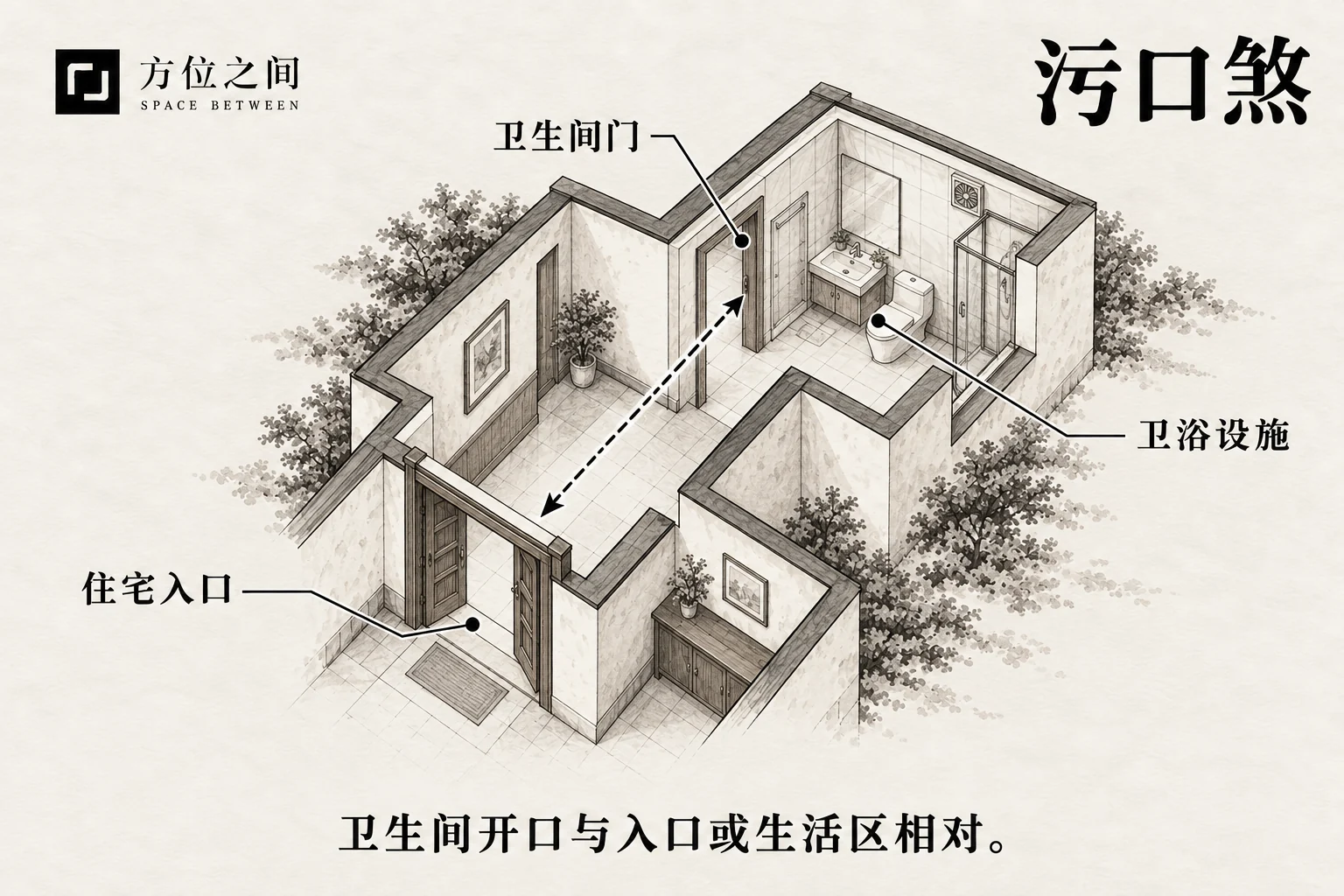
Name and background
The term combines an opening relationship with room function. Seeing a basin on entry, seeing a toilet directly, and reaching a bathroom after a short corridor offer different privacy layers; a line on a plan does not make every arrangement equivalent.
Typical form and comparisons
Typically the bathroom opens onto the visitor’s first view from the entry, or an en-suite door is visible from the pillow. An internal return wall may hide the toilet even when doorways align. That reduces exposure, while its effect on ventilation remains a separate design question.
Distance, swing and habits matter. In a small home a bathroom door beside the dining table can mix movement and dining; a distant door across a broad foyer is different. In food businesses, customer and cleaning routes require planning beyond a curtain.
Traditional reasoning and modern observations
Tradition treats the entrance as receiving and the toilet as discharging, interpreting direct alignment as disturbance of clean qi. This preference for an orderly, dignified entry encourages screening or closing the door; it differs from the technical conditions of modern traps, exhaust and plumbing.
Odours may come from dry or damaged traps, drain connections or cleaning issues; moisture may come from bathing or leaks. Hong Kong’s Centre for Health Protection advises maintaining traps and repairing abnormal drainage. Changing a door direction does not fix these faults, and fragrance does not identify their source.
How to identify it
Check direct views first, then trace odour and moisture separately.
- From the entrance or bedside, record visible fixtures with doors in normal use, not just doorway centres.
- Mark exhausts, floor drains and access panels, observing odour and water before/after bathing and after disuse.
- Check door/furniture collisions and whether screens obstruct passage or ventilation make-up air; tenants should confirm repair arrangements with management.
Common points of confusion
Ordinary facing doors concern views and swings; this term adds bathroom function. A central bathroom is a location issue, and one upstairs a vertical relationship. Odour without facing doors still calls for drainage investigation, not searching for a matching doorway.
Effects described in traditional beliefs
Yang Dengke’s authorised entrance-to-toilet account links clean/unclean symbolism with fortune and relationships. These folk claims do not establish disease or blame bathroom users.
- Fortune and support: disrupted reception is associated with poor fortune and less help.
- Disputes: an unsettled entrance suggests quarrels or litigation in the story, not a prediction of neighbour relations.
Traditional remedies and practical improvements
Address observable odour and exposure first, then choose a screen that suits daily use.
- If the toilet is visible on entry, close the bathroom door after use or add a short private interior screen that preserves door movement.
- Exhaust needs a suitable make-up air path; do not seal designed door gaps, louvers or vents to block symbolic unclean qi.
- For persistent drain odour, maintain the water seal as required and have qualified personnel check damage, blockage and joints rather than masking it with scents.
- For bedroom or dining exposure, first adjust furniture or an internal screen; any door or pipe relocation needs waterproofing, structural and access checks.
- Gourd or compass customs in the cited account are symbolic. Existing small items can be stored securely, without blocking access panels or claiming odour removal or healing.
Illustrative example
Suppose the entrance reveals a basin but a return wall hides the toilet, while an unused drain smells. The resident checks the trap and drainage before considering door relocation. Closing the door and tidying the basin improves the entry view. This hypothetical case separates odour repair from presentation; facing doors are not the entire cause.
Sources and further reading
These sources help clarify the concepts and their origins. Explaining a traditional term does not establish that it can predict outcomes.