
Name and background
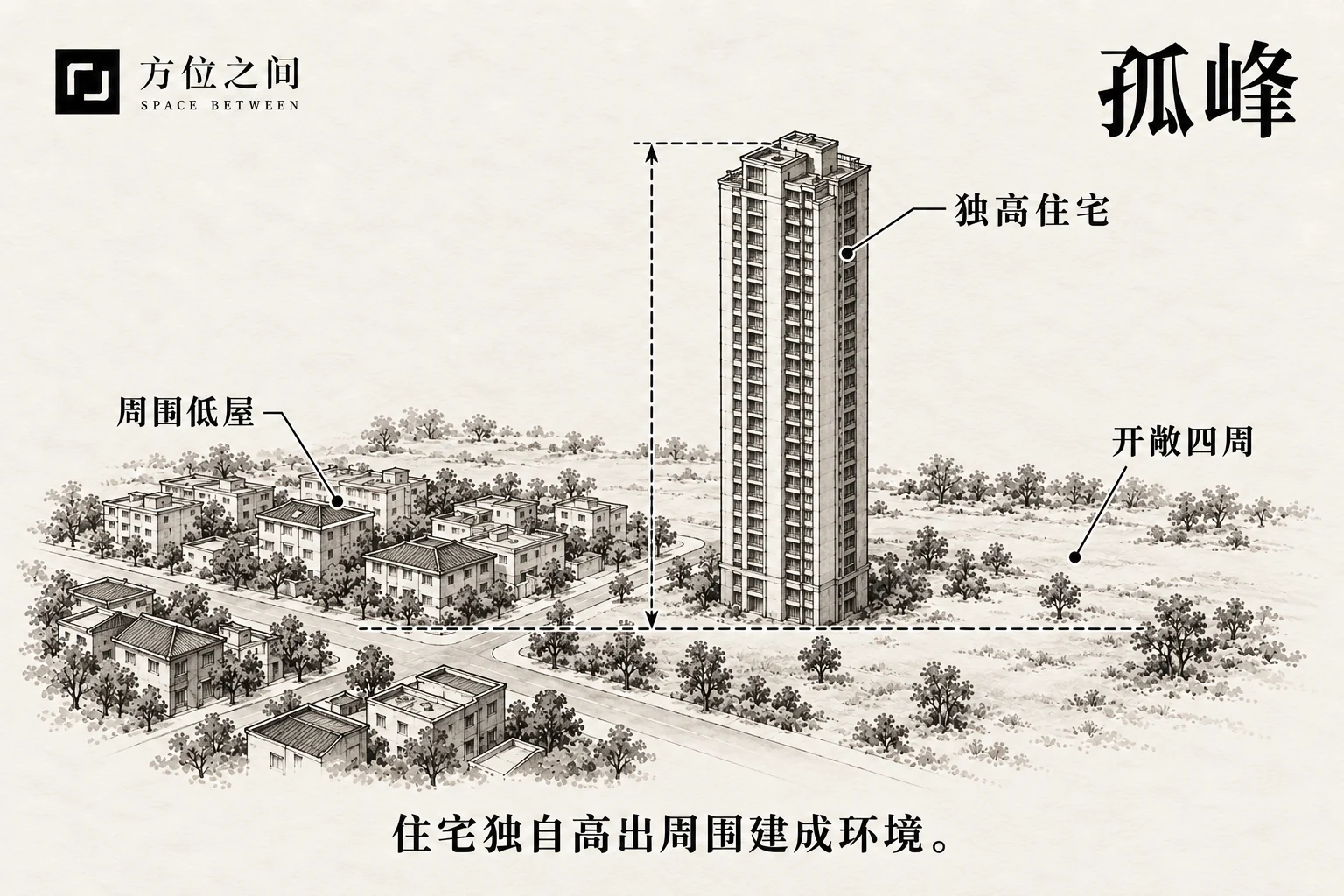
Peak means the conspicuously raised subject; isolated means a lack of similar-height surroundings. Exposed to wind sometimes describes the same openness, while an astrological solitude term belongs to a different system. Solitary yang may be a related label here, but its use for locations near public institutions concerns another object.
Typical form and comparisons
Include the district, slopes and nearby hills in the comparison. A twenty-storey tower among two- or three-storey houses differs from a twenty-two-storey block among similar towers. Roof elevation on a slope includes the ground-level difference; storey counts alone are insufficient. A distant mountain may not shelter the main local wind direction.
Lower floors may sit behind trees or a podium while upper floors are exposed. Corner and recessed balconies differ too. In homes consider regularly opened windows and resting areas; in offices, desks; in shops, entries and signs. A photograph of the tower top cannot describe every space.
Traditional reasoning and modern observations
Traditional form theory treats surrounding buildings or hills as support. A lone peak stands out without companions, suggesting a lack of help in human affairs. Zhaijing’s pairing of yin and yang provides a background to this preference for balance, not a modern tower-height limit.
The Hong Kong Observatory explains that reduced surface obstruction often means stronger wind higher up, with exceptions under some weather systems. At a home, façade shape, openings and shelter matter. Sun exposure and a good open view can coexist; height alone does not establish unsafe windows, poor air or a withdrawn personality.
How to identify it
Compare the whole setting first, then the home’s openings; these answer different questions.
- Sketch surrounding heights and setbacks, including ground levels, open lots and podiums, rather than only the nearest pair of buildings.
- At the occupied floor, inspect windows, balconies and sunny periods by orientation, separating exposed and sheltered sides.
- Note wind noise, overheating or opening difficulties in ordinary weather; report loose fittings rather than leaning out to test in strong wind.
Common points of confusion
Here solitary yin means a low subject enclosed by taller blocks, opposite to a lone peak. Peeking occurs when a foreground hides most of a rear building, even if that building is not isolated. A detached low house with trees and suitable enclosure is not an isolated tower merely because no house is attached.
Effects described in traditional beliefs
Chen Yujiu’s home feng shui lecture describes a tower without surrounding support and associates it with social and family ties. These are folk associations from the lecture, not predictions of personal destiny from building height.
- Social support: isolation is associated with receiving less help from friends.
- Family ties: distant children and weaker contact express anxiety about family cohesion, not grounds to accuse relatives of disloyalty.
Traditional remedies and practical improvements
Practical improvement means providing suitable shelter at occupied spaces while retaining the benefits of an open view.
- If wind discomfort centres on a window, move long-stay seating inward and check restrictors and seals; ask management to inspect persistent rattling or looseness.
- For afternoon sun in a home or office, time the blinds and adjust screens to reduce glare; external shading needs separate fixing and permission assessment.
- The traditional wish for support can inform seating backed by a wall or stable low cabinet, giving a clear boundary; avoid creating a symbolic mountain with a tall cabinet that blocks light.
- Keep loose objects off exposed balconies and place pots securely inside; existing protective ornaments follow the same rule and cannot act as wind barriers.
- If limited neighbourly support is the concern, establish maintenance and everyday contact channels; these make help accessible without rooftop additions or purchased charms.
Illustrative example
Suppose a twenty-storey apartment tower rises above three-storey houses. A west-facing fifteenth-floor resident enjoys the view but has afternoon glare and occasional corner-window wind noise. They adjust shading and the desk while management checks fittings. A third-floor resident instead checks tree shade. The hypothetical tower form is shared, but improvements depend on each floor’s conditions.
Sources and further reading
These sources help clarify the concepts and their origins. Explaining a traditional term does not establish that it can predict outcomes.