
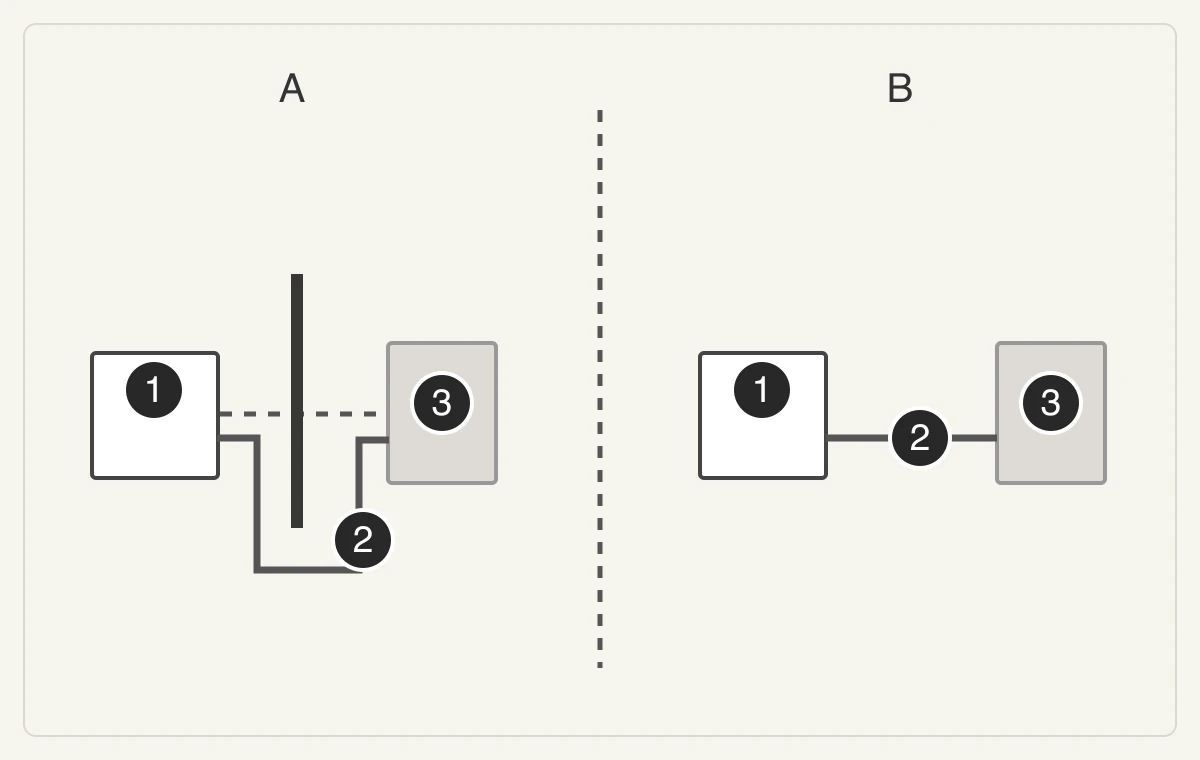
Pick one trip your household makes often. Start at each candidate building entrance and finish at the station entrance, shop or pickup point you would actually use. A short line on a map can cross a wall or a street whose crossing is around the corner.
Does the closer neighborhood always mean a shorter commute?
Find the gate and crossing you can use. Carry your usual bag and time the trip from the building entrance, noting the gate, signal wait and station entrance. If one brochure measures from the estate boundary and another from the apartment door, use the same starting point before comparing.
How can I check whether a grocery shop is on my way?
Walk from the station to the shop and back to the building as you would after work. Count crossings and stairs with shopping bags. Record an operating shop, its hours at your usual time and planned retail as different facts. For a weekly car trip, check the carry from parking to the lift separately.
Will the daytime gate work for a late return?
Check the posted side-gate hours, resident access and alternative evening route in areas open to you. Look for a continuous footway and garage exits on the detour. If you have not walked it at night, mark it for a revisit and date the information from management. Check lighting at the time you would use the route.
Example: how did the nine-minute walk arrive sooner?
Suppose both trips start at 08:00 on separate weekdays and end at the same station entrance. A takes 7 minutes walking, 5 waiting at crossings and 3 on the gate detour: 15 total. B takes 9, 1 and 2 minutes respectively: 12 total. Detour time is counted separately from ordinary walking. Record a three-minute difference on these visits and repeat another workday.
A line you can take on the next visit
Record estate code, building and gate, destination entrance, weekday and time, minutes walking/waiting/detouring, and any untested leg. Keep one line per route. Ask another household member to try it on a return visit and note how gates, steps and crossings affect them.
Questions and answers
Does the closer neighborhood always mean a shorter commute?
Find the gate and crossing you can use. Carry your usual bag and time the trip from the building entrance, noting the gate, signal wait and station entrance. If one brochure measures from the estate boundary and another from the apartment door, use the same starting point before comparing.
How can I check whether a grocery shop is on my way?
Walk from the station to the shop and back to the building as you would after work. Count crossings and stairs with shopping bags. Record an operating shop, its hours at your usual time and planned retail as different facts. For a weekly car trip, check the carry from parking to the lift separately.
Will the daytime gate work for a late return?
Check the posted side-gate hours, resident access and alternative evening route in areas open to you. Look for a continuous footway and garage exits on the detour. If you have not walked it at night, mark it for a revisit and date the information from management. Check lighting at the time you would use the route.