
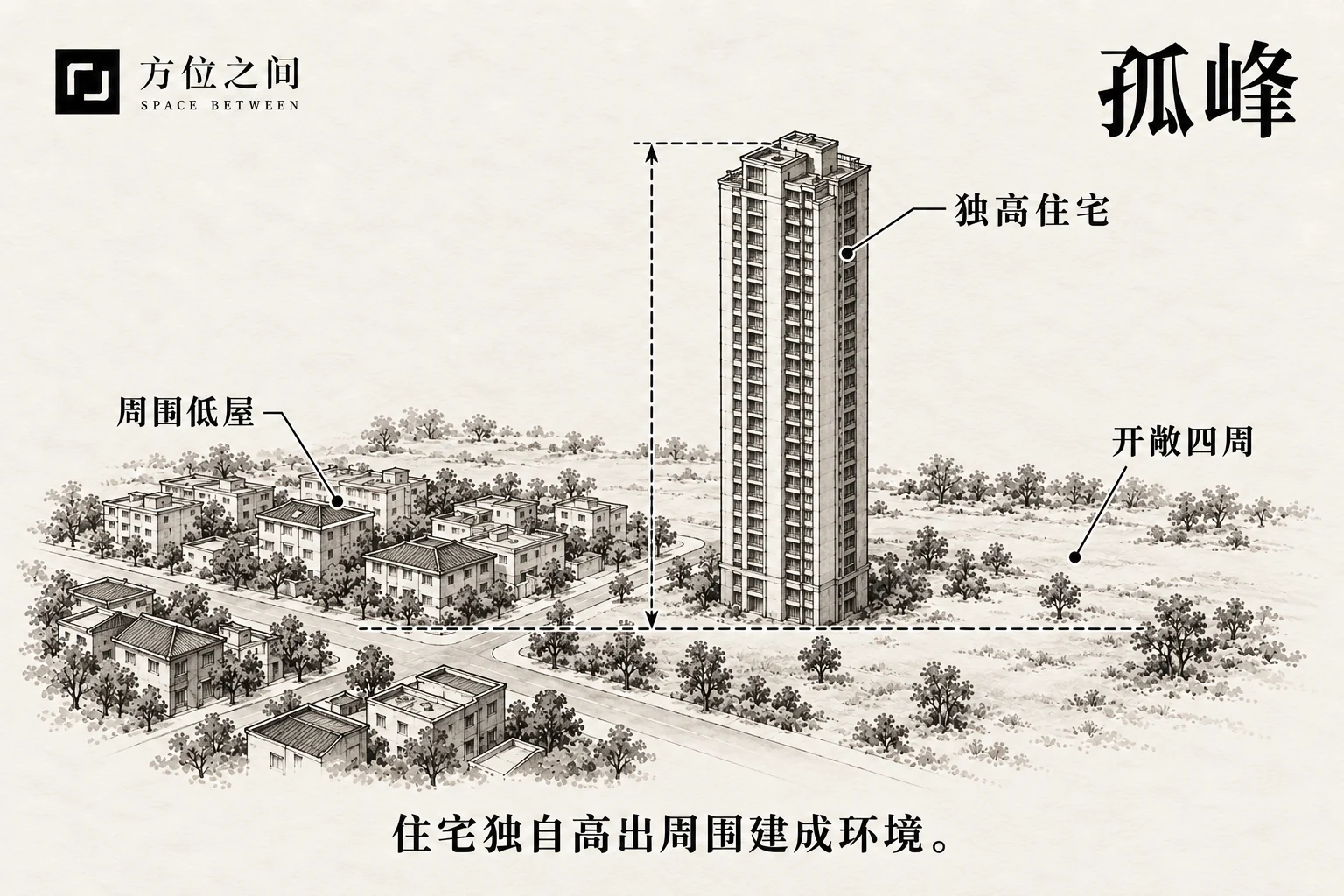
Name and specific form
The supplied list describes Lufeng sha as “low beasts, high house,” the reverse of Laoyu’s wording. It first expresses a home that stands higher than surrounding masses. Whether beasts means wings, neighboring buildings or landforms still needs checking. The name alone does not establish drafts or excessive ventilation.
How to identify and record it
Compare the home and actual surroundings against one ground datum, then observe air movement at commonly used openings. A roof, high balcony and ground-floor entrance can feel very different. Record conditions where people actually spend time.
- Identify the entity called a beast and mark its height and distance.
- Record wind direction, time and window state when discomfort occurs, not only the floor number.
- Distinguish leakage through window gaps, windward openings and flow around buildings.
Sources, versions and related names
This name comes from the supplied modern list; a historic diagram resolving all its meanings has not been verified. The isolated-tower entry also observes relative height, but emphasizes a lack of similarly tall surroundings. The brief Lufeng definition is less specific, so comparison is limited to clearly identified relationships.
Folk meanings and limits of interpretation
Traditional descriptions use protection and gathering qi to discuss the surroundings, and exposed height is sometimes interpreted as dispersal. That symbolic language is not a wind-speed measurement and cannot establish family conflict or lack of career support. Traditional preferences do not make height a measure of fate.
Practical observation: what determines the effect
Actual wind conditions depend on terrain, building arrangement, openings and weather. Relative height can also provide open views and good light. Address repeatable discomfort, problems operating doors and windows, and object stability rather than simply removing the height difference.
Improvements and what they cannot replace
Begin with opening habits, window and door maintenance, and seating. Secure balcony or terrace objects appropriately. Any new wind screen must suit the building and preserve ventilation and escape routes.
- Record conditions at different openings and times; obtain professional assessment when needed.
- Check seals and hardware to distinguish defects from layout issues.
- Do not treat sealed windows or arbitrarily taller boundary walls as a universal remedy.
Sources and further reading
These sources help clarify the concepts and their origins. Explaining a traditional term does not establish that it can predict outcomes.