
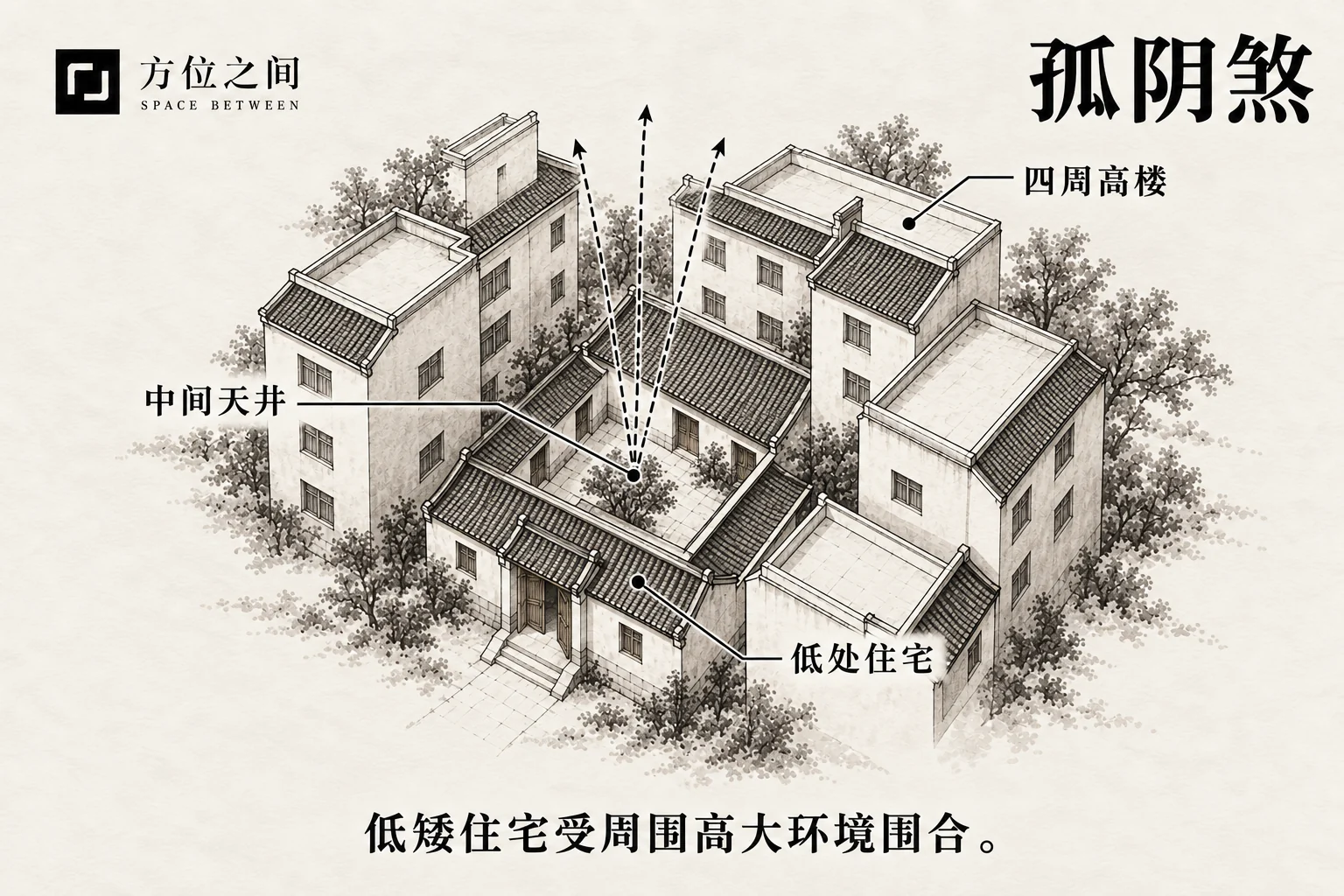
Name and specific form
In this list, Sihai sha means the neighboring buildings on all four sides are higher than the home itself. Unlike a one-sided comparison, it requires separate records for front, rear, left and right. Yet higher buildings in four directions do not necessarily form a sealed enclosure; spacing and openings change the actual conditions.
How to identify and record it
Mark the home and taller surrounding buildings on one site plan, then photograph sky visibility from the main rooms. Storey counts help describe size, but ground levels, roof forms and perspective can make a comparison based only on storeys misleading.
- Record neighboring heights, distances and the home’s openings on each side.
- Identify any open land that remains; do not turn isolated tall buildings into a continuous wall in the drawing.
- Observe lighting, circulation and sightlines at different times and record real inconveniences.
Sources, versions and related names
Sihai is a name in the supplied modern list, not a verified universal historic category. Its high-surroundings, low-home form can be compared with the Guyin entry’s environmental observations. Two reading routes for a similar subject do not prove that the terms are identical across traditions.
Folk meanings and limits of interpretation
The “four harms” name strengthens an association with constraint on every side and reflects traditional concern for surrounding space and buffers. There is no basis for assigning four specific disasters or inventing relatives, diseases or years merely to match the number. Explanation should stay within the known text.
Practical observation: what determines the effect
Check whether sky views are restricted, rooms need lighting for long periods, windows face strong overlooking, or exits feel congested. Distant neighbors or an open courtyard can leave a lower home quiet and comfortable. Assessment belongs to particular rooms and periods of use.
Improvements and what they cannot replace
Prioritize light, layout and privacy in the most-used rooms. Moderate planting or screening is preferable to excessive enclosure that removes more light and ventilation. Discuss specific impacts with the party responsible before seeking changes to neighboring or public space.
- Make a four-side observation record rather than generalizing from the most oppressive camera angle.
- Clear window areas and exits, and select privacy measures that preserve useful light.
- Do not add unauthorized height or trust an ornament to change the distance between buildings.
Sources and further reading
These sources help clarify the concepts and their origins. Explaining a traditional term does not establish that it can predict outcomes.