
Name and background
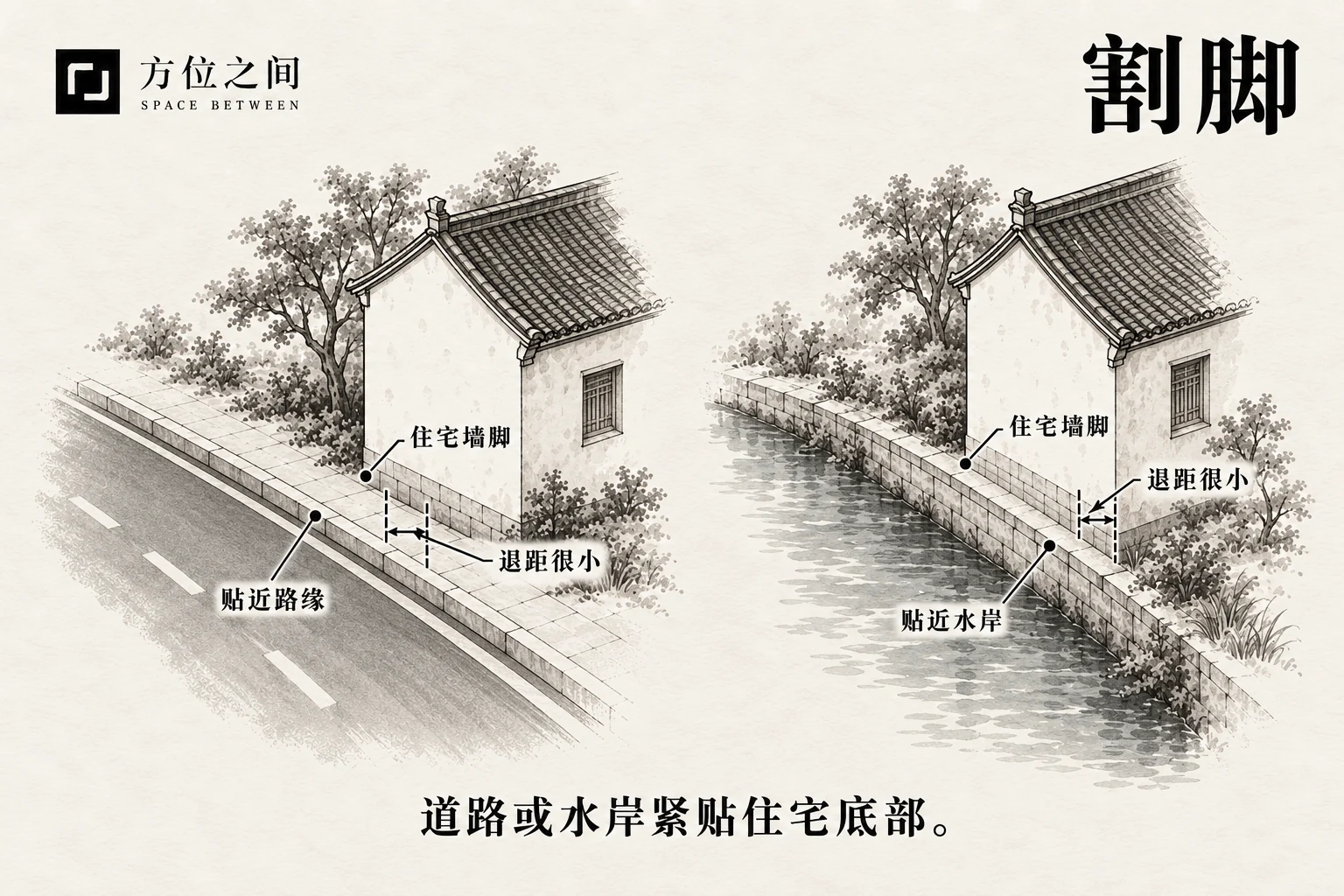
Foot-cutting begins with an image of excessive closeness: outside movement brushes a home’s base before it seems to have secure footing. Waterfront accounts are common, and later descriptions compare close, fast traffic to rushing water. The image is shared, but road access and water levels require different responses.
Typical form and comparisons
A typical roadside case has the wall or threshold nearly at the kerb with little space to pause. At a waterfront, the foundations approach the bank with a short transition to water. Similar distances can conceal different conditions: a high terrace with a broad promenade differs from a low-threshold riverside home without a forecourt in height, buffering and water-level relationships.
Traditional reasoning and modern observations
Tradition likens water to wealth while valuing places where water gathers and a dwelling has support. Flow too close to the base is interpreted as wealth passing without staying and insufficient protection, hence talk of repeated rises and falls. Spatially, an added transition can give entrances, resting places and drainage their own space.
In practical terms, roadside proximity can reduce space to pause and look before exiting, while waterfront proximity calls for considering floor levels, water levels, drainage and bank slopes together. Closeness does not mean foundation damage; a path, stable bank protection or suitable level difference can change the conditions substantially.
How to identify it
Start with the actual boundary at the dwelling’s base. Distinguish a road from a waterfront, then compare horizontal separation and vertical level differences in the same record.
- Record wall-to-kerb or wall-to-bank-edge distances and mark walls, pavements, drains and railings. Distinguish the waterline from the top of the bank.
- Draw a simple section showing threshold, floor, road and usual water levels. Leave the highest water level unconfirmed if evidence is unavailable.
- From a safe position, check visibility and space to pause outside the door, and note traffic times. Do not stand in traffic to measure or photograph.
- For waterfront sites, consult drainage records, public flood information and bank-maintenance records. Refer post-rain ponding, erosion or seepage to appropriate specialists.
Common points of confusion
Foot-cutting concerns proximity at the base, reverse-bow the outside of a curve, and water-directed sha the flow direction. They may coexist without being interchangeable. A high-floor river view does not place the foundations beside water, nor does a parallel river flow at the door. The actual bank position and height are more informative than a view photograph.
Effects described in traditional beliefs
Modern folk accounts of foot-cutting chiefly concern unstable finances and changing fortune, as also recorded in Chen Yujiu’s home feng shui talk. These are traditional beliefs, not causal evidence linking roads or banks to life outcomes.
- Wealth not staying: accounts describe short-lived gains and unstable savings, reflecting water passing close to the house without lingering.
- Changing fortune and relationships: fluctuating affairs and unstable cooperation are linked symbolically to a disturbed base; modern accounts also mention disputes.
- Health and settled living: other accounts express concern for bodily harm and an unsettled home through the image of threatened footing. Practical attention belongs to access buffers, moisture, drainage and bank maintenance.
Traditional remedies and practical improvements
Responses centre on creating room and protecting the base, with separate road and waterfront measures. Begin with modest changes within your property; involve the relevant managers and specialists for public roads, banks or structural work.
- Set roadside access back: use a vestibule or turn inside the property so people pause before entering traffic. Avoid doors swinging into circulation. Shops can bring queues and collection points indoors so customers do not wait at the kerb.
- Soften proximity with a boundary: a low wall, screen or rounded-leaf planting in a private forecourt can interrupt direct views of the road below windows. Keep road visibility and stability; planting screens views, while collision protection requires assessed protective equipment.
- At waterfront homes, begin with drainage: clear private rainwater inlets and inspect backflow routes and ground falls where thresholds are low or water ponds. Any flood barrier should suit local levels and drainage, without diverting water toward neighbours.
- Reserve an inner area for rest and business: move beds, seating and children’s play away from the most exposed windows. Waterfront shops can retain views while storing valuables and long-term stock away from damp or flood-prone low areas.
- Keep waterside symbolism modest: local records describe Shi Gandang stones by rivers. A small secure object within private space can express that wish without costly materials or great weight; railings, banks and drainage still provide their respective practical functions.
Illustrative example
Example: a riverside shop opens beside a road, customers wait at the kerb and its rear yard ponds in rain. The owner moves collection and waiting indoors, clears the rainwater inlet and addresses backflow with drainage advice, while retaining a small symbolic object on a shelf. In this hypothetical case, household custom coexists with specific access and drainage measures.
Sources and further reading
These sources help clarify the concepts and their origins. Explaining a traditional term does not establish that it can predict outcomes.