
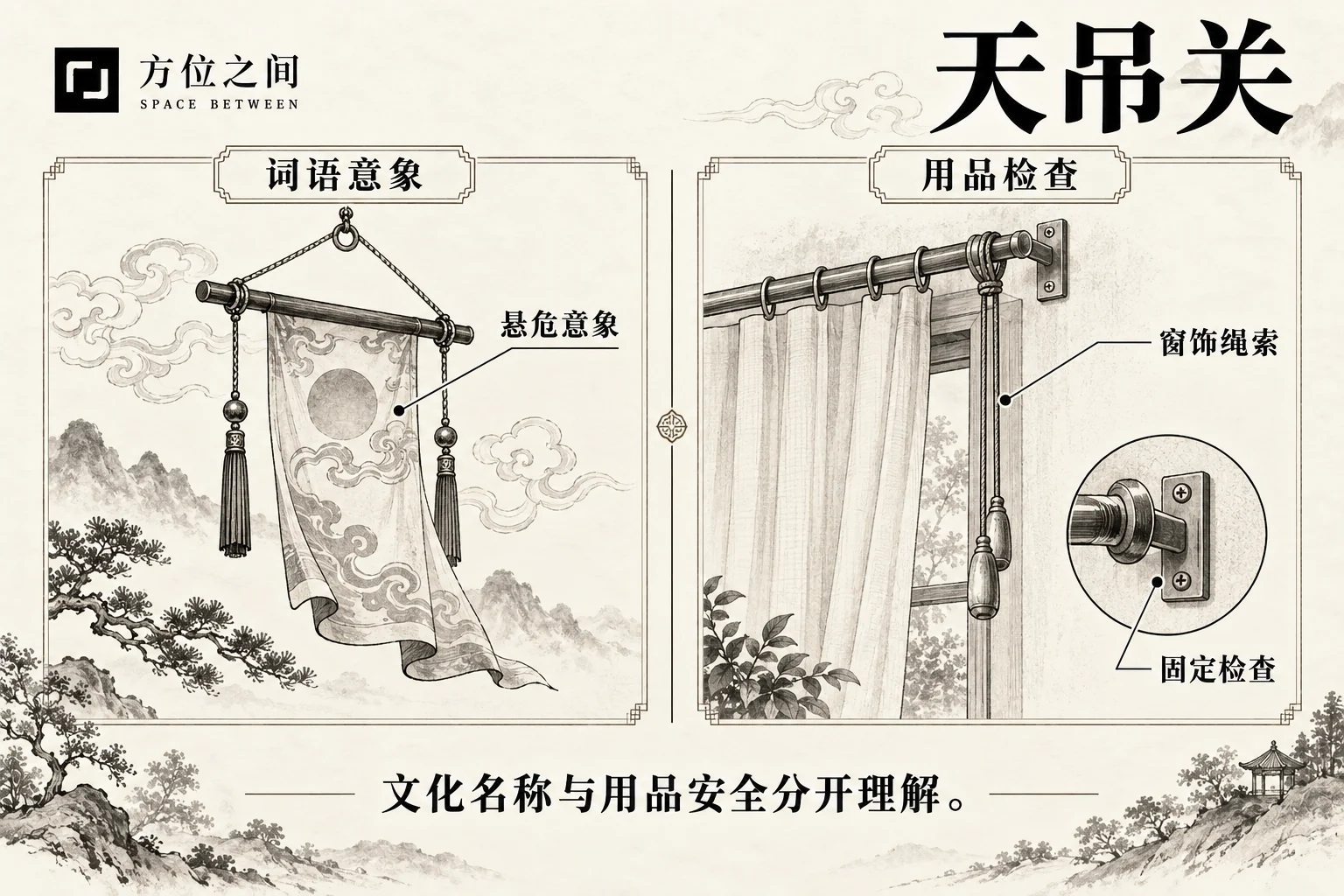
Name and meaning
Tiandiao combines “heaven” with “hanging,” inviting associations with suspension, precariousness or height. As a guan-sha name, its wording alone does not establish a particular accident story. This entry starts with semantics and does not use the label to predict seizures, falls or any specific medical condition.
Sources and spelling variants
The name appears in contemporary lists, which establish its use but not the authority of every attached explanation. No uniform origin text or calculation method has been verified here. Online stories need their own attribution. The term is also distinct from a building beam or a ceiling fixture that is actually loose.
Recognizing the context
Identify whether the context concerns a divination label, a ritual term or a hanging building component. Only the last directly supports inspecting fixings, loads and use. Joining all three through the word “hanging” obscures inspectable problems and assigns unnecessary labels to ordinary furniture.
Folk interpretations and versions
Guan-sha narratives use imagery to describe uncertainty; the vivid word makes later retellings easy to elaborate. Research may trace those changes while distinguishing the original text from interpretation. Frightening pictures do not make an account more credible and should not be repeatedly shown or told to children.
Practical observation and limits
Check curtain cords, toy strings and hanging decorations according to their actual design and use. US Consumer Product Safety Commission guidance addresses cordless window coverings and arrangements that keep accessible cords away from children. This concerns real products, not birth labels, and does not validate a Tiandiao mechanism.
Reading and responding
If the name causes worry, organize the text and images, then inspect genuinely accessible items, keeping literary and practical questions separate. Use appropriate help for fixtures or children’s symptoms. Do not hang supposed protective cords around a child’s neck or within reach.
Sources and further reading
These sources help clarify the concepts and their origins. Explaining a traditional term does not establish that it can predict outcomes.