
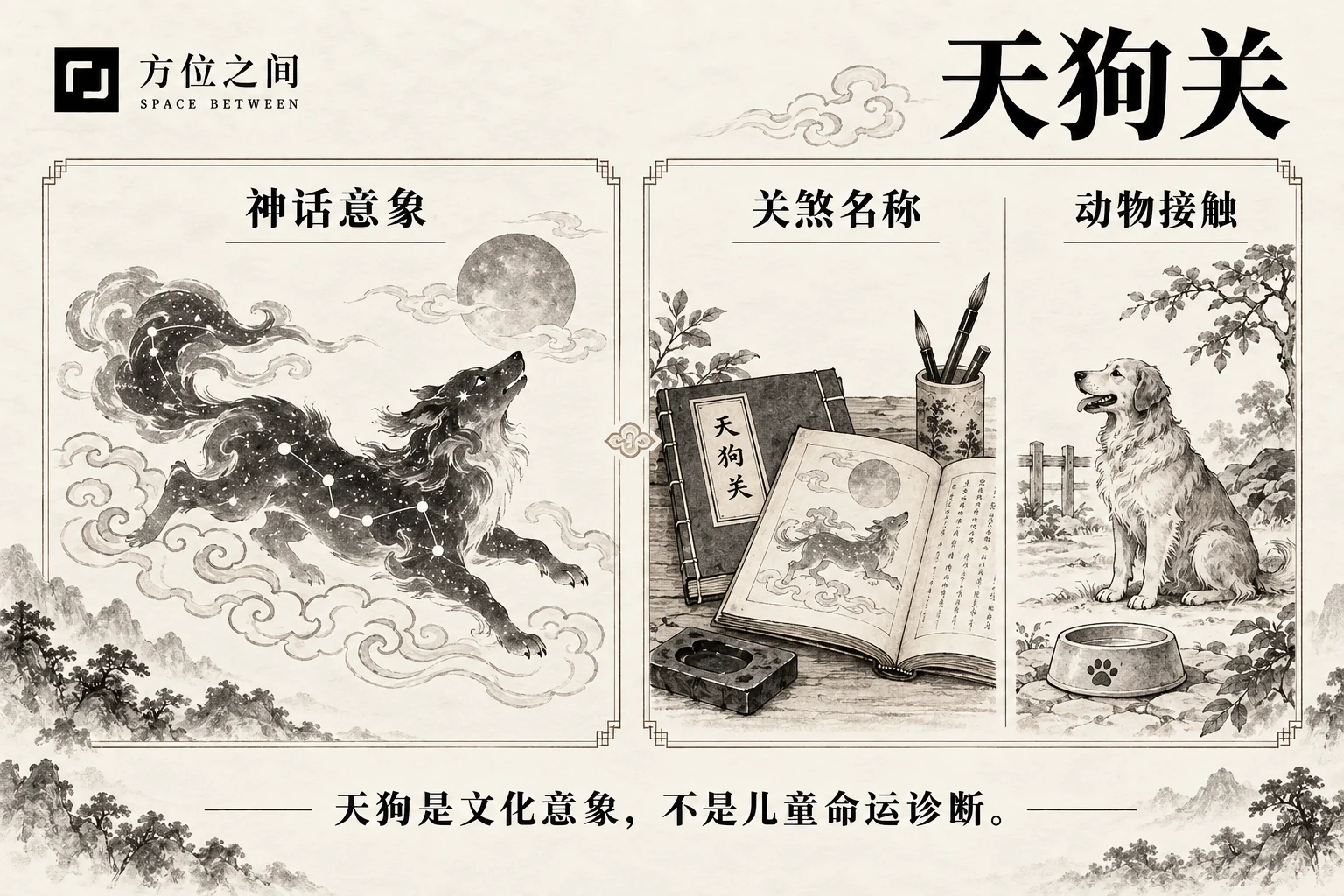
Name and meaning
Tiangou Guan uses a mythical animal’s name in childhood guan-sha. The heavenly dog has different forms in different narratives; these stories cannot be combined into one explanation of a child’s fate. This entry does not identify a harmful presence near a home or decide animal contact from the label.
Sources and spelling variants
Modern lists also use “Tiangou Sha”; verify whether the context is childhood guan-sha. Dejiang research records a local association with danger, not a universal account. Eclipse legends, similarly named calendar terms and the childhood label each have their own context and cannot prove one another through shared wording.
Recognizing the context
Identify the subject: celestial mythology, a calculation table, a local ritual or actual dog behavior. In real encounters, consider the interaction, the animal’s state and supervision; none follows from a birth date. Barking at night is not evidence that a folklore gate is active.
Folk interpretations and versions
Animal imagery can express vigilance, uncertainty and hopes for protection. An account may describe how the name is used in a particular place without turning local belief into an inevitable injury. Illustrations should distinguish narrative from reality rather than show a supernatural animal threatening a child.
Practical observation and limits
Pet-and-child arrangements depend on actual interaction. When a child fears dogs, listen to their experiences instead of assigning a fate label. A bite or other injury calls for appropriate professional care based on the event. The folklore name cannot assess a wound or replace follow-up.
Reading and responding
Attribute local wording and make its status as a reported belief clear. Families can focus on understandable animal-contact rules and adult supervision, without abandoning a pet because of the label or forcing contact to prove a cure. Cultural wishes and practical precautions can coexist, but their functions differ.
Sources and further reading
These sources help clarify the concepts and their origins. Explaining a traditional term does not establish that it can predict outcomes.