
Name and specific form
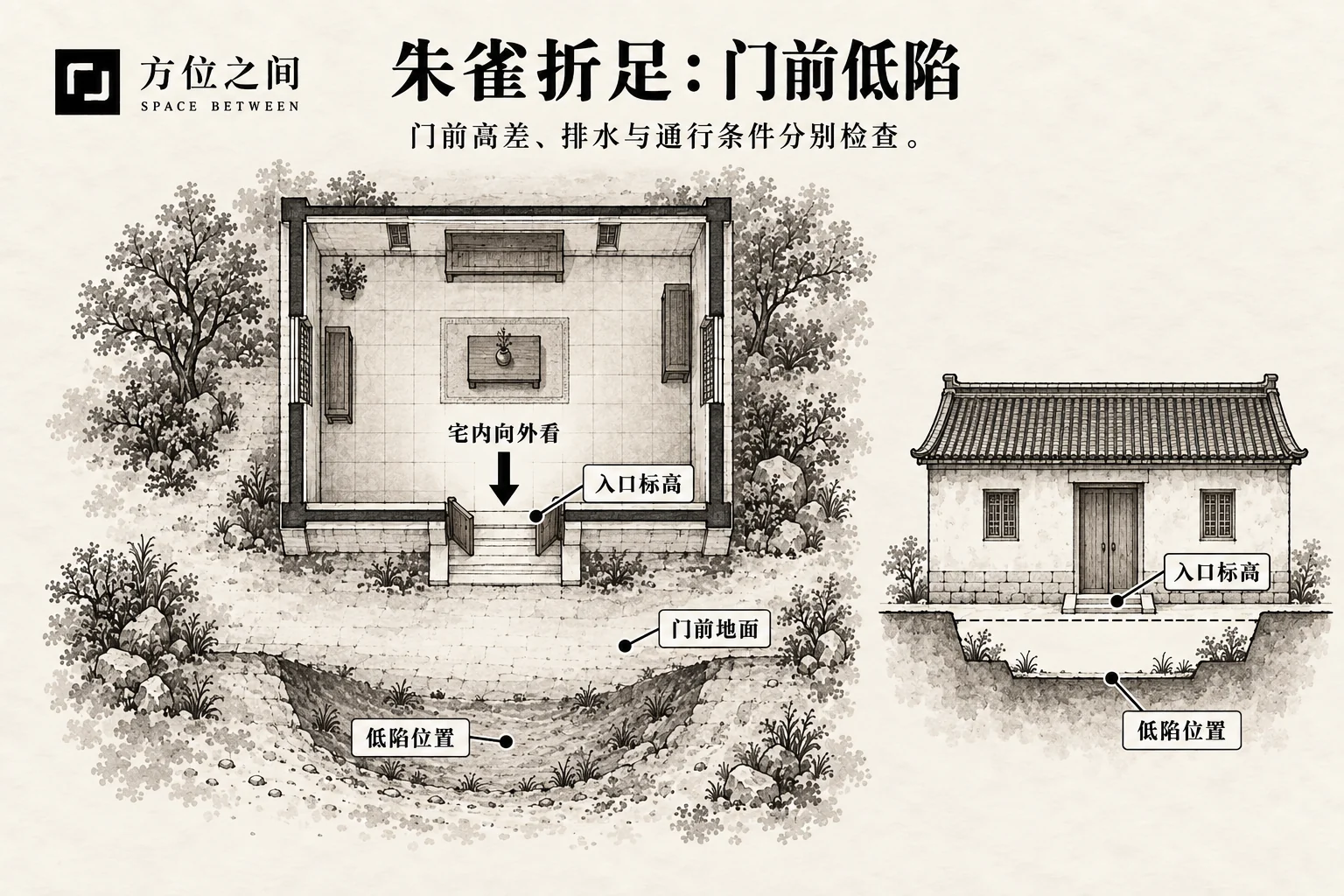
Item 78 uses Vermilion Bird with a broken foot for low or sunken foundation conditions on the front. Foundations concern building support and must not be confused with drainage slopes, designed steps or unequal building heights. If settlement is only suspected visually, record it as a condition requiring inspection rather than making a structural diagnosis from an image.
How to identify and record it
Fix the home’s orientation and record the relationship between front ground, visible foundation portions and nearby walls or columns. Separate original level differences, recent settlement and a depression in surface paving. Photographs document change but do not establish the condition of deeper foundations.
- Mark the affected area, discovery time, water accumulation, cracks and other visible facts.
- State whether the change concerns paving or building support; leave unknown details unknown.
- Record new sticking of doors or windows and whether changes continue, for professional review.
Sources, versions and related names
This entry follows the supplied foundation-settlement meaning of Vermilion Bird with a broken foot, not a verified universal historic diagram. Without feet means no building, broken arm usually means damaged building fabric, and lowered head concerns low side buildings. Their bodily metaphors do not justify identical repair advice.
Folk meanings and limits of interpretation
The broken-foot image compares support conditions with a body’s feet. It cannot predict injury or blame actual building deformation on an animal sign or family member. Attention to defects is worthwhile, but a folk name is not a technical assessment.
Practical observation: what determines the effect
Distinguish uneven surfaces, water erosion and changes that may affect support. Continuing changes especially require further investigation and should not merely be covered for appearance. A single image or a secondhand claim is insufficient to establish a cause or announce imminent collapse.
Improvements and what they cannot replace
Keep records of position, time and change, and arrange use and inspection according to the responsible party or a qualified professional when needed. Do not excavate, fill, add loads or seal affected areas without assessment. Repair should follow the identified cause.
- Separate visible facts from speculation, without exaggerating or ignoring ongoing change.
- Maintain normal drainage and avoid directing water into an unexplained depression.
- Mirrors, protective objects and rituals cannot replace foundation or component inspection and repair.
Sources and further reading
These sources help clarify the concepts and their origins. Explaining a traditional term does not establish that it can predict outcomes.