
Name, characteristics and scope
Some lists explain house forms with brief phrases such as wandering airflow, yin-yang imbalance or turtle-like feet, which are insufficient to reconstruct one definite plan. This entry preserves searchable names and identifies the missing recognition conditions for each. Observable conditions can be discussed; unverified older meanings should not be fixed by an imagined illustration.
How to identify it step by step
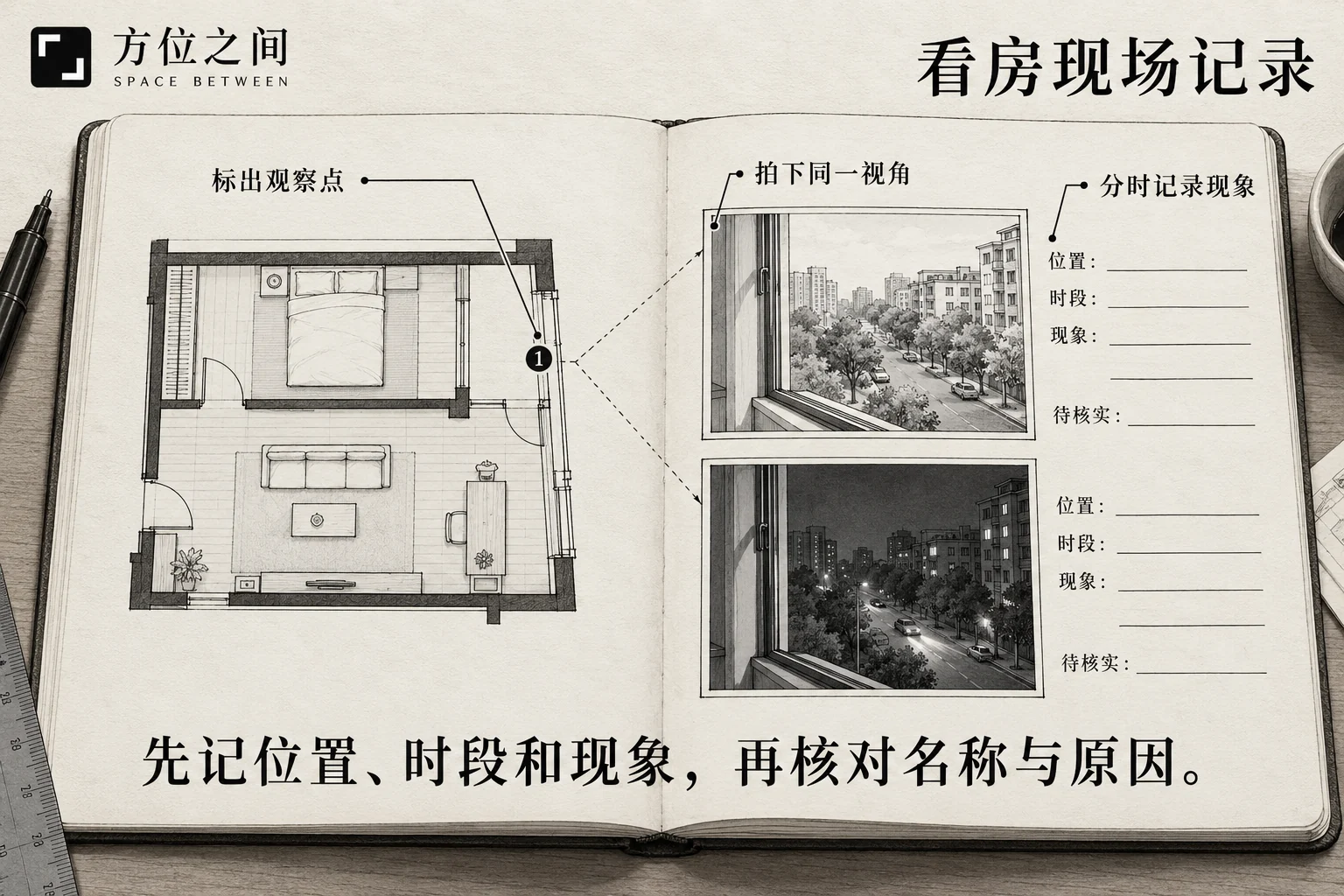
Start from the position people actually use, recording shape, spatial relationship and duration separately. These checks distinguish conditions; they are not a universal formula for fortune.
- For Gu Xu, check whether one side is missing or both sides lack neighbors. Tiger entering the front court needs an actual relationship between a high object on the right and the courtyard in front.
- For contending doors, record spacing, operation and overlapping swing areas. The phrase very close does not establish a universal threshold.
- Wandering, hidden-flow and agitating-injury terms require actual openings and airflow paths. A text saying qi flows does not mean airflow has been measured.
- For four-pillar deficiency, distinguish a missing plan corner from damage to a load-bearing column; their responses are entirely different.
- Turtle-foot, destructive-loss, mixed male/female and yin-yang paired forms need an original diagram, definition and comparison object. No fixed outline is assigned yet.
How to understand the folk account
These names personify dispersal, imbalance, absence or conflict, and circulating lists often append fortune or injury predictions. Short names and repeated reposting cannot establish one classical source, precise dates or founder stories. They are included for terminology analysis, not presented as verified independent sha types.
What matters in present-day living
Practical investigation returns to door collisions, lighting, ventilation, room proportions and structural condition. Actual damage to a column, beam or wall must be treated as a building issue rather than ignored under an abstract failure to gather qi. Asymmetry may also reflect a reasonable functional design.
Traditional responses and practical adjustments
Traditional ideas of avoiding, screening, buffering and separating can be understood as reorganizing sightlines, circulation and activity areas. Try small reversible changes first, then consider permanent alterations if they help.
- Photograph the site, draw the plan and identify objects before writing only a sha name.
- Direct confirmed aspects to existing entries on door alignment, White Tiger pressure, missing corners or airflow.
- Prioritize circulation and maintenance. Do not alter a building according to a name whose geometry is unclear.
- Keep source versions and unresolved questions, revising the explanation when reliable original diagrams become available.
Common misreadings and related names
Different lists may use Gu Chen for an isolated tower or for hall-bedroom order. The same name cannot merge them into one shape.
This illustration shows a method of identifying objects, not a reconstruction of every old term such as turtle-foot form.
Sources and further reading
These sources help clarify the concepts and their origins. Explaining a traditional term does not establish that it can predict outcomes.