
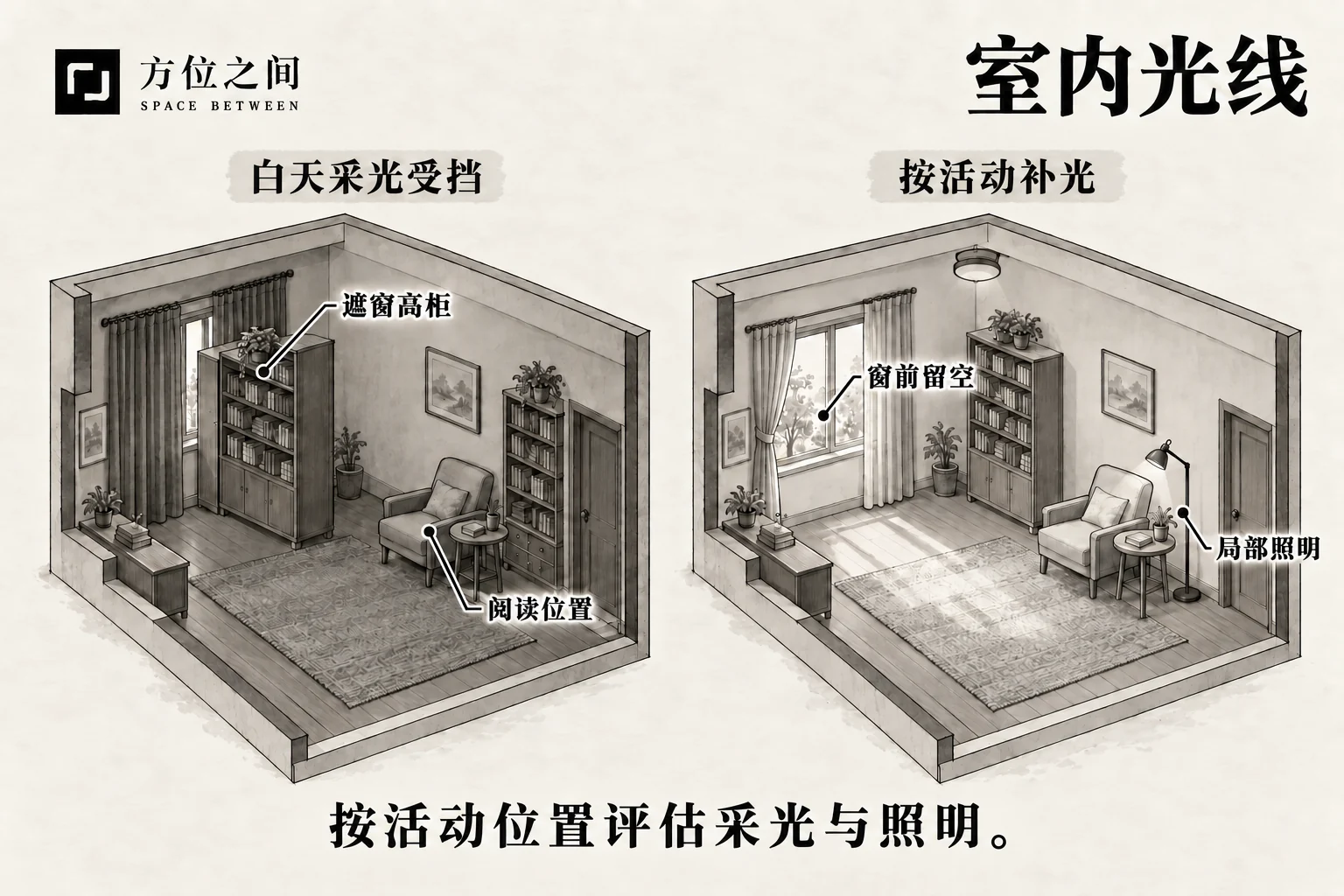
Name, characteristics and scope
A dark bedroom or living room may result from few windows, deep obstruction, a deep plan, dark finishes or insufficient lighting; these should not all be called invisible yin energy. Darkness for sleep differs from persistently lacking daylight. Reading, resting and sleeping in the same room require different lighting conditions.
How to identify it step by step
Start from the position people actually use, recording shape, spatial relationship and duration separately. These checks distinguish conditions; they are not a universal formula for fortune.
- Switch off artificial lighting in daytime and record window positions, outside obstructions and where daylight reaches.
- Observe where people read, dress and get out of bed. Brightness beside the window does not represent the whole room.
- Separate the impression created by dark finishes from an actual lack of light sources.
- Check dampness, mold and ventilation separately rather than attributing associated problems directly to darkness.
How to understand the folk account
Traditional preference for a bright, open front hall links darkness with weak qi or poor household fortune. This expresses a comfort preference; a dark living room cannot establish introversion, selfishness or family decline. Shading a bedroom at night is not inherently unlucky.
What matters in present-day living
More useful questions are whether an activity needs extra light, whether contrast is glaring and whether everyday use suffers. If neighboring structures limit daylight, evaluate finishes, lamp positions and furniture height together. Artificial light and natural ventilation are not substitutes for one another.
Traditional responses and practical adjustments
Traditional ideas of avoiding, screening, buffering and separating can be understood as reorganizing sightlines, circulation and activity areas. Try small reversible changes first, then consider permanent alterations if they help.
- Remove items blocking windows and adjust tall furniture first.
- Layer task, circulation and general lighting rather than creating glare with one intense lamp.
- Balance daytime use with nighttime shading; curtains need not remain fully closed all day.
- If there are leaks or mold, investigate water sources and ventilation separately instead of covering the problem with pale paint.
Common misreadings and related names
The tree-shade entry concerns exterior obstruction; this entry concerns occupied indoor positions. They can be read together.
Dimness is not equivalent to oxygen deficiency. Ventilation requires a separate check.
Sources and further reading
These sources help clarify the concepts and their origins. Explaining a traditional term does not establish that it can predict outcomes.