
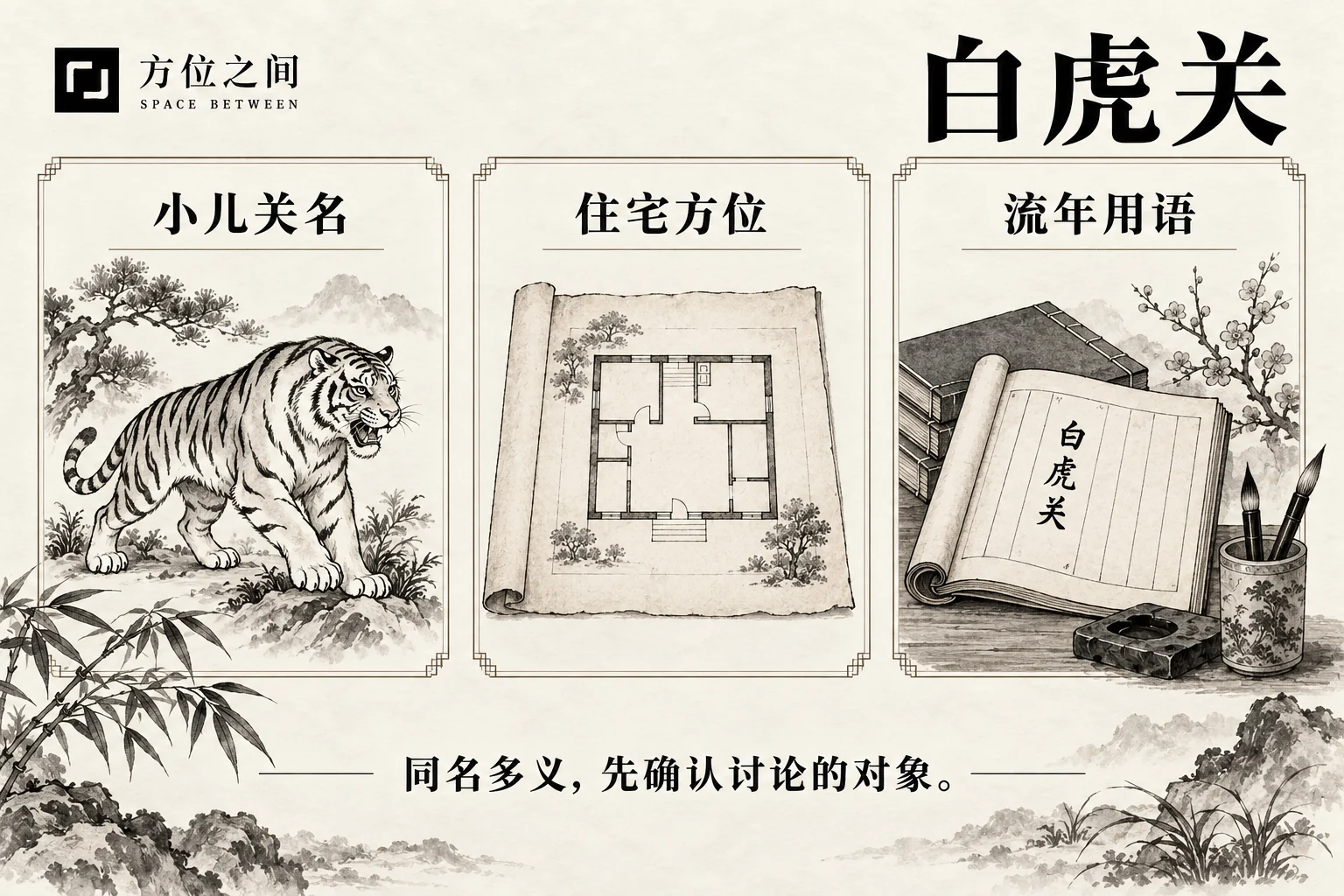
Name and meaning
White-Tiger Gate is a childhood guan-sha name. The White Tiger also appears in directional symbolism, building arrangements and other systems; these are not automatically one concept. This page neither predicts injury from the tiger image nor claims that a tiger-shaped ornament activates a gate.
Sources and spelling variants
Modern lists include Baihu Guan, while the right side of a dwelling may be called its White-Tiger side in another spatial vocabulary requiring a defined viewpoint. The subjects and required information differ. A passage that abruptly shifts from birth time to a building on the right may be mixing systems.
Recognizing the context
Mark whether a reference concerns a person, a dwelling or a year. Childhood labels, building forms and annual terms may share the name without sharing rules. Whether a neighboring building blocks light, makes noise or affects access requires site observation, not a childhood-gate chart.
Folk interpretations and versions
Tigers can symbolize power, guardianship or danger, with meanings differing among traditions. Do not select only ferocity to invent an accident forecast or flatten local beliefs into one prohibition. The value of documentation lies in its contextual differences, not in proving that an animal deity threatens a child.
Practical observation and limits
Practical care concerns actual activities and feelings; housing problems call for environmental improvements. If the name causes worry, clarify whether the concern is health, furnishings or a neighboring building. A clear question is more useful than repeatedly moving a tiger ornament, blaming a direction or avoiding neighbors.
Reading and responding
Create a comparison card identifying each term’s source, subject and limits. Do not tell a child a White Tiger is seeking them, or regard a remedy object as protection. Actual building defects, injuries and symptoms need their respective help, rather than explanations repeatedly borrowed from different systems.
Sources and further reading
These sources help clarify the concepts and their origins. Explaining a traditional term does not establish that it can predict outcomes.