
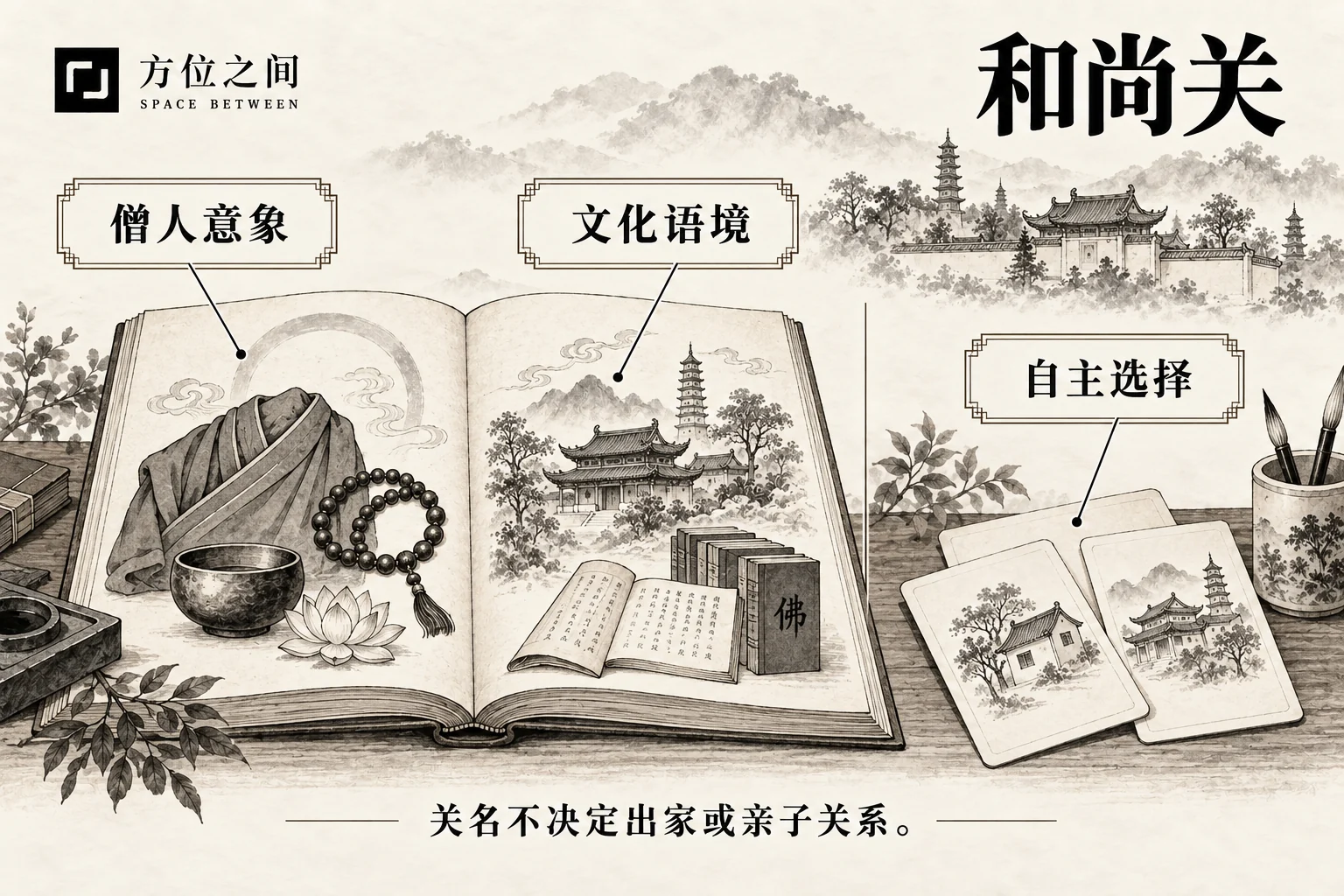
Name and meaning
This guan-sha name invokes a monastic identity, prompting associations with ordination, kinship or a way of life. These are cultural associations, not facts about a child’s future. Nor does the name make monks or temples harmful; it must not be used to disparage a religious community.
Sources and spelling variants
Contemporary lists include Monk Gate, but attached restrictions and explanations need separate checking. The available material establishes neither a universal requirement to become a monk nor a definite origin story. Research on local religious blessings, symbolic affiliation or kinship practices needs its region and participants identified.
Recognizing the context
Distinguish a divination label from an actual religious choice or a family arrangement. The first is a textual subject; the others concern lives and wishes. A label cannot override these differences. Curiosity about a temple, quietness or enjoyment of solitude does not confirm this gate.
Folk interpretations and versions
Some retellings imagine a change of identity as passing an obstacle, but a local symbolic practice is not a universal duty. Explain its social and emotional setting without claiming that refusal will harm relatives or requiring a child to assume a religious identity or distance themselves from family.
Practical observation and limits
Practical concerns include whether a child is respected, understands an activity and is caught in conflict over the label. Visits to religious places can follow the venue’s rules and actual care arrangements. Interests, temperament and future choices need no divination label that predetermines their meaning.
Reading and responding
Organize notes around identity imagery, regional evidence and present-day choice. Respect religious culture without turning birth details into an identity command. When relatives disagree, discuss actual wishes and arrangements instead of burdening a child with a supposed obligation to become a monk to remain safe.
Sources and further reading
These sources help clarify the concepts and their origins. Explaining a traditional term does not establish that it can predict outcomes.