
Name and meaning
Five-Ghosts Gate is a childhood guan-sha term using spirit language for uncertainty and obstacles. “Five ghosts” also occurs in other traditions, without implying the same rules. This page does not identify five real harmful beings or treat nightmares or fear of darkness as evidence of the gate.
Sources and spelling variants
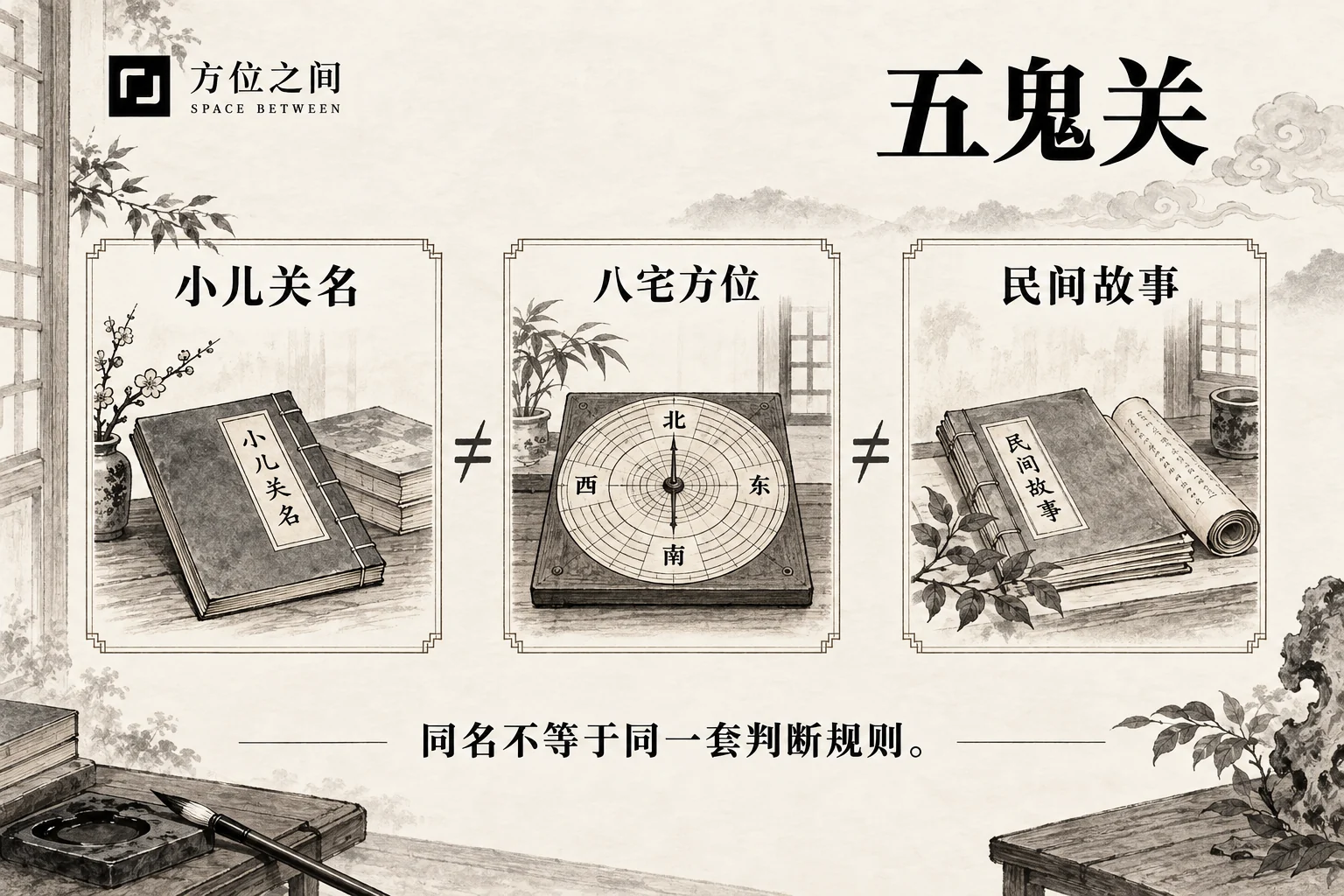
A modern name list documents Wugui Guan, while the Five-Ghosts position in Eight Mansions belongs to a different directional system. Check the heading, required information and subject. Do not transfer a room’s direction to a child’s fate or present a local story as a universal divination manual.
Recognizing the context
Ask who or what is being discussed, which information is used and what the explanation claims to address. A childhood label, a house direction and an exorcism story often answer these differently. Preserving context explains shared wording without merging it through visually similar diagrams.
Folk interpretations and versions
Spirit vocabulary may give a name to the unknown, but individual stories need regional verification. Documenting the gate neither endorses frightening narratives nor marks a child as haunted. Threats, humiliation or forced ritual participation to obtain obedience depart from both careful documentation and care.
Practical observation and limits
When a child fears a room, listen to descriptions of sounds, shadows, stories or past experiences and inspect real conditions. Understand sleep and emotional concerns in context instead of automatically blaming five ghosts. Better light or quieter surroundings show changed conditions, not proof that beings were expelled.
Reading and responding
Compare the different uses of the name, then list observable issues and actions. Preserve sources, limit threatening images and repeated suggestions, and seek suitable help when needed. Voluntary cultural objects or rituals should neither replace improvements nor promise the removal of a supposed force.
Sources and further reading
These sources help clarify the concepts and their origins. Explaining a traditional term does not establish that it can predict outcomes.