
Name and meaning
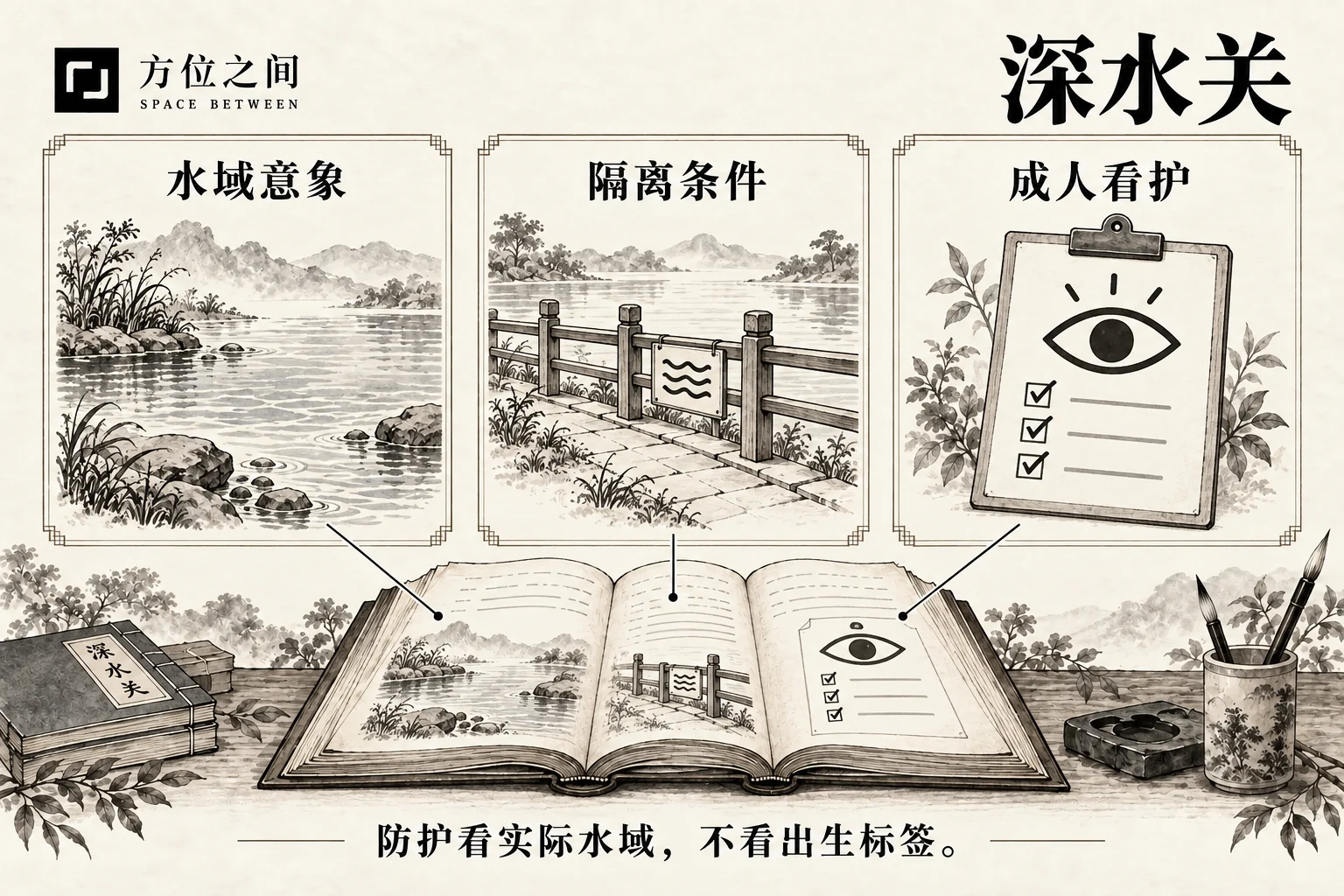
Deep-Water Gate directly invokes water depth as a childhood guan-sha image. It does not mean only children with certain birth details need water precautions, or that deep water is the only potentially hazardous setting. The term belongs to cultural narrative; real water conditions require situational assessment.
Sources and spelling variants
Volume seven of Sanming Tonghui mentions the name while questioning related gate claims; Dejiang research documents regional ritual use. These serve different purposes—historical debate and local ethnography—and neither replaces a real drowning-risk assessment.
Recognizing the context
Distinguish a term’s explanation from actual water guidance. Record where water is, how it can be entered, what barriers exist and who supervises, rather than using birth details to choose a supposedly safe depth. Swimming lessons are not a guarantee that supervision is unnecessary.
Folk interpretations and versions
Water and crossings can express transition and peace, and a local rite may carry wishes for growth. It cannot guarantee freedom from drowning, nor does discomfort near water prove the gate. Distinguishing belief from practical protection allows cultural respect without overlooking changeable conditions.
Practical observation and limits
US CDC drowning guidance stresses close, continuous, undistracted supervision and suitable barriers and environmental protection. These are real safety principles, not scientific endorsement of Deep-Water Gate. Current, visibility and facilities must be assessed from site information rather than inferred from the name.
Reading and responding
List water activities, the responsible supervisor and protective conditions separately, with clear handovers. Keep sources and local interpretations as cultural records without labelling a child naturally vulnerable or invulnerable to water. Respond to emergencies as real events, without waiting for an auspicious time or ritual.
Sources and further reading
These sources help clarify the concepts and their origins. Explaining a traditional term does not establish that it can predict outcomes.