
Name and specific form
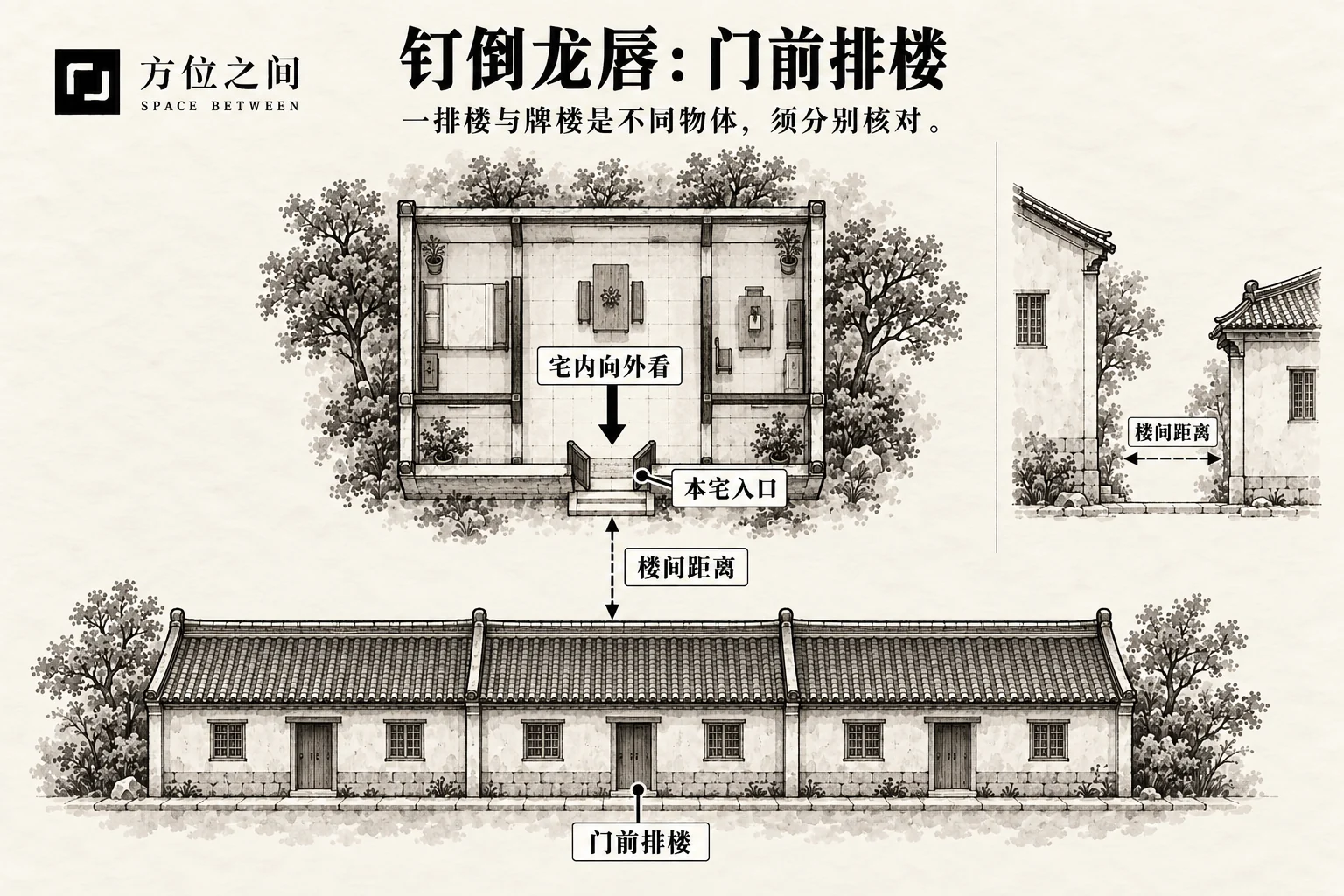
This supplied definition of Dingdao Longchun describes a row of buildings erected before an entrance. This page calls it the row-of-buildings version. The object is a series of occupied building masses, not a gateway of posts and crossbeams or a decorative frame. Establish the row’s relationship to the main entrance first.
How to identify and record it
Mark the original building, main door and new row on a site plan, recording each building’s spacing, connections and access direction. If the object consists only of posts and crossbeams, read the ceremonial-gateway version instead. A building row requires attention to the whole frontage and its use.
- State whether the row stands directly before the door, diagonally ahead or across another street, and whether it obstructs anything.
- Record passages between buildings, entrance sightlines and vehicle activity.
- Compare light, access and drainage before and after construction rather than relying on the name.
Sources, versions and related names
Other circulated lists describe a ceremonial gateway before the entrance. “A row of buildings” and “ceremonial gateway” may reflect copying or interpretation differences, but the wording should not be corrected without the original page. This entry separately preserves the supplied building-row meaning, and its illustration must not substitute a gateway.
Folk meanings and limits of interpretation
Dragon lip is traditional bodily imagery for land or space before a dwelling; nailing it down expresses a negative view of occupying that frontage. The name is not grounds for inventing fire, bankruptcy or year-specific predictions, nor for saying any new front row harms the home.
Practical observation: what determines the effect
A building row may change sky visibility, the street edge, access and rainwater paths. Effects depend on height, gaps and use. The row may also serve legitimate gatehouse, support or commercial functions. Actual use must establish whether there is inconvenience.
Improvements and what they cannot replace
Clarify access and management responsibilities, then discuss specific changes to light, drainage and visibility. Existing buildings cannot be altered merely because of a traditional label. Additional screening should not make the frontage more enclosed.
- Keep a plan and site photographs together and identify the row-of-buildings version being used.
- Make the main entrance and usable routes legible, and record real problems in use.
- Confirm rights and professional conditions for alterations; protective objects are not a substitute for agreement.
Sources and further reading
These sources help clarify the concepts and their origins. Explaining a traditional term does not establish that it can predict outcomes.