
Name and specific form
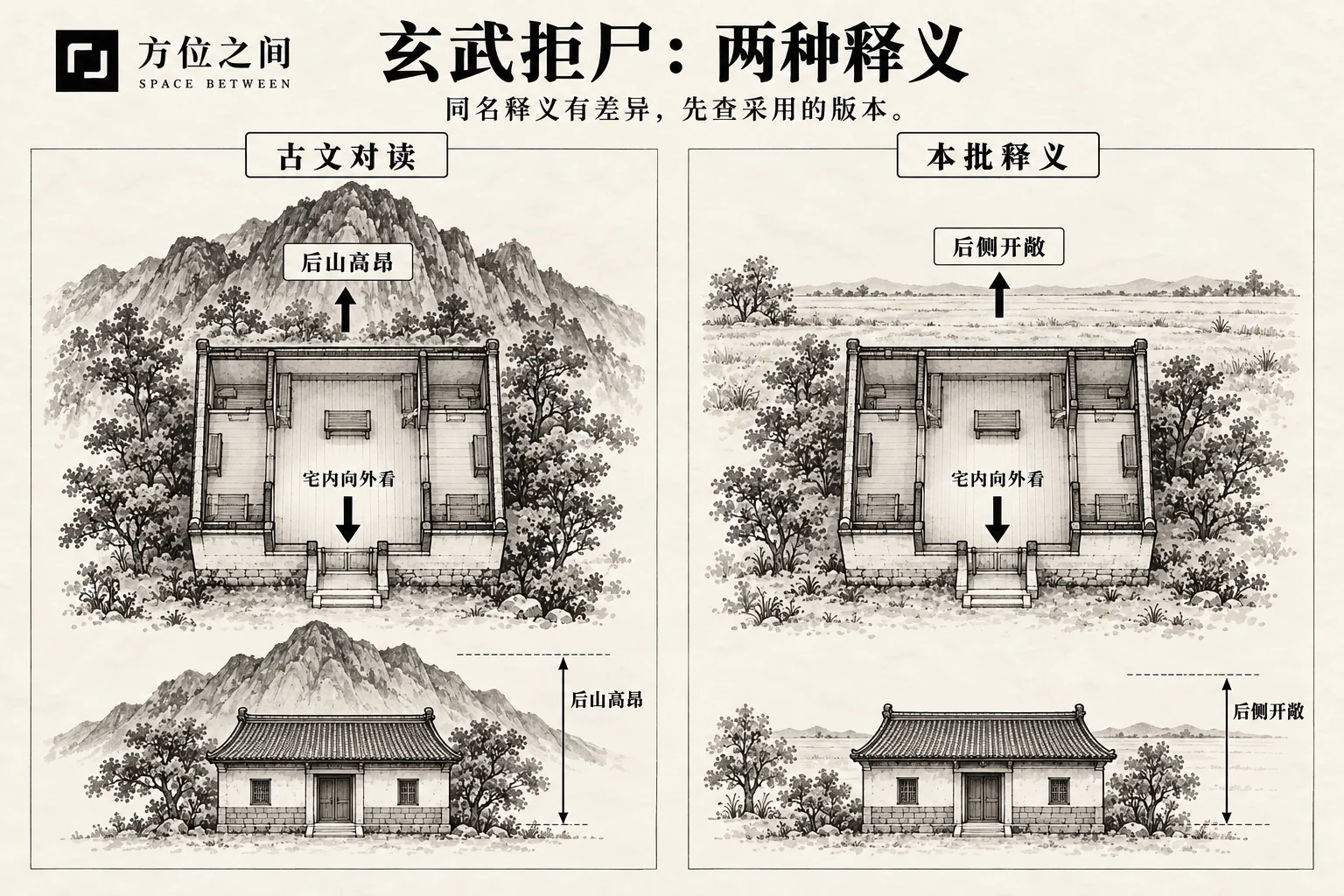
This list explains Black Tortoise refusing the body as a lack of backing behind the home: no hill or building regarded as support. That modern summary differs from identifiable historical wording. The two interpretations must be separate; a photograph without a rear hill or building does not demonstrate the original text’s meaning.
How to identify and record it
When following this list, mark the home’s rear and the actual terrain, buildings and open distances behind it. Specify whether backing means a slope, neighboring building, wall or landscape, rather than equating the absence of one rear building with the absence of all support.
- Fix the home’s orientation and identify its rear rather than the top of a photograph.
- Record rear objects, distances and level differences, and whether they affect use.
- If discussing the old text, draw the main hill and burial site separately instead of presenting a house plan as a burial-landform diagram.
Sources, versions and related names
The relevant passage in Zhai Zang Shu Shi Yi Zhong describes a high rear main hill that does not descend toward the burial site. The supplied list instead says there is no backing. A high hill that does not bow and an open rear are not the same form. Evidence supports documenting the difference, not declaring either wording universal.
Folk meanings and limits of interpretation
The “refusing the body” name belongs to traditional landform imagery. Although alarming, it cannot establish that a home will injure anyone. The modern lack-of-backing account also uses support symbolically; it does not show that family relationships, careers or lifespan depend on a rear building.
Practical observation: what determines the effect
An open rear can provide views, light and quiet, while also exposing a particular opening. Observe wind comfort, privacy, access and maintenance. An actual steep slope or retaining structure requires its own site and building checks.
Improvements and what they cannot replace
Adjust privacy and usability with suitable curtains, planting or layout where needed. Do not arbitrarily pile soil, raise walls or add rear loads to manufacture backing. A mountain picture or ornament cannot substitute for drainage or structural maintenance.
- Record the version you use before naming photographs and diagrams.
- List the benefits of rear openness separately from actual inconveniences.
- Base changes involving slopes, foundations or fixed enclosures on appropriate professional checks.
Sources and further reading
These sources help clarify the concepts and their origins. Explaining a traditional term does not establish that it can predict outcomes.