
Defining features
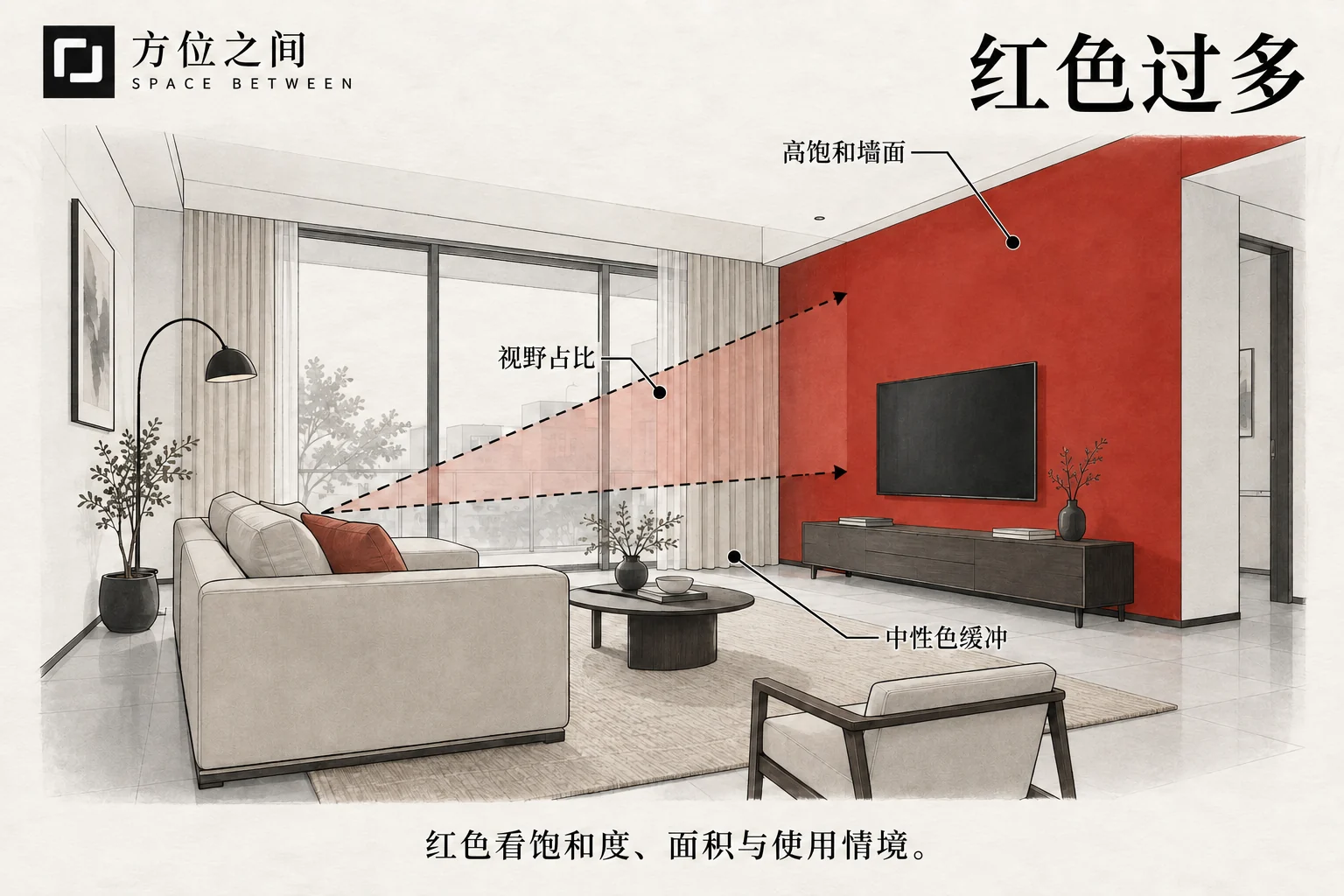
Red walls, ceilings, curtains and lighting can concentrate the dominant color. Gloss and matte, day and night differ. Bedrooms, dining rooms and short-use activity spaces should not share one universal “too much” area limit.
How to recognize it
Compare samples under normal light from seated views and across the room. One red picture differs from four red walls plus red lighting. Record color-recognition difficulty or a preference for a softer background without generalizing to everyone.
Common confusions
Red objects, red illumination and rapidly changing light are different. Red does not automatically raise air temperature; a visually hot impression is not thermal measurement. Respect safety signs, festive decoration and religious color functions.
Folklore and sources
Red-fire correspondence is traditional classification, not measured heat. Claims of inevitable arguments or illness are unsupported here. The modern label has no verified dedicated classical threshold for interior color schemes.
Traditional responses and practical improvements
Harmony can mean reducing overlapping dominant colors, not mechanically cancelling one with an opposing phase color. Try removable fabrics or colored lights first, keep favored accents and reassess. Do not make a room darker or more glaring merely to “suppress fire.”
Sources and further reading
These sources help clarify the concepts and their origins. Explaining a traditional term does not establish that it can predict outcomes.