
Defining features
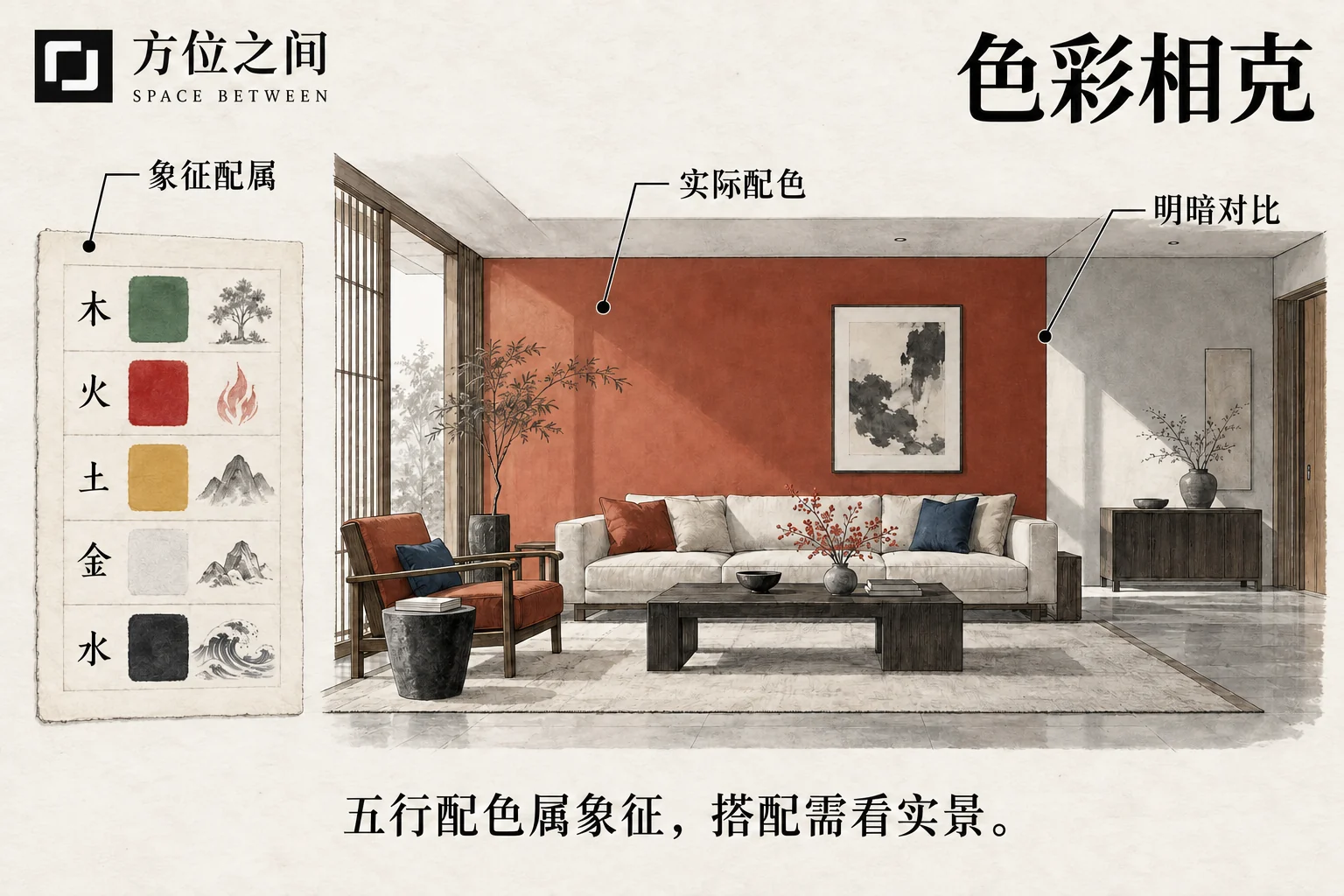
Modern claims may call black-red or red-white combinations conflicting, yet each name covers many shades and textures. Broad adjacency, tiny accents and projected colored light behave differently; color names alone cannot decide the effect.
How to recognize it
Compare actual samples under the same light, noting area and viewing distance. Small red handles on white cabinets differ from wall-wide high-contrast stripes. Test daytime and nighttime and identify precisely what feels uncomfortable or hard to distinguish.
Common confusions
Five-phase generation and control are classifications, not modern complementary colors or material performance. Disliking a combination does not mean residents conflict. Do not turn clothing, religious colors or children’s choices into identity judgments.
Folklore and sources
Xie Ji Bian Fang Shu provides traditional phase background, not inevitable fortune judgments for modern paint swatches. No dedicated source for “any two such colors create sha” was verified. This is a modern extension, not borrowed classical authority.
Traditional responses and practical improvements
Harmony may be an aesthetic theme without required “mediating” ornaments. Adjust proportions, brightness, textures and local spacing with small samples first. Respect cohabitants’ preferences rather than invoking conflict to force them to abandon a favorite color.
Sources and further reading
These sources help clarify the concepts and their origins. Explaining a traditional term does not establish that it can predict outcomes.