
Defining features
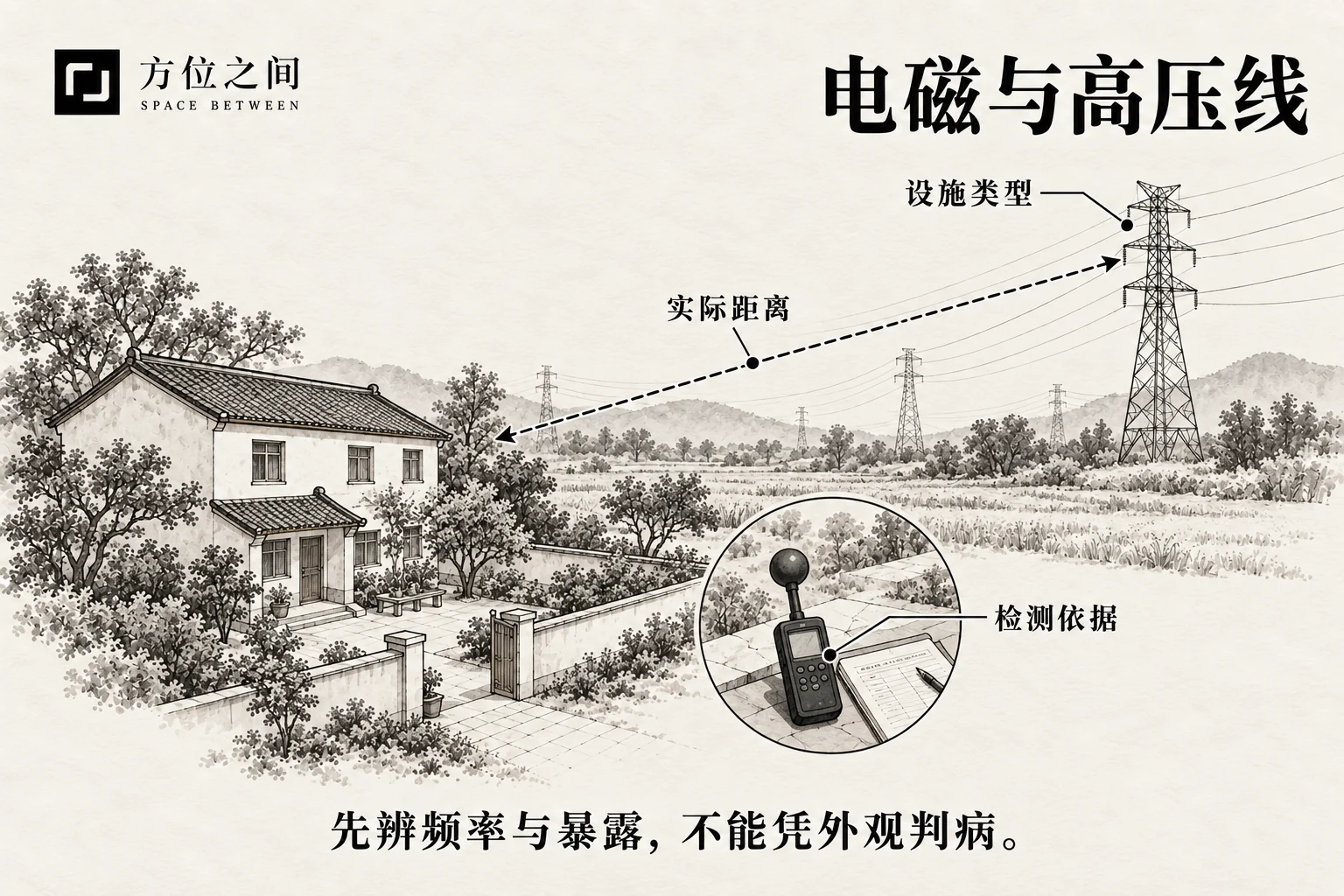
AC power lines involve mainly low-frequency electric and magnetic fields; DC and wireless systems differ. Field strength depends on current, voltage, distance and equipment. A photograph cannot supply readings, and materials affect electric and magnetic fields differently.
How to recognize it
Identify the facility and occupied position, then check the responsible operator, public assessment and applicable standards. Use competent frequency-appropriate measurement if needed. Compass deflection near metal indicates possible navigation interference, not a harmful-radiation test.
Common confusions
Power lines are not nuclear radiation, and low-frequency fields require different methods from Wi-Fi. Record visual enclosure, noise, electrical clearance and electromagnetic exposure separately. Anxiety about one does not establish the others.
Folklore and sources
These are folk labels from modern technology, without ancient texts specifically about high-voltage transmission. ICNIRP distinguishes frequencies and evidence. Association is not causation: neither inevitable disease nor safety everywhere can be declared from an unmeasured situation.
Traditional responses and practical improvements
Screens and plants may change a view, not shield fields or change required clearances. Use facility information, appropriate measurement and expert interpretation; never climb towers or wrap cables yourself. Refer electrical and building issues to operators and avoid unsupported “sha-shielding” products.
Sources and further reading
These sources help clarify the concepts and their origins. Explaining a traditional term does not establish that it can predict outcomes.