
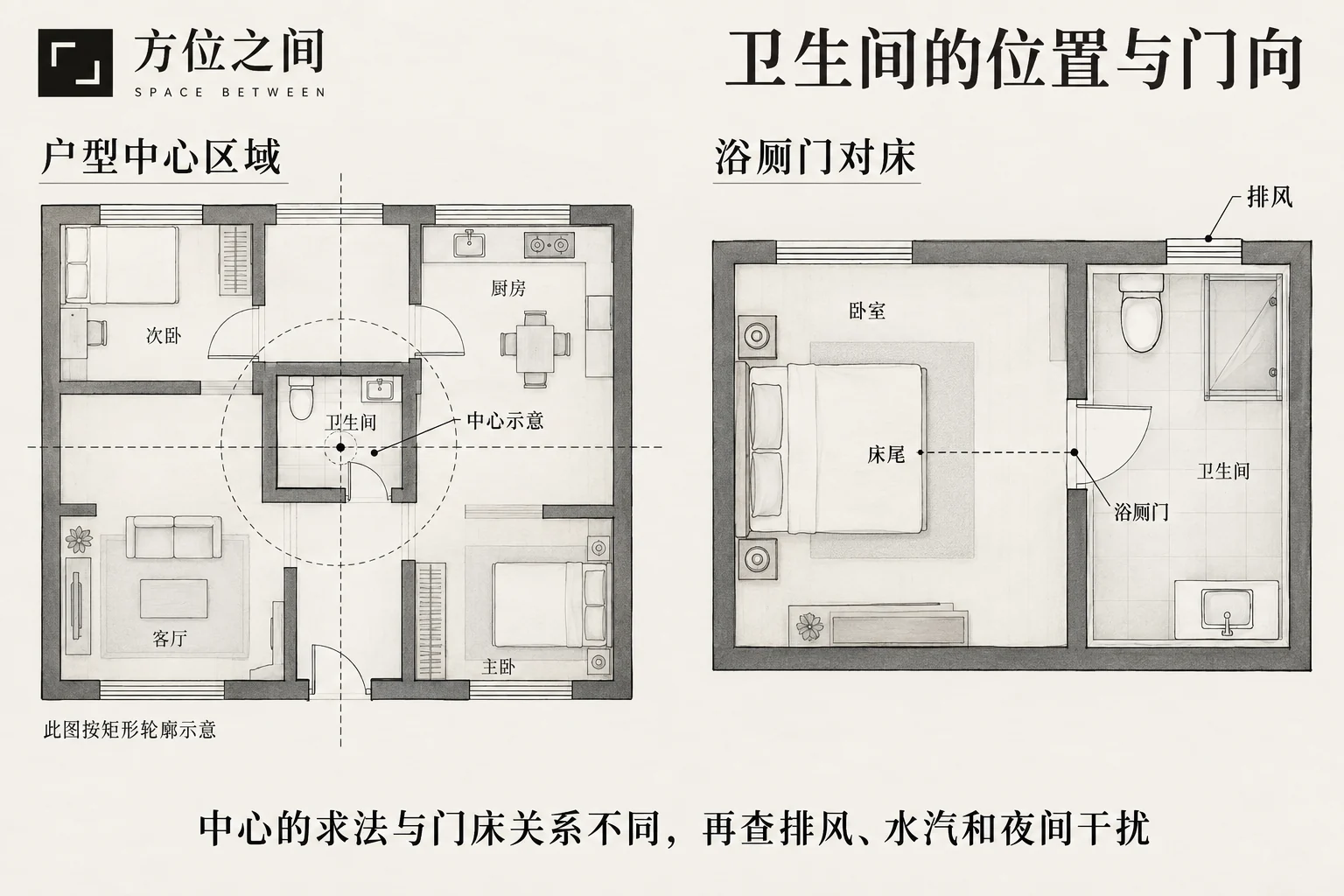
Name, characteristics and scope
A toilet occupying the central palace, also called a polluted center, describes a toilet in the dwelling's supposed central zone. A bathroom facing a bed describes the relationship between doorway and bed. These are not interchangeable. State the plan boundary and division method used for the center; observe the bed relationship with the actual door open rather than predicting illness from a line on a diagram.
How to identify it step by step
Start from the position people actually use, recording shape, spatial relationship and duration separately. These checks distinguish conditions; they are not a universal formula for fortune.
- Outline the actual dwelling boundary and record how the center is found and how much of it the toilet occupies.
- Check visibility into the bathroom from the bed, distinguishing the doorway, basin and toilet fixture.
- Check post-use moisture, leaks, odors and extraction. The room being called a bathroom does not prove contamination has occurred.
- Record whether nighttime lighting, flushing or door movement affects rest.
How to understand the folk account
Traditional symbolism treats the central palace as the home's hub and the toilet as unclean, producing the polluted-center metaphor. Comparing it to the human heart and predicting serious illness or family loss is not medical evidence. Respecting preferences for cleanliness and privacy does not require accepting frightening consequences.
What matters in present-day living
Check drainage, leaks, moisture control, cleanliness and disturbance. A bathroom in the middle of a plan may rely on mechanical extraction; whether it works explains more than an abstract center label. Trace actual sources of drain odors instead of masking them with fragrance.
Traditional responses and practical adjustments
Traditional ideas of avoiding, screening, buffering and separating can be understood as reorganizing sightlines, circulation and activity areas. Try small reversible changes first, then consider permanent alterations if they help.
- Maintain extraction and drainage, first addressing visible leaks or persistent dampness.
- Where needed, adjust door sightlines or bed placement to protect privacy and reduce nighttime disruption.
- Use an easy-to-clean layout instead of piling moisture-absorbing clutter into a supposed sha barrier.
- Relocating a bathroom affects waterproofing, pipes and structure. Do not undertake it yourself solely to match a nine-palace direction.
Common misreadings and related names
The toilet-door-to-entrance relationship is covered in the polluted-mouth entry. This entry focuses on the center and bed.
Closing a door reduces a direct view but does not automatically repair failed extraction or leaks.
Sources and further reading
These sources help clarify the concepts and their origins. Explaining a traditional term does not establish that it can predict outcomes.