
Name and meaning
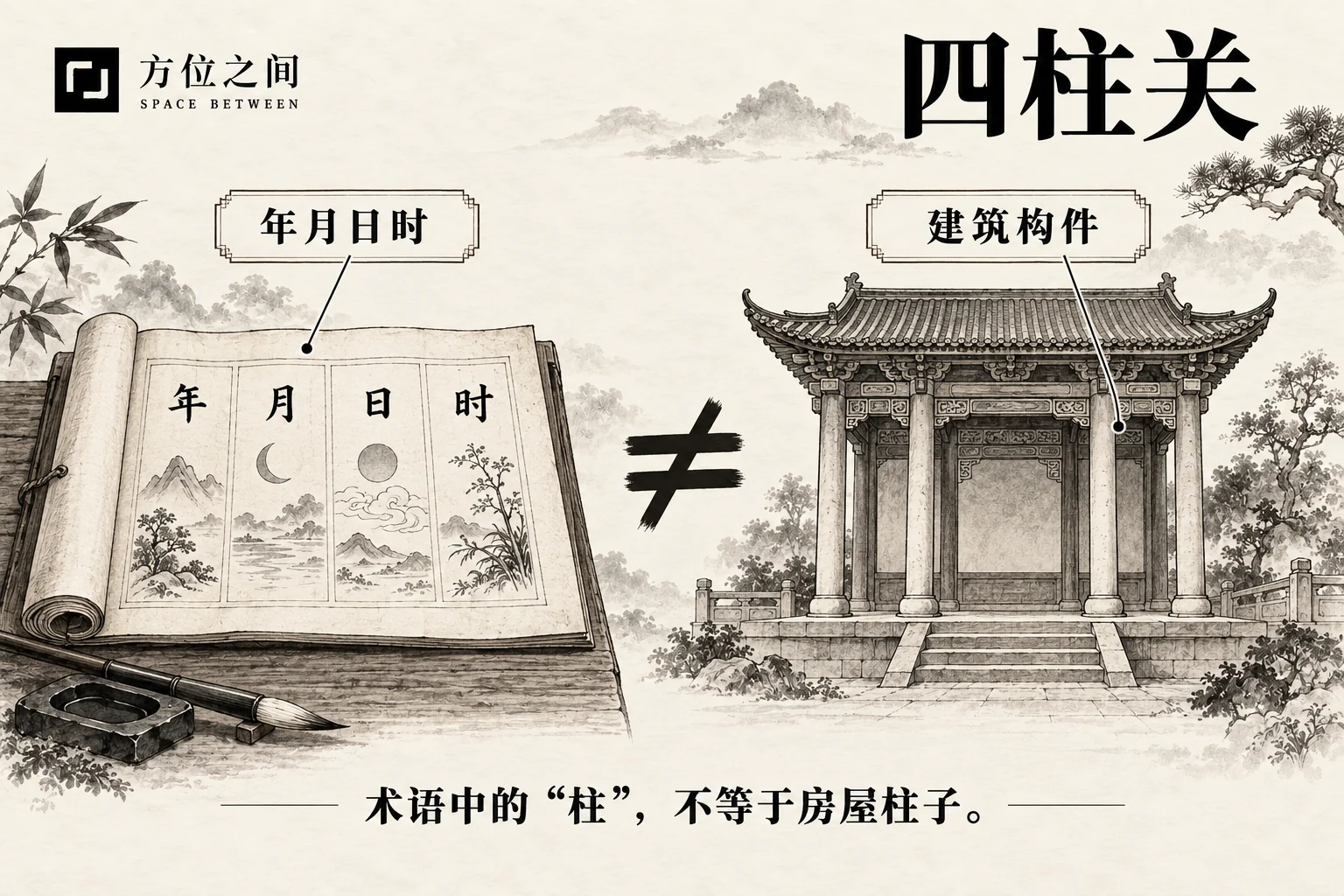
This childhood-gate name borrows the traditional year, month, day and hour vocabulary. Its “pillars” are generally not building columns: four posts, four corners or a column facing a door cannot establish the gate. Shared wording between a divination term and a structural component does not create a causal relationship.
Sources and spelling variants
Volume seven of Sanming Tonghui mentions Four-Pillars Gate while questioning childhood-gate claims. Four Pillars is a broader divination concept, while the gate is one named item. Tables using differing year, month, day or hour conditions need edition-by-edition checking rather than an invented universal rule.
Recognizing the context
Identify whether a source uses calendar inputs, a name index or a building drawing. Calendrical interpretation also involves solar terms and traditional hours, but precise inputs do not validate health predictions. This entry collects no children’s birth information and provides no birth-based classification table.
Folk interpretations and versions
Using temporal order to describe growth is a cultural practice worth studying. The subjects are names, texts and practices, not predetermined lives. A chart should not require altering a recorded birthday, distancing relatives or abandoning normal activities, nor explain every problem through one pillar.
Practical observation and limits
Cracks, deformation or structural doubts belong with qualified building assessment; children’s physical or developmental concerns require their respective evaluation. Neither is explained by this gate. Identifying the actual subject prevents extensive rearrangement of irrelevant ornaments while a real issue remains unattended.
Reading and responding
Use a terminology tree: year, month, day and hour belong to calendar and divination vocabulary; Four-Pillars Gate is a named entry; building columns are components. Preserve historical criticism alongside quotations. Family wishes should not become birth labels or guarantees of health or structural safety.
Sources and further reading
These sources help clarify the concepts and their origins. Explaining a traditional term does not establish that it can predict outcomes.