
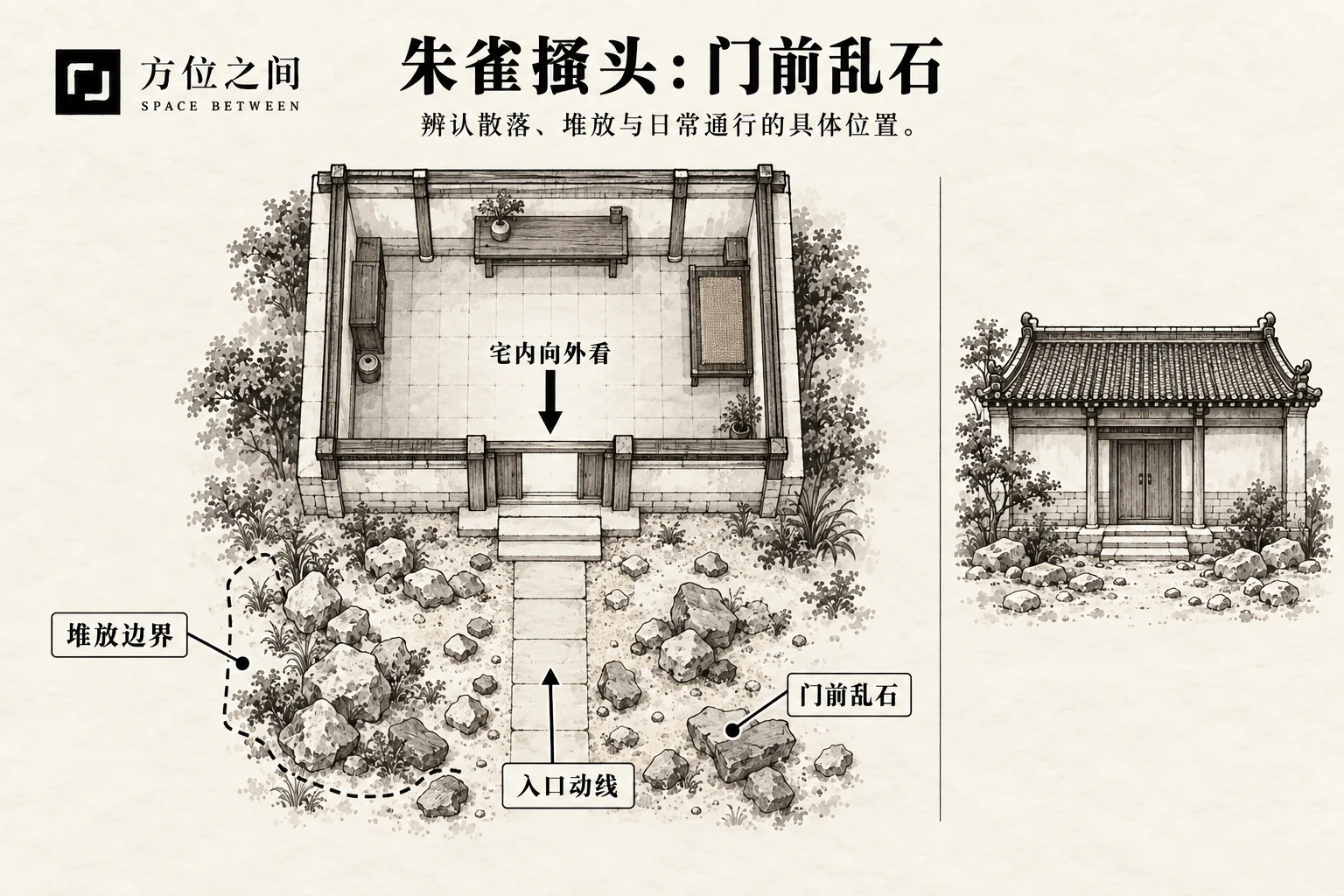
Name and specific form
In this list, Vermilion Bird scratching its head means scattered stones on the front of the home. Separate intentional landscape rocks, temporary construction stockpiles, natural slope debris and loose blocks. These are different objects; the name cannot replace an account of stability and how the space is used.
How to identify and record it
Mark the location, extent and distance from activity routes on the front, then establish how the stones came to be there. Photograph from permitted positions without climbing a pile or entering a slope. Apparent disorder in a photograph does not prove movement.
- Identify landscape material, construction storage or natural terrain.
- Check for obstructed routes, blocked drainage, unclear boundaries or recent movement traces.
- Identify responsibility; neighboring or public objects are not automatically yours to clear.
Sources, versions and related names
This page independently records the supplied modern meaning of Vermilion Bird scratching its head; a specific historic diagram has not been established. Damaged-hill and Lianzhen terms share only some material associations. Stones alone do not make them equivalent, and natural rock does not imply human damage.
Folk meanings and limits of interpretation
The scratching-head image associates an uneven surface with agitation in a folk metaphor. Scattered stones cannot establish family fortune, illness or litigation. Personal dislike of a landscape should not be presented as fixed good or bad fortune. Discuss traditional aesthetics separately from physical condition.
Practical observation: what determines the effect
Actual concerns may include unclear access, blocked drainage or an unstable stockpile. Secure landscape rocks with adequate circulation may simply be an aesthetic choice. Slope rockfall and a few courtyard stones have different scales, responsibilities and remedies.
Improvements and what they cannot replace
Where rights and safety are clear, organize movable clutter and maintain legible boundaries, routes and drainage. Natural slopes or large stones showing movement need relevant professional assessment. Do not remove supporting stones or cover changing ground merely to make it look neat.
- Record material origins and uses, identifying objects before choosing improvements.
- Recheck everyday routes and drainage so clearing does not create another obstruction.
- Do not promise that a protective stone cancels the physical problems of other rocks.
Sources and further reading
These sources help clarify the concepts and their origins. Explaining a traditional term does not establish that it can predict outcomes.